

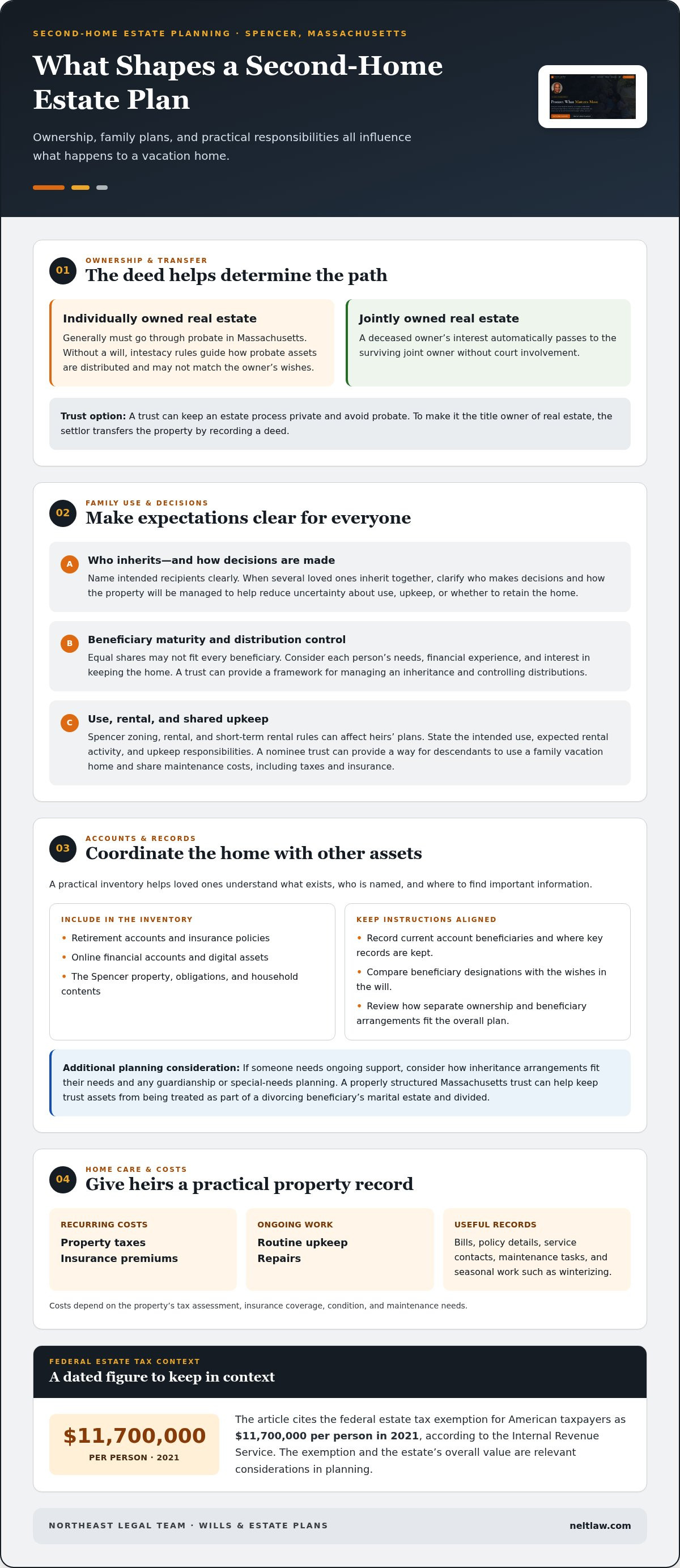
A second home’s ownership can shape how it passes to loved ones. In Massachusetts, individually owned real estate generally must go through probate, while a deceased owner’s interest in jointly owned real estate automatically passes to the surviving joint owner. Estate planning for a second home in Spencer, MA, means coordinating the title with your will or trust and your broader wishes for the property.
If you’re looking for a wills lawyer, it helps to understand how each part of your plan works together. You may be weighing who should inherit the home, how beneficiaries can use it, and how to account for financial and digital assets or potential federal estate tax exposure. This guide explains how probate and estate administration may affect a second home, what ownership and beneficiary choices can mean, and how incapacity and tax considerations fit into the picture. With the key decisions in view, you can take a clearer next step toward protecting your wishes and giving your family practical direction.
Key Takeaways
- Coordinate account and insurance beneficiary choices with your broader estate plan so the intended recipients and your property arrangements work together.
- Consider whether placing a vacation home in a trust could support privacy and make future use and shared upkeep clearer for family members.
- Set inheritance terms that reflect beneficiaries’ maturity and your wishes for how and when they receive assets.
- The federal estate tax exemption for American taxpayers was $11,700,000 per person in 2021, according to the Internal Revenue Service. Learn why the exemption and your estate’s overall value matter when planning.
Planning for probate and estate administration
For a second home, the deed, will, and family’s intended use all affect estate administration. Planning ahead clarifies who may receive the property and what happens next.
Probate and Intestacy Concerns
Without a will, Massachusetts intestacy rules guide how probate assets are distributed, which may not reflect the owner’s personal wishes. Probate can become difficult when heirs disagree, the title is unclear, or the property needs attention. Review the deed, co-owner arrangement, and will together. In Massachusetts, a deceased person’s interest in jointly owned real estate automatically passes to the surviving joint owner without court involvement. That distinction helps clarify whether probate representation or another transfer plan may be relevant.
Asset Distribution Through Probate
A will gives the probate court direction about how the maker wants assets handled. Start by listing the Spencer property, related obligations, household contents, and financial accounts. Then identify which assets are addressed by the will and which have separate ownership or beneficiary arrangements. A trust can keep an estate process private and avoid probate altogether. To make a trust the title owner of real estate, the settlor transfers the property by recording a deed.
Probate representation can help an executor carry out the will’s instructions, manage administration, and distribute assets. For example, when siblings inherit a Spencer vacation home, clear ownership records and written instructions can help them understand their roles. An attorney can assist with probate steps and communication among heirs, especially when decisions about the property are difficult. Consider who will manage the estate, maintain records, and coordinate the home’s transfer.
Spencer zoning, rental, and short-term rental rules can affect whether heirs may rent the home and how they plan its future use. Include the intended use, expected rental activity, and upkeep responsibilities in the estate plan. These details help beneficiaries understand the practical expectations attached to the property.
Digital assets, retirement accounts, insurance, and real estate
A second-home plan should coordinate the property with financial accounts, insurance, and digital records. A practical inventory helps loved ones understand what exists and how each asset should pass.
Protecting Assets and Beneficiary Needs
List retirement accounts, insurance policies, online financial accounts, and digital assets alongside the Spencer property. Record each account’s current beneficiary choice and keep instructions for locating important records. Beneficiary designations may affect who receives specific assets, so compare them with the wishes in your will. If someone needs ongoing support, consider how inheritance arrangements fit their needs and any guardianship or special-needs planning.
Trust planning can address creditor concerns, beneficiary maturity, and control over distributions. In Massachusetts, a properly structured trust can help keep trust assets from being treated as part of a divorcing beneficiary’s marital estate and divided. Discuss your family’s goals with counsel before deciding how assets should be held or distributed.
Passing Homes to Loved Ones
A will can describe how property should be distributed and affairs managed after death. Name intended recipients clearly, then review how those instructions fit the deed and account beneficiaries. A trust becomes the owner of real estate when the settlor transfers the property by recording a deed.
For a family vacation home, a nominee trust can provide a way for descendants to use the property and share maintenance costs, including taxes and insurance. Consider who will coordinate use, make decisions, and keep records. Lawyers can help align will drafting and asset distribution with the family’s intended estate plan.
Second-Home Costs for Heirs
Heirs should plan for property taxes, insurance premiums, routine upkeep, and repairs. Costs depend on the property’s tax assessment, insurance coverage, condition, and maintenance needs.
Write down recurring bills, policy details, service contacts, and maintenance tasks so heirs can see what requires attention. A simple record of seasonal work, such as winterizing the home, can clarify responsibilities. For a considered plan that connects real estate and other assets, estate planning documents can help organize your wishes.
Beneficiary maturity and inheritance control
Equal shares may not suit every beneficiary. A child who is ready to manage money may need different guidance from someone still learning financial responsibility. Trust planning can address beneficiary maturity and control over distributions, helping owners set instructions that reflect family circumstances and the intended use of an inheritance.
Start by considering each beneficiary’s needs, financial experience, and interest in keeping the Spencer home. When several loved ones inherit together, disagreements about use, upkeep, or whether to retain the property can complicate decisions. A plan can clarify who makes decisions and how assets should be managed for beneficiaries. Discussing expectations with family beforehand can help everyone understand the intended arrangement.
For children or younger beneficiaries, consider whether an inheritance should be managed for them rather than handed over without guidance. A trust can provide a framework for controlling distributions. Think through practical needs such as education, housing, and support, then decide what instructions best reflect your priorities. Clear directions can help the person managing the inheritance and give beneficiaries a better understanding of your wishes.
Special-needs planning deserves particular attention if a beneficiary has a disability. Specialized planning can help preserve eligibility for government benefits when that person receives an inheritance or other funds. Consider the beneficiary’s existing support needs and how a future inheritance could affect them. Include trusted people who understand the beneficiary’s circumstances in discussions about long-term care and financial support.
Inheritance planning also connects with decisions made during your lifetime. Health care proxies can identify who may make medical decisions if you become incapacitated, while a durable power of attorney can designate someone to manage financial affairs. These roles differ from managing an inheritance, but naming the right people for each can make administration more efficient. Review your choices as family needs change, and make sure your written instructions still reflect your intentions.
Federal estate tax exemptions
Federal estate tax planning considers the value of an individual’s estate, including a Spencer second home. The federal estate tax exemption for American taxpayers was $11,700,000 per person in 2021, according to the Internal Revenue Service. Treat that figure as a dated reference, not a current planning assumption. Families should inventory real estate, financial assets, and ownership interests before making decisions about gifts or trusts.
Massachusetts estate tax rules are separate from the federal system, so assess state exposure independently. Include the Spencer property with the rest of the estate rather than evaluating the home alone. Ownership, the estate’s overall composition, and applicable deductions inform the calculation. The property’s value and how it is held can affect the review, so organized records help clarify the facts behind a family’s plan.
Some estate plans consider transferring real estate to an Intentionally Defective Grantor Trust. The gift reduces the owner’s remaining estate tax exemption by the property’s value when it is gifted. It can also remove the property’s value and future appreciation from the owner’s taxable estate. These are consequential decisions, not routine title changes. Compare the potential tax effects with your family’s wishes for continued use and control.
For example, an owner who wants children to inherit a vacation home should weigh tax planning against practical goals such as family access and shared upkeep. Trusts and estates planning can also address creditor concerns and reduce uncertainty that might lead to disputes. Gather the deed, a current asset inventory, and existing estate documents before reviewing the options. To discuss how your property and wider estate fit together, review estate planning options with legal counsel and decide which approach may help you achieve your goals.
Northeast Legal Team: Wills & Estate Plans
Northeast Legal Team can help connect your Spencer second home with the rest of your estate plan. Consider turning to the firm when you need to clarify who inherits the property, coordinate ownership with your wishes, or prepare for someone else to manage your finances if you become unable to do so.
Wills & Estate Plans and Living Trusts can provide direction for property and other assets. A Power of Attorney can designate someone to manage financial affairs, while Healthcare Directives record your medical wishes. Reviewing these documents together can help ensure each addresses a different part of your plan.
Before discussing your goals, gather the property deed, existing estate documents, and a current list of accounts and beneficiaries. This gives you a practical starting point for identifying decisions that need attention. Contact Northeast Legal Team to discuss your estate planning needs, or visit neltlaw.com.
Make Your Next Step a Clear One
Thoughtful estate planning for second homes in Spencer, MA, starts with a practical conversation about the future you want for the property. Before making changes, write down your priorities: who should enjoy the home, who could help manage it, and what family traditions you hope to preserve. This gives your planning discussion a personal starting point, not just a list of documents.
Then choose one manageable action. Gather the deed and current estate papers, or talk with loved ones about how they envision using the home. A clear record of your goals can help bring everyone into the process and ground decisions. You don’t need to settle every detail at once. Begin with the choice that matters most to you, then build from there.
Contact Northeast Legal Team today to discuss a plan that reflects your wishes. A thoughtful first step can help you move forward with greater confidence and care for the people who matter to you.
Frequently Asked Questions
Searching for a wills lawyer?
Northeast Legal Team helps individuals and families prepare estate plans, including wills, trusts, powers of attorney, and healthcare directives. For a Spencer property, bring the deed and a list of intended beneficiaries to discuss how your documents can reflect your wishes. The firm offers a free consultation or assessment with personalized recommendations. Its local focus includes Worcester County, Massachusetts, and Middlesex County.
What estate planning options are available for a second home in Spencer, Massachusetts?
Good estate planning for second homes in Spencer, MA, considers a will, a living trust, and coordinated plans for financial and healthcare decisions. The right combination depends on how the home is titled, who should receive it, and whether beneficiaries should share use or ownership. For example, a parent may want one child to inherit the home while leaving other beneficiaries different assets. Review the deed alongside your goals.
How does Massachusetts probate apply to a vacation or second home in Spencer?
Probate treatment depends partly on the ownership shown on the deed. If the deceased owned the Spencer property individually, it generally must go through probate before passing to loved ones. Jointly owned real estate passes automatically to the surviving joint owner without court involvement. Check the deed’s exact ownership language, since a family’s assumption about who owns the home may differ from its recorded title.
Should I place a Spencer, MA second home in a revocable living trust or an LLC?
For estate planning for second homes in Spencer, MA, a living trust may suit owners who want property held in the trust to pass privately and avoid probate. An LLC is a different ownership structure, so compare its purpose with your goals for family use, management, and transferring the home. Don’t assume either option automatically resolves every tax, liability, or family concern. Review the deed, intended successors, and ongoing management needs before changing ownership.
How are capital gains and stepped-up basis handled when inheriting a Massachusetts vacation home?
Capital gains depend on the home’s tax basis and what happens if an heir later sells it. “Stepped-up basis” refers to adjusting the tax basis associated with inherited property, but the result depends on applicable tax rules and circumstances. Keep records of the property’s ownership, value, and later improvements. These details can help clarify potential gains if beneficiaries sell rather than keep the home.
How can co-owners pass on a second home while avoiding disputes and probate?
Co-owners can reduce uncertainty by confirming how the deed holds title and documenting what should happen to each owner’s interest. Joint ownership can mean a deceased owner’s interest automatically passes to the surviving joint owner. Owners should also agree on practical matters such as who may use the home, how expenses are shared, and how future ownership decisions will be handled. Clear written expectations can help prevent avoidable disagreements.


