

A probate case doesn’t always require a courtroom hearing. In Massachusetts, the informal probate process in West Boylston, MA is handled administratively by an MUPC Magistrate rather than a judge. It may proceed without hearings when there are no disputes, legal issues, or creditor complications.
After a loss, it’s natural to want a clear path for handling property and carrying out the deceased person’s wishes. Informal probate can be a simpler route when the estate and family circumstances are suitable, but it isn’t right for every case.
This guide explains what informal probate means, who may be appointed personal representative, and when formal probate may be necessary instead. It also outlines the steps from notice and filing through appointment and estate administration, so you can better understand what lies ahead.
Key Takeaways
- Appointment follows Massachusetts priority rules, and heirs and beneficiaries may have rights to object to the will or the personal representative.
- A missing original will or death certificate, handwritten changes to a will, or unresolved inheritance issues can make formal probate necessary.
- Before filing, identify the proper county, give entitled parties notice at least seven days beforehand, and gather the required documents.
- Formal probate can help establish who inherits real estate when a will is contested or the deceased left no will.
What Is Informal Probate in Massachusetts?
Massachusetts has three probate options: voluntary administration, informal probate, and formal probate. Informal probate is an administrative proceeding handled by an MUPC Magistrate, not a judge, and may proceed without hearings when there are no disputes or legal complications.
According to Massachusetts Probate and Family Court, the informal probate petition filing fee is $375 and the surcharge fee is $15. Appraisal, publication, and tax work may also involve expenses, depending on the estate’s needs.
Estate Asset Identification and Distribution
Identifying and distributing assets involves locating probate property, determining its value, and transferring it to those entitled to receive it. The personal representative, also known as an executor, identifies property held solely in the deceased person’s name and arranges appraisals when needed. The will guides distribution if one exists; without a will, Massachusetts law determines who inherits. A devisee is someone who receives property under a will.
When Massachusetts Estates Need Probate
Probate may be needed to access and distribute assets held solely in a deceased person’s name through an authorized personal representative. For example, probate may provide the authority needed to administer a bank account held solely in the deceased person’s name. Property that passes outside the probate estate may not require this process. Reviewing how each asset is owned helps determine what must be administered through the court.
Voluntary Administration Estate-Value Limit
Voluntary administration is a separate, limited option for certain smaller estates. In Massachusetts, it is generally available when a Massachusetts resident’s estate is valued at no more than $25,000. This limit helps distinguish voluntary administration from informal probate, but the value alone does not resolve every eligibility question. The estate’s assets and circumstances also matter when choosing the appropriate process.
Estate planning can address how assets are titled and who is named to receive them. Those choices can affect which property must pass through probate. Reviewing a will, beneficiary designations, and ownership records can help families understand how an estate may be administered and whether probate is needed.
Priority for appointment of a personal representative
Massachusetts law sets appointment priority under Chapter 190B, Section 3-203. A will may nominate a personal representative, but the probate court must appoint someone to administer the estate.
Eligibility and priority are related but not identical. A person may be considered for appointment under the statutory order, while the will may nominate someone to serve. In practice, the nominee’s willingness and ability to handle the work also matter. If no suitable person takes the role, the court’s appointment process determines who may act for the estate.
For an estate without a will, the Massachusetts informal probate filing requirements include Bond form MPC 801. The bond relates to the personal representative’s authority and responsibilities. The required filing and bond documents depend on whether the decedent left a will and the estate’s circumstances.
Heirs at law and estate recipients have notice rights, including the right to object to a will’s validity, the personal representative’s appointment, or the representative’s management of the estate. A timely objection can raise an issue that informal administration cannot resolve on its own. A conservator may represent a minor or incapacitated recipient, which can add time, expense, and ongoing duties. A guardian and conservator have distinct legal roles, so the representative should know who is authorized to act for a recipient.
West Boylston probate matters are handled by Worcester Probate and Family Court. Massachusetts allows informal probate forms to be filed online, by mail, or in person, giving families different ways to submit documents.
Before filing, identify the proposed representative, review the will for a nomination, and determine whether a bond form applies. If a recipient objects or needs representation, those facts may affect the route and administration. For guidance on probate and estate administration, consider how the appointment, bond paperwork, and notice rights fit together.
When formal probate may be required
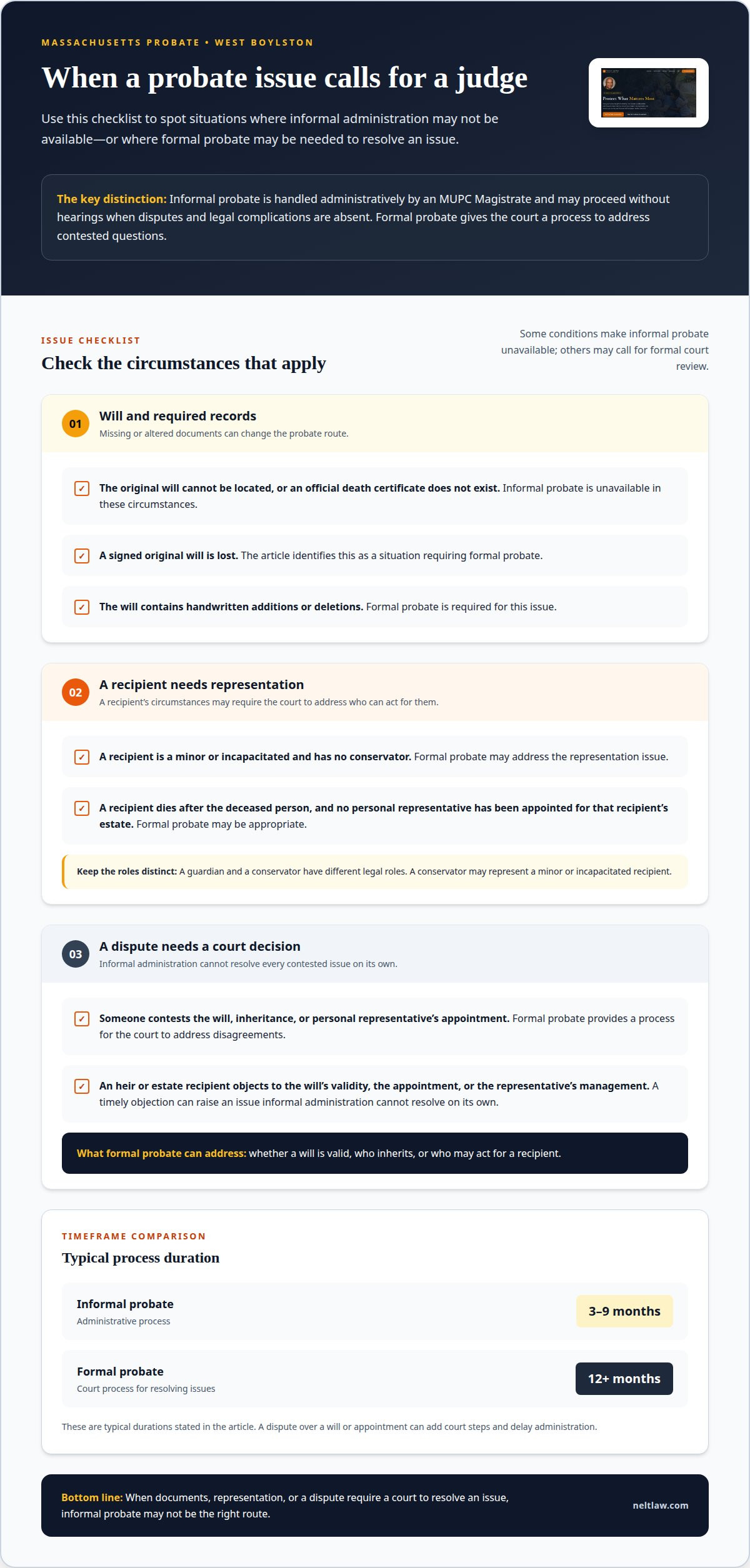
For families considering the informal probate process in West Boylston, MA, the key question is whether a judge must resolve a contested issue. Informal administration can proceed without a hearing when complications are absent. Formal probate provides a process for the court to address disagreements about a will, inheritance, or appointment.
Formal probate may be necessary or useful in several situations:
- If the original will cannot be located or an official death certificate does not exist, informal probate is unavailable.
- A signed original will that is lost, or a will with handwritten additions or deletions, requires formal probate.
- If a recipient is a minor or incapacitated and has no conservator, formal probate may address representation.
- If a recipient dies after the decedent and no personal representative has been appointed for that recipient’s estate, formal probate may be appropriate.
These issues may require the court to determine whether a will is valid, who inherits, or who may act for a recipient. For example, if a contested will is found invalid, formal probate can help establish inheritance rights. Reviewing the documents and identifying interested parties helps clarify which questions need resolution before administration moves forward.
Massachusetts informal probate typically takes 3 to 9 months, while formal probate typically takes 12+ months. A dispute over a will or appointment can add court steps and delay administration. The informal probate process in West Boylston, MA may not fit when a court needs to resolve such a dispute.
Real estate can also affect the choice of probate process. If the deceased left no will, or a contested will is found invalid, formal probate can determine who inherits real estate and help establish clear title before a transfer or sale. An estate plan with an accessible original will can reduce uncertainty, although property ownership and any dispute still affect which probate route is appropriate.
Informal probate steps
In Massachusetts, informal probate begins with notice and a petition, followed by the appointment of a personal representative. The sequence matters: notice comes before filing, and estate administration follows the court’s appointment.
Before filing, entitled parties must receive notice at least seven days beforehand. After the petition is accepted, publication notice must appear in a newspaper designated by the register within 30 days. Massachusetts General Court states informal probate may be opened as soon as seven days after the decedent’s death.
- Choose the filing location and gather documents. File in the county where the Massachusetts decedent lived at death. Prepare the original will, if one exists, and an official death certificate. Identify beneficiaries and interested parties who must receive notice.
- Send notice and file the petition. Give entitled parties notice before submitting the petition. A no-will estate also includes Bond form MPC 801 among its filing requirements.
- Complete service and publication. File Notice of Informal Probate and Return of Service, form MPC 550. After acceptance, arrange publication using Informal Probate Publication Notice, form MPC 551, within 30 days.
- Administer the estate after appointment. The order appointing the representative is form MPC 750. Within 30 days of appointment, the representative sends notices to creditors and devisees. The representative identifies estate assets, addresses debts and taxes, then distributes inheritances.
The right path depends on the estate and its recipients. A minor or incapacitated beneficiary, for example, may need representation, while a disagreement may point toward formal rather than informal probate. Massachusetts has three types of probate: voluntary administration, informal probate, and formal probate. Each addresses different estate circumstances.
Have the original will, death certificate, and recipient information ready before filing. Get help organizing probate filings and notices so the petition and required steps are addressed in sequence.
Northeast Legal Team: Wills & Estate Plans
Northeast Legal Team helps individuals and families plan for future decisions and manage estate matters. If you’re handling probate now, the firm’s Probate & Estate Admin service can help you understand the administration process and your role. If you’re planning ahead, Wills & Estate Plans and Living Trusts can document your wishes and address how your assets should be handled.
A Power of Attorney and Healthcare Directives address decisions during your lifetime, rather than distributing property after death. Reviewing these documents together can show how each part of a plan serves a different purpose and where your current arrangements may need attention.
Whether you’re organizing an estate after a loss or putting your wishes in writing, contact Northeast Legal Team or visit neltlaw.com to arrange a free consultation.
Choose a Clear Next Step for Your Family
Estate administration can also prompt families to consider how future decisions will be handled. As you prepare for the informal probate process in West Boylston, MA, gather records showing ownership, beneficiary choices, and the deceased person’s intentions. Note any remaining questions, especially if family circumstances or asset arrangements have changed.
That preparation can support a focused conversation about what needs attention now and what can be planned for later. You don’t need to resolve every issue at once. A clear first step is to discuss the estate’s circumstances and your family’s decisions with care.
For a thoughtful conversation about your next steps, contact Northeast Legal Team. Taking action at your own pace can help bring greater clarity to the decisions ahead.
Frequently Asked Questions
When Is It Necessary To Probate An Estate?
Probate is generally needed when someone must access or distribute assets held solely in the deceased person’s name. For example, an appointed personal representative may be needed to administer a solely owned account. Property with a surviving joint owner or named beneficiary may pass differently, so review ownership records and beneficiary designations alongside the will before deciding which assets require probate.
What is informal probate in Massachusetts, and when is it available?
Informal probate is a Massachusetts administrative proceeding handled by a magistrate. It may be appropriate when the personal representative is ready to serve, the estate can pay its obligations, and heirs and beneficiaries are known and agree. A dispute about the will, an unresolved legal issue, or creditor complications can make the informal route unsuitable. The original will and official death certificate are also important to eligibility.
How do you file for informal probate in Worcester County, Massachusetts?
File in Worcester County if the deceased lived there at the time of death; West Boylston filings go through Worcester Probate and Family Court. Massachusetts permits informal probate forms to be filed online, by mail, or in person. Before submitting, organize the petition, will, and death certificate, and identify everyone entitled to notice. This helps ensure the filing and required notices address the same estate and interested parties.
Which Massachusetts probate forms and supporting documents are required for informal probate?
The central petition is MPC 150, accompanied by the original will when one exists and an official death certificate. Related forms include MPC 550 for notice and return of service, MPC 750 for the order, and MPC 551 for publication notice. For an estate without a will, the filing requirements include bond form MPC 801. The applicable supporting forms depend on whether the decedent left a will.
How long does the informal probate process take in Massachusetts?
Informal probate typically takes 3 to 9 months in Massachusetts. The overall administration can extend beyond that range as the representative identifies assets, handles taxes, and resolves creditor claims. Creditors generally have one year from the date of death to file claims, so appointment and final distribution are different milestones. A complete inventory and prompt responses to estate issues can help keep administration moving.
What are the executor’s duties after an informal probate appointment in Massachusetts?
After appointment, the executor must safeguard estate assets and notify creditors and devisees. Massachusetts law requires notice in a local newspaper to alert creditors. The representative addresses debts, taxes, and expenses before distributing inheritances, and handles tax responsibilities such as the deceased person’s final income tax return. If estate assets are sold, capital gains tax may also need attention during administration.


