

To file a petition for probate in Westminster, MA, choose the process that fits the estate: informal probate uses form MPC 150, while formal probate uses form MPC 160. For a Massachusetts resident, file in the Probate and Family Court for the county where the person lived. The next important task is identifying which assets belong in the probate estate and preparing an inventory.
It’s understandable to focus first on the court forms. But knowing what the deceased person owned, how each asset was held, and who may need notice can also shape the process and help you organize the estate.
This guide explains informal probate, how to choose between informal and formal proceedings, and how to distinguish probate assets from assets that may pass outside probate. It also covers notice requirements for heirs and MassHealth, so you can understand the steps ahead and prepare for them.
Key Takeaways
- Compare formal and informal probate requirements to understand which process fits the estate’s circumstances.
- Organize notice for heirs, beneficiaries, and MassHealth around the filing timeline.
- For informal probate, prepare the required documents and identify the people who must be located.
- Sort assets by ownership and transfer arrangements to see which belong in the estate inventory.
What is Petition for Formal Probate of Will and/or Appointment of Personal Representative (MPC 160)?
Formal probate uses form MPC 160 to ask the Probate and Family Court to accept a will, appoint a personal representative, or both. Start by identifying where the deceased lived, since that determines the proper county court.
Gather Probate Forms and Filing Fees
Use MPC 160 for a formal petition, and review form MPC 963 for filing instructions. Check that each form is current and complete before submitting it. A formal petition adds a $15 citation fee. For comparison, the informal probate petition filing fee is $375, plus a $15 surcharge, according to Massachusetts Probate and Family Court. Keep court fees separate from tax filings.
Locate and File the Original Will
Find the original will and compare it with any copies, noting the named executor and beneficiaries. In Massachusetts, someone holding a will must deliver it within 30 days after learning of the death to a person able to probate it or to the court. Include the original with the formal filing. If you can’t locate it, explain that issue in the petition rather than treating a copy as the original.
File the Formal Probate Petition
File in the county where the deceased lived. For a Westminster resident, file in Worcester County; for a resident of Middlesex County, file there. A formal case may involve one or more hearings before a judge. Once appointed, the personal representative receives Letters of Authority to act for the estate. Massachusetts estate tax returns are due within nine months of death if the gross estate, including assets outside probate, exceeds $2 million. Federal filings are separate and depend on the estate’s circumstances.
Can I file without an attorney? Yes. You may file without an attorney, but you’re responsible for accurate forms, required notices, and any court appearances.
How long does probate take? The timeline depends on the court process, estate administration, and whether disputes arise. Formal matters may involve one or more hearings.
What if someone objects? The court considers the objection. It may require a hearing and affect the appointment of a personal representative or how the will is handled.
How can I check a Westminster case? Contact the Worcester Probate and Family Court where the case was filed. Have the case number or the deceased person’s name ready.
Notice requirements for heirs and MassHealth
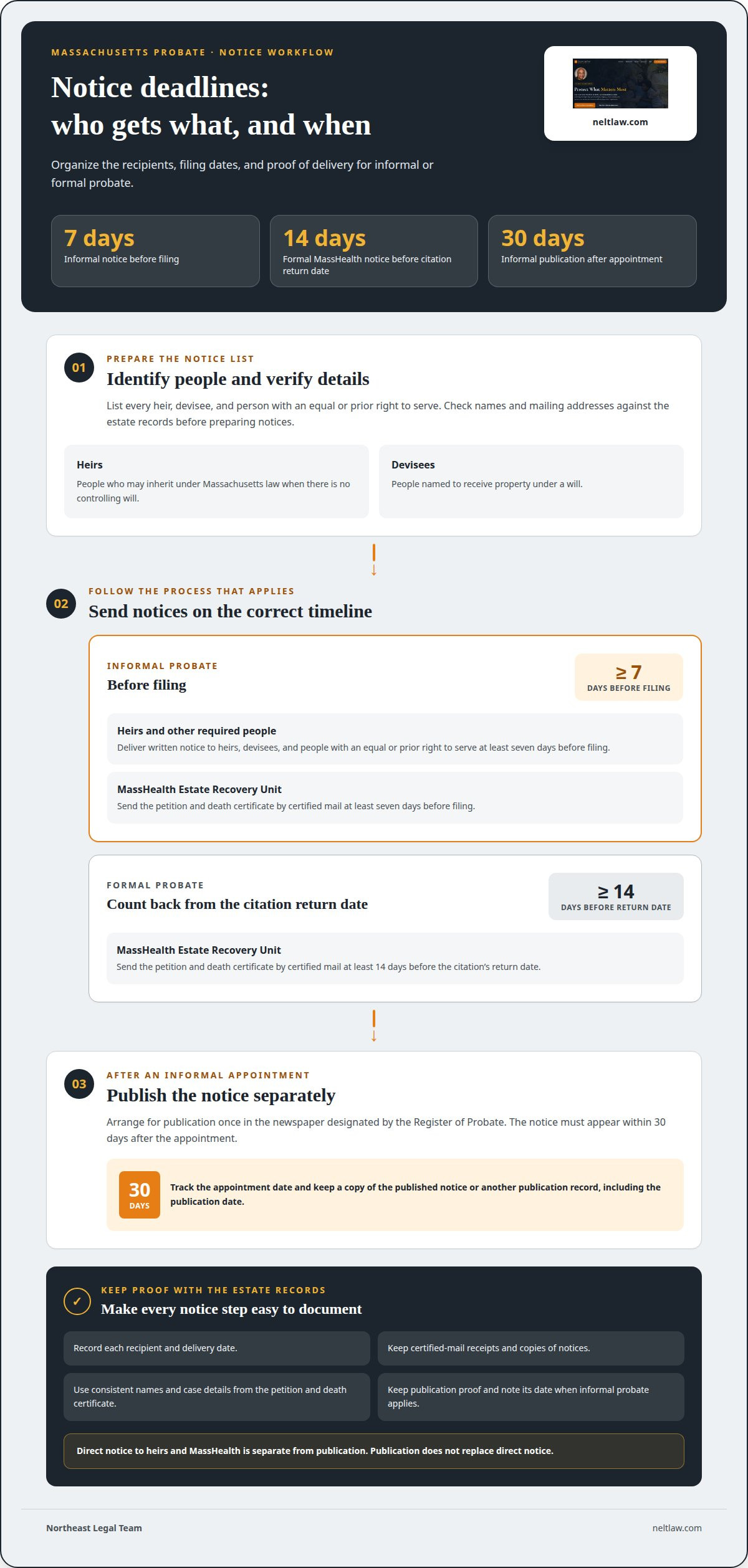
Create a notice list before filing, then track each delivery and publication deadline. Requirements differ between informal and formal probate, particularly for MassHealth.
-
Provide Notice to Heirs and MassHealth
Identify every heir, devisee, and person with an equal or prior right to serve. For informal probate, deliver written notice at least seven days before filing, according to the General Court of Massachusetts. Send the petition and death certificate by certified mail to the MassHealth Estate Recovery Unit at least seven days before filing.
For formal probate, send the petition and death certificate to the MassHealth Estate Recovery Unit by certified mail at least 14 days before the citation’s return date. Keep mailing receipts and copies with the estate records. Record each recipient and delivery date so the personal representative can document the notice steps.
-
Publish the Required Notice
After an informal appointment, arrange publication once in the newspaper designated by the Register of Probate. The notice must appear within 30 days after the appointment. Keep a copy of the published notice or other publication record with the case documents, and note the publication date.
Publication is separate from direct notice to heirs and MassHealth. One does not replace the other. Track the personal representative’s appointment date and the newspaper deadline together, and keep proof that the notice was published as required.
- Complete and track each notice field. Use the petition and death certificate consistently when recording the deceased person’s name and relevant case details. Check each recipient’s mailing address against the estate’s records, and preserve certified-mail receipts. A missing heir or incorrect address can complicate proof that notice was given.
Keep a simple timeline with the filing date, the informal notice delivery date, MassHealth mailing date, citation return date when formal probate applies, and publication date after an informal appointment. If organizing these steps feels difficult, probate and estate administration support can help bring the filings and notice records into order.
What is Informal Probate?
Informal probate is a Massachusetts Probate and Family Court process that does not require a formal hearing before a judge. Use these steps to prepare the petition and supporting documents.
- Start with form MPC 150, the Petition for Informal Probate of Will and/or Appointment of Personal Representative. Check that the petition names the correct personal representative and accurately describes whether the deceased left a will. Massachusetts estates need an original will available for submission when one exists, plus a certified death certificate with the initial filing. Keep copies of the completed petition and supporting papers for your records.
- Gather the names and details needed to identify every heir and devisee before completing MPC 150. Heirs are people who may inherit under Massachusetts law when there is no controlling will; devisees are people named to receive property under a will. The court needs these parties identified for the informal process. Compare spellings and relationships against the death certificate, will, and family records to avoid inconsistent details.
- Review related Massachusetts forms for information that supports the petition. Form MPC 162 is the Surviving Spouse, Children, Heirs at Law form, while MPC 163 is the Devisees form. Use the relevant form to organize the people connected to the estate, rather than leaving names or relationships unclear. These forms complement MPC 150; they don’t replace the petition itself.
- Choose the filing route and add only forms that fit the estate’s circumstances. A Massachusetts informal petition may be filed online through eFile, by mail, or in person. Form MPC 161 is for late and limited formal testacy and/or appointment, not the standard informal petition. Keep it distinct from MPC 150. After filing, retain the court-stamped documents and any filing confirmation with the estate records.
Identifying probate and non-probate assets
Classify property by ownership and transfer arrangements, not just by its name or location. A careful asset list helps the personal representative distinguish property to administer from property that may pass outside probate.
- Collect records for every asset the deceased person owned or may have held an interest in. Gather bank and investment statements, deeds, vehicle records, insurance documents, and business ownership papers. For each asset, note the institution, account or property description, named owners, and any beneficiary. These details help establish how it was held at the time of death.
- Review title and transfer instructions before including an asset in the probate estate. A bank statement, for example, identifies an account, but ownership records and the account agreement help clarify who held it. Also review beneficiary designations and joint ownership documents. An asset’s label alone does not show whether it belongs in the probate inventory.
- Separate assets that appear to require estate administration from those with another documented transfer route. Note the reason for each classification, such as sole ownership, joint title, or a beneficiary designation. If records conflict, flag the asset for follow-up rather than treating an assumption as fact. This distinction helps avoid omissions and keeps estate records clear.
- Secure the records and prepare a comprehensive inventory after appointment. According to the General Court of Massachusetts, a personal representative must prepare an inventory within three months of appointment. Include each asset’s description and value, and retain statements or title records supporting the entries. An appraisal may be needed to establish fair market value at the time of death.
For help organizing an estate inventory and administration steps, get probate asset guidance.
Northeast Legal Team: Wills & Estate Plans
Northeast Legal Team provides probate and estate administration assistance when court forms, asset records, or required notices are difficult to manage. The firm can help identify estate property and guide you through the administration process after a death.
If you’re planning ahead, Wills & Estate Plans and Living Trusts can set out how you want your property handled. A Power of Attorney and Healthcare Directives address decision-making during your lifetime; they do not replace probate after death. The right planning tools depend on your goals, family circumstances, and assets.
For guidance with probate administration or a future estate plan, contact Northeast Legal Team or visit neltlaw.com.
Take the Next Step With Confidence
Once you’re ready to move forward, create one clear working file for the estate. Keep correspondence, court papers, asset records, and questions together so you can see what’s been handled and what still needs attention. A shared, factual record can also make family conversations more focused and reduce confusion as decisions unfold.
If you’re preparing a petition for probate in Westminster, MA, or managing an estate after filing, consider what support would make the next decision easier. Clear guidance can help you handle the details while keeping the people and wishes behind them in view.
Contact Northeast Legal Team to discuss your next step. You can approach the process one decision at a time, with a clearer path forward.
Frequently Asked Questions
When is Probate Not Required?
Probate may be unnecessary for assets that pass outside the probate process through their ownership or beneficiary arrangements. Massachusetts also permits voluntary administration for an estate with personal property worth $25,000 or less, excluding one car, if there’s no real estate. Before relying on that option, list the assets and check ownership records. Real estate or property above the threshold can change which process applies.
Where do I file a petition for probate in Westminster, Massachusetts?
For someone who lived in Westminster, file the petition with the Probate and Family Court serving Worcester County. Massachusetts generally assigns a resident’s case to the county where the person lived, not where an heir lives. Gather the deceased person’s residence information and estate records before filing. If the deceased lived outside Massachusetts but owned property here, the appropriate county may depend on where that property is located.
Which Massachusetts Probate and Family Court serves Westminster?
Westminster is in Worcester County, so the Worcester Probate and Family Court serves probate matters for Westminster residents. The deceased person’s residence, not the petitioner’s address, generally determines where a resident’s case belongs. Use the deceased person’s Westminster address when identifying the court, and keep it consistent across the petition and supporting records.
What forms are required to petition for probate in Massachusetts?
The main petition depends on the process: MPC 150 is used for informal probate, while MPC 160 is used for formal probate of a will and/or appointment of a personal representative. A late and limited formal proceeding uses MPC 161. Related forms can identify heirs, surviving family, and devisees. Choose forms that match the estate and proceeding, and use the current versions.
What information and documents are needed to file a Massachusetts probate petition?
For an informal filing, prepare the original will, if there is one, and a certified death certificate. You’ll also need accurate information about heirs, devisees, and the proposed personal representative. Gather the deceased person’s residence details and records that establish family relationships, including documents clarifying any name changes. Consistent names and relationships across the petition and supporting papers help make the filing clear.
How much are Massachusetts probate filing fees, and how can I pay them?
For informal probate, the filing fee is $375, plus a $15 surcharge, according to Massachusetts Probate and Family Court. A formal petition adds a $15 citation fee. Payment instructions depend on the filing channel: informal petitions may be submitted through eFile, by mail, or in person. Follow the court’s instructions for the chosen method, and keep the receipt with the estate’s case records.


