

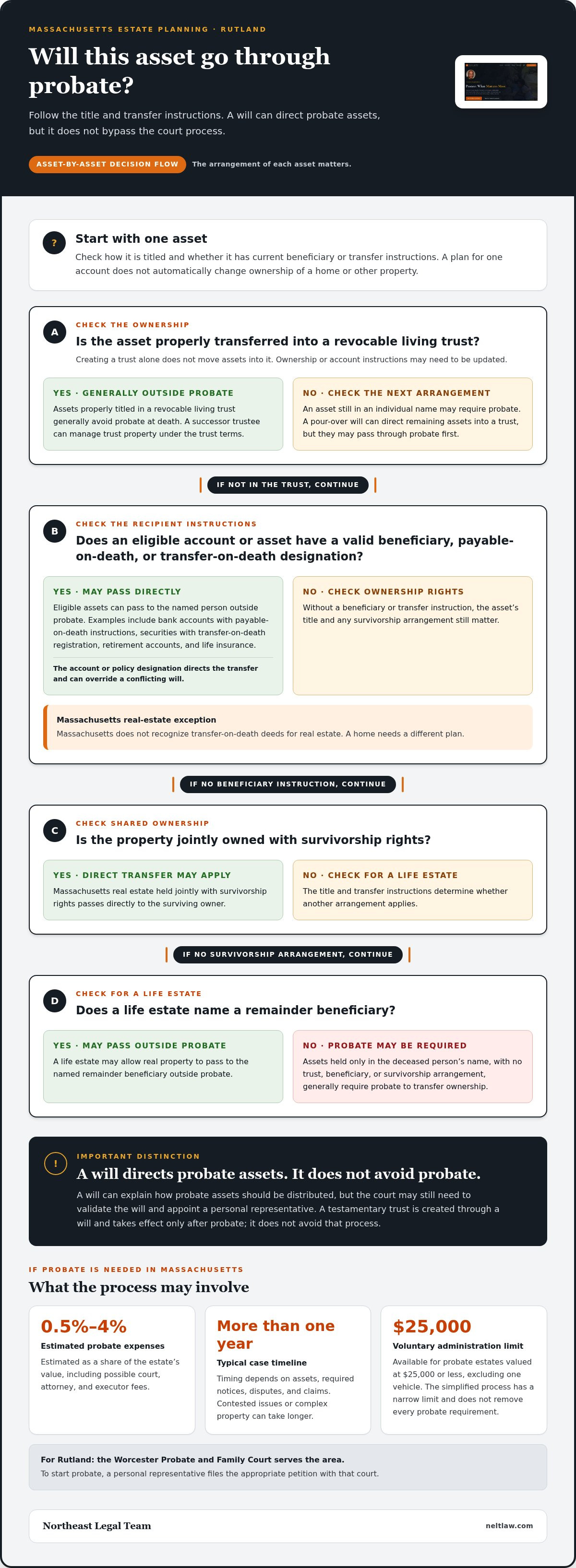
A will doesn’t keep an estate out of probate; the court must validate it. To understand how to avoid probate court in Rutland, MA, focus on how assets are titled and who is named to receive them. Assets held in a living trust or with valid beneficiary designations can generally pass outside probate. If assets remain solely in the deceased person’s name, a will can guide their distribution, but probate may still be required.
It’s understandable to want a clear plan that protects privacy and helps loved ones manage a difficult time. A will and a trust serve different purposes, and beneficiary designations can determine who receives certain accounts or policies.
This article explains what probate involves, why a will alone doesn’t avoid it, and how trusts, joint ownership, and beneficiary designations may help transfer assets outside court. Whether probate can be avoided depends on how each asset is arranged, so review your Massachusetts estate plan as a whole.
Key Takeaways
- A revocable living trust can keep assets properly titled in it out of probate; a testamentary trust is created through a will after probate.
- Payable-on-death and transfer-on-death designations can pass eligible assets outside probate, but Massachusetts does not recognize transfer-on-death deeds for real estate.
- Review beneficiary designations after major life changes and annually, since they can take precedence over conflicting instructions in a will.
- A will explains how to distribute probate assets, but it doesn’t bypass the court process needed to validate the will and appoint a personal representative.
What’s the difference between a Testamentary Trust and a Revocable Living Trust?
A revocable living trust is created during your lifetime and can be changed while you’re alive. Assets properly transferred into it generally avoid probate at your death, and the trust document doesn’t become part of the public probate record. A successor trustee can manage trust property after your death according to the terms you set.
Funding the trust is essential. Creating it alone doesn’t move assets into it. Real estate, for example, may need a new deed, while financial accounts may need updated ownership or beneficiary designations. Assets still titled in your individual name may require probate. A Massachusetts pour-over will can direct remaining assets into the trust, but those assets may still pass through probate first.
A testamentary trust works differently: a will creates it, and it takes effect only after the will goes through probate. It can guide how beneficiaries receive property, but it doesn’t avoid probate. If your goal is to keep funded assets outside that process, a revocable living trust is the more direct tool.
Probate expenses in Massachusetts are estimated at 0.5% to 4% of an estate’s value, including possible court, attorney, and executor fees.
A trust’s main risks are practical: setup and administration require attention, and assets left outside it may still need probate. A trust also doesn’t automatically resolve every tax or creditor issue. The Worcester Probate and Family Court serves Rutland. To start probate, a personal representative files the appropriate petition with that court. When there’s a will, the proceeding seeks its validation and the representative’s appointment.
Can probate be avoided entirely in Massachusetts?
Some assets can pass outside probate, while assets owned solely in a person’s name may still enter the probate process. The outcome depends on title, survivorship rights, and current designations.
Payable-on-Death and Transfer-on-Death Designations
A payable-on-death designation names who receives a bank account, while a transfer-on-death registration can direct securities to a named beneficiary. These arrangements can transfer eligible assets directly to loved ones, outside probate. Massachusetts does not recognize transfer-on-death deeds for real estate, so a home needs a different plan. Review account designations as part of your estate plan and update them after life changes.
Assets That Must Go Through Probate
Assets held only in the deceased person’s name, without a trust, beneficiary, or survivorship arrangement, generally require probate to transfer ownership. For example, a solely owned account without a payable-on-death designation may need court administration. By contrast, Massachusetts real estate held jointly with survivorship rights passes directly to the surviving owner. The title and transfer instructions matter.
Massachusetts offers voluntary administration for probate estates valued at $25,000 or less, excluding one vehicle. This simplified process has a narrow value limit; it doesn’t apply to every estate or remove probate requirements for assets outside its scope.
A typical Massachusetts probate case takes at least more than one year. The timeline depends on the estate’s assets, required notices, and whether anyone disputes the will or makes claims. Formal proceedings involving contested issues or complex property can take longer.
To reduce probate exposure, review ownership and designations together rather than relying on a single account form. A payable-on-death designation can direct a bank account, but it doesn’t change the title to a home. A life estate may allow real property to pass to a named remainder beneficiary outside probate. Joint ownership can also transfer real estate directly to a surviving owner.
Matching each asset with your wishes can clarify what loved ones must handle through court. A coordinated estate plan can help align titles and beneficiary instructions.
Beneficiary designations for financial accounts and insurance
Beneficiary designations let eligible financial assets pass directly to named people after your death. In Massachusetts, assets with designated beneficiaries pass outside probate. Common examples include retirement accounts, life insurance policies, and bank accounts with payable-on-death instructions. The designation on the account or policy directs the transfer, rather than instructions in your will.
A designation can also override a conflicting will. For example, if a will names one person but a life insurance policy names someone else, the policy designation controls that benefit. This can help loved ones receive eligible assets without waiting for probate. Financial institutions usually complete beneficiary transfers within a few weeks after receiving the required documents.
Review each institution’s records, not just your estate documents. Compare the beneficiaries named on bank accounts, retirement accounts, and insurance policies with your current wishes. Check that names and contact details are accurate, and update the forms after significant life changes. A marriage, divorce, birth, or death may change who you intend to receive those assets.
An annual review helps catch outdated instructions before they cause confusion. Keep a private record of which institutions hold accounts and policies, and note where each designation is maintained. This record can help your representative locate the right forms, while the institution’s records govern the transfer. A will cannot replace a beneficiary form or change its instructions.
Consider how each designation fits with the rest of your estate plan. Leaving an account directly to one beneficiary may not match a broader plan for several loved ones. If a designation is missing or no longer effective, the asset may remain in your name and require probate. Reviewing account ownership and beneficiary forms together can help clarify your intended transfers.
Why a will does not avoid probate
A will directs how probate assets should be distributed, but it doesn’t transfer them by itself. In Massachusetts, the court validates the will and appoints a personal representative to handle the estate. Under M.G.L. 190B § 3-301, that representative cannot act until the court appoints them. The will is a guide for the process, not a substitute for it.
This distinction matters for property owned only by the deceased person. For example, if a home is titled solely in one person’s name, naming a child in the will doesn’t change the title at death. Probate may be needed to authorize the transfer. By contrast, assets already held in a living trust are managed by the trustee under the trust document.
Massachusetts probate may be informal or formal. Informal probate can apply when heirs don’t dispute the matter and the will appears to meet legal requirements. Formal probate is needed when disputes arise, validity is questioned, or estate matters are complex. Under M.G.L. Chapter 190B, probate proceedings typically involve providing formal notice to all interested parties and creditors.
A will still plays an important role in estate planning. It can name an executor, identify beneficiaries, and nominate guardians for minor children. A pour-over will can direct assets left outside a living trust into that trust, but those assets may first pass through probate. A testamentary trust created by a will likewise begins only after probate.
For a smoother transition, review each asset’s ownership during your lifetime. Match account titles, beneficiary designations, and real estate arrangements to your plan. If you want a will to work alongside a trust, review your will and trust plan so the documents and asset arrangements support the same intentions.
Northeast Legal Team: Wills & Estate Plans
Northeast Legal Team helps individuals and families shape estate plans around their assets, wishes, and loved ones. If you’re deciding whether a living trust fits your goals, the firm’s attorneys can help you consider how trust funding, beneficiary designations, and a will work together.
Wills & Estate Plans can address more than probate. A plan may also include a Power of Attorney for financial decisions and Healthcare Directives for medical wishes. If your circumstances change, reviewing these documents and your asset arrangements can help keep your plan aligned.
For a thoughtful next step, contact Northeast Legal Team to discuss your estate planning needs.
Put Your Estate Plan Into Action
Deciding how to avoid probate court in Rutland, MA, is part of a larger choice: how you want your affairs handled and whom you trust to help. Start by reviewing your priorities, the people you want to protect, and the documents that should reflect your wishes. Your plan should be understandable, not just a stack of unfamiliar legal papers.
Northeast Legal Team offers Wills & Estate Plans and Living Trusts to help shape your plan, along with Power of Attorney documents for financial decision-making. These tools address different needs, so the right starting point is the concern you most want to resolve.
Take a moment to consider what you want your family to know and what decisions you want to put in writing. Explore your estate planning options with Northeast Legal Team. A clear, considered plan can give you a steadier path forward and help your loved ones understand your intentions.
Frequently Asked Questions
What Is Probate?
Probate is the court-supervised process for administering assets that need legal authority to transfer after someone dies. It can involve identifying property, addressing creditor claims, and distributing remaining assets to heirs or beneficiaries. For Rutland residents, the Worcester Probate and Family Court serves the town. Whether an asset needs court administration depends chiefly on its ownership and any valid beneficiary or survivorship instructions.
How can I keep property out of probate without a Trust?
If you’re researching how to avoid probate court in Rutland MA without a trust, options may include joint ownership with survivorship rights, payable-on-death bank-account designations, and transfer-on-death registration for securities. Life insurance policies can also name beneficiaries. Massachusetts doesn’t recognize transfer-on-death deeds for real estate, so a home needs another approach. Review each asset’s title and transfer instructions together, since one method won’t cover every kind of property.
What Assets Should Go Into the Trust?
Consider which assets you want managed under the trust’s instructions, especially property otherwise titled solely in your name. A home is one example; other individually owned assets may also be considered. Start with an inventory of each asset’s owner, beneficiary instructions, and intended recipient. Then coordinate the trust terms with each asset’s transfer requirements, rather than assuming that signing the trust document alone changes ownership.
How does a revocable living trust avoid probate in Massachusetts?
A revocable living trust holds title to property during your lifetime, with a trustee managing it under the trust document. After your death, the successor trustee can manage or distribute trust property according to those terms without probate transfer of those assets. The trust works only for property properly transferred into it. Keep a current asset record so the successor trustee can identify what the trust owns.
How do you transfer a Massachusetts home into a living trust?
A practical part of how to avoid probate court in Rutland MA is transferring a home into a living trust. This generally involves preparing and recording a deed that changes ownership from you individually to the trust or its trustee. The deed must identify the property and new owner consistently with the trust documents. Compare the current deed with the trust’s exact legal name and terms, then keep the recorded deed with your estate-planning papers.
Can joint ownership or tenancy by the entirety avoid probate in Massachusetts?
Yes. Massachusetts real estate held as joint tenants or tenants by the entirety passes directly to the surviving owner. The form of ownership matters: simply adding another person’s name doesn’t establish survivorship rights. Review the deed to see how title is held and consider whether shared ownership fits your lifetime plans, since it changes who owns and controls the property while you’re alive.


