

What would happen to your child’s care and financial support if you couldn’t be there to guide decisions? If you’re thinking about protecting my special needs child's future, it’s natural to worry that a gift or inheritance could affect benefits, or that trusted family members may not know what support your child needs.
These concerns don’t have to become one overwhelming problem. A thoughtful plan can bring legal documents together with practical care instructions, giving the people you trust clearer guidance and keeping your child’s needs at the center. Timing can also matter when Medicaid asset protection is part of your plan.
This guide explains how wills, trusts, care instructions, and ABLE accounts may fit into a coordinated approach, and which benefit questions deserve careful attention. You’ll also find practical steps for sharing your priorities with family and preparing for future caregiving decisions. Use it as a starting point for a Massachusetts plan shaped around your child and your family.
Key Takeaways
- Protecting my special needs child's future starts with connecting your child’s care priorities, trusted people, and planning documents into one thoughtful plan.
- A will, trust, and letter of intent serve different purposes. Identify what each is meant to do and what questions to raise with an attorney.
- Before making a gift or inheritance, consider what questions it may raise about MassHealth or Supplemental Security Income benefits.
- Gather your child’s care details, important records, and family contacts to make future planning conversations more focused and useful.
- For Medicaid asset-protection planning, begin the conversation early and discuss how timing applies to your circumstances.
Protecting a special needs child’s future starts with the family’s biggest questions
If you became unable to provide care tomorrow, who would know how your child communicates, what helps them feel safe, or what support they need throughout the day? For many parents, protecting my special needs child's future begins with this personal question, not with paperwork. Continuity depends on people understanding your child as an individual, including their routines, preferences, strengths, and changing needs.
A thoughtful plan brings caregiving, financial choices, and legal documents into the same conversation. No single document can answer every question or guarantee a particular outcome. A will, trust, or written care guide may each serve a different purpose, and their value depends on how they fit your family’s circumstances. Decision-making needs differ, too. Your child may need help with some choices while expressing clear preferences about others.
Early, coordinated planning gives you time to share what matters, consider different forms of support, and prepare trusted people for possible changes. It also creates room to review the plan as your child’s needs, abilities, and independence evolve.
What does a future-focused plan need to address?
Start with the details a future caregiver would need to provide familiar, respectful support: daily routines, communication methods, medical and educational contacts, sensory preferences, and what helps during a difficult moment. Separate immediate care questions, such as who can step in and where essential information is kept, from longer-term financial and legal questions. A Special Needs Trust is one tool families may learn about, but it isn’t a substitute for a broader plan or individualized legal guidance.
Needs can change over time. Leave room to revisit what support is appropriate and how your child’s own choices can be included.
Why should Massachusetts families plan before a crisis?
Planning ahead gives parents and trusted relatives time to talk through responsibilities, identify questions, and explain a child’s needs without the pressure of an urgent transition. Families in Middlesex and Worcester Counties can begin by deciding who should receive care information and who can help coordinate practical tasks. These conversations may reveal gaps, such as a missing backup caregiver or unclear instructions, while there is time to address them.
Benefit questions also deserve careful attention. MassHealth and Supplemental Security Income rules can depend on individual circumstances and current requirements, so a gift, inheritance, or change in assets should prompt informed review rather than assumptions. Timing depends on your goals and situation; no single schedule fits everyone. For Medicaid asset-protection planning, Northeast Legal Team emphasizes: “It’s crucial to take action at least five years in advance to secure full protection.” Discuss how timing applies to your circumstances. Planning cannot guarantee benefit eligibility or a specific result.
How wills, trusts, and care instructions can work together
Each planning tool answers a different question. A will can record wishes about assets and nominate a guardian, subject to Massachusetts law and court procedures. A trust can set out how assets are held and managed. A letter of intent can give caregivers practical insight into your child’s life. Together, these tools can create a more complete picture, but none guarantees a particular caregiving or benefit outcome.
Use the comparison below to organize questions for a Massachusetts estate-planning attorney. The right documents and wording depend on your family’s circumstances, your child’s decision-making needs, and applicable benefit rules.
| Tool | General purpose | Questions for attorney review |
|---|---|---|
| Will | Records wishes about distributing assets and may nominate a guardian. | How do Massachusetts requirements apply, and what steps would follow a guardian nomination? |
| Trust | Holds and manages assets under written terms. A special needs trust may be considered for assets intended to support a beneficiary. | Which trust structure fits the source of funds, and how could its terms interact with benefits? |
| Letter of intent | Shares practical care information and personal preferences with future caregivers. | How should this guidance be kept current and shared alongside formal documents? |
What role can a will and trust play?
A will gives you a place to express wishes about your estate and nominate a guardian for consideration, though a nomination is not a guarantee of who will serve. A trust serves a different function: it can describe how assets are managed and used for a beneficiary. A special needs trust may be part of planning for assets intended to support a person with a disability, but its terms and possible effects on benefits need Massachusetts-specific legal review.
Funding and wording matter. If you’re considering an inheritance, life insurance proceeds, or other assets, discuss how those resources would be directed before assuming how they may affect MassHealth or Supplemental Security Income. Planning for healthcare wishes in Massachusetts is a related but distinct concern. This article can help frame questions about expressing healthcare preferences, while an attorney can discuss which documents fit your situation.
How can a letter of intent guide future caregivers?
A letter of intent can make your child’s everyday world easier to understand. It might describe routines, communication preferences, important providers, sources of comfort, and what a caregiver should know during transitions. Keep it practical and update it as circumstances change. This document offers guidance, not legal authority: it doesn’t itself appoint someone to make decisions or replace formal estate-planning documents.
Families often find it helpful to coordinate care notes with legally prepared documents, so each serves its intended purpose. Northeast Legal Team provides special needs planning in Massachusetts. A personalized conversation about special needs planning in Massachusetts can help connect your family’s priorities with appropriate legal planning.
Protecting benefit eligibility: questions to resolve before gifts or inheritances
A gift or inheritance can raise important questions if your child receives, or may later need, MassHealth or Supplemental Security Income (SSI). That doesn’t mean every gift has the same effect or that a particular benefit will automatically change. The answer can depend on the program, the type of asset, when and how it is received, and your child’s circumstances. Treat this as a reason to get individualized guidance, not as an eligibility determination.
Rules can change, and MassHealth requirements are not identical to federal SSI rules. Before relying on an assumption, review current Massachusetts and federal program guidance and discuss how it applies to your child. A plan designed to support your child should account for both the intended use of funds and any benefit questions those funds could raise.
Could an inheritance affect public benefits?
It might prompt a review, but the result depends on the facts and applicable program rules. For example, a direct inheritance, a cash gift, and funds held under a trust may raise different planning questions. The name of an arrangement alone doesn’t determine its effect. The terms, funding, timing, and relevant benefit rules all matter, so avoid assuming an asset is harmless or automatically disqualifying.
As part of protecting my special needs child's future, gather details before money changes hands: which benefit your child receives, what asset may be transferred, who would control it, and what the funds are meant to support. A legal review can help clarify the questions without promising eligibility or a particular outcome.
What should parents consider before making a transfer?
Pause before changing ownership, accepting a gift on your child’s behalf, or directing an inheritance. A well-meant transfer can have consequences families didn’t anticipate, while an early discussion may leave time to explore options. Northeast Legal Team provides Medicaid asset protection and qualification assistance as part of planning tailored to a family’s circumstances.
- Identify the asset, its current owner, and the person expected to receive or manage it.
- Write down the intended purpose, such as future care, daily expenses, or added opportunities.
- Note the benefits involved and any upcoming decisions or changes in your child’s circumstances.
- Get legal guidance before signing transfer documents or changing how an inheritance is directed.
For related background on one possible planning approach, the Massachusetts Medicaid asset protection trust guide discusses trust planning. A guide can help you prepare questions, but it can’t determine how current rules apply to your family.
For Medicaid asset-protection planning, discuss timing early and ask how it applies to your circumstances. The relevant timing and available planning choices depend on the facts and current rules.
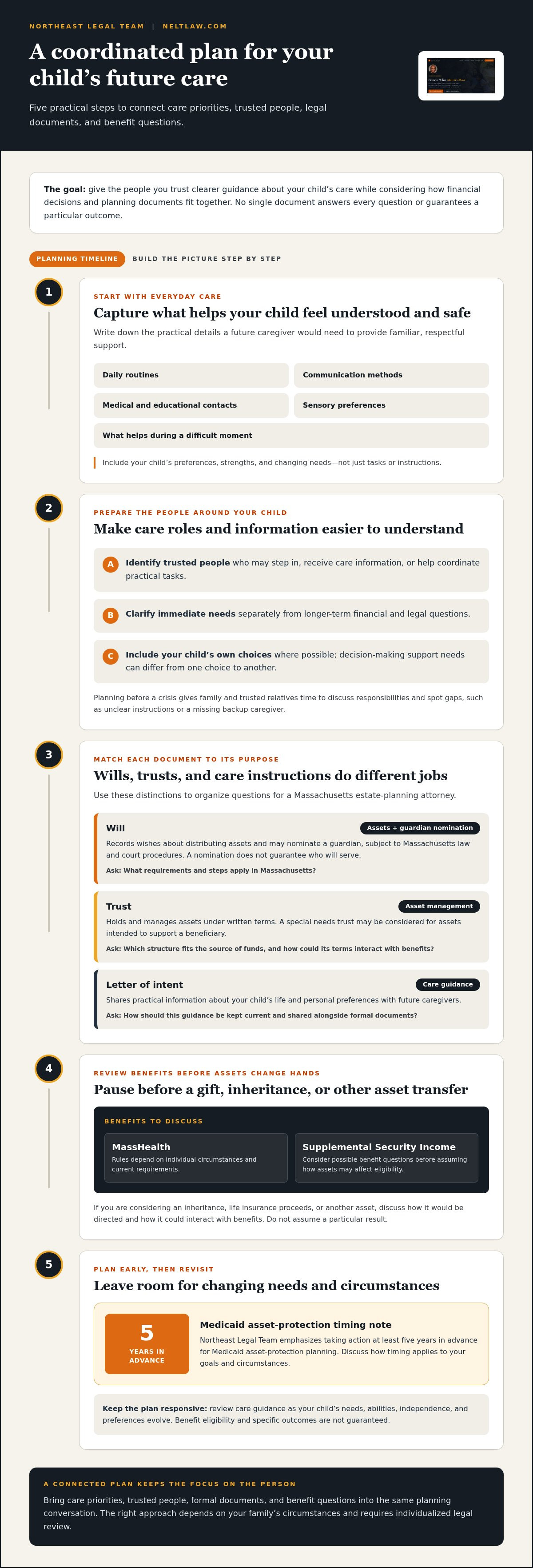
A practical family checklist for organizing future care
You don’t need to solve every legal question before you begin organizing information. Start with what a person stepping into your child’s routine would need to know, then make it easier for trusted people to find and understand. This preparation can help you spot missing details and have more focused conversations about protecting my special needs child's future.
What information should parents gather first?
Build a practical reference, not a set of legal documents. Include both support needs and the details that make your child who they are. Keep records in a place trusted people can access, and note where originals or updated information are stored. A future caregiver should be able to find routines, communication preferences, support needs, and key contacts without having to guess.
- Describe daily routines. Note meals, sleep, transitions, activities, and what helps your child feel comfortable. Include differences between weekdays, weekends, and other regular schedules.
- Record communication preferences. Explain how your child expresses needs, makes choices, or signals discomfort. Add helpful approaches, tools, or cues that caregivers may not recognize right away.
- Gather care and education details. Organize relevant provider, school, and care information, along with useful contact details and instructions for locating current records. Keep sensitive information accessible only to appropriate people.
- Include interests and strengths. List favorite activities, meaningful relationships, skills, and preferences, as well as support requirements. This helps a caregiver offer familiar choices rather than viewing care only as a list of tasks.
- Identify important contacts. Make a current contact list for family members and relevant care, education, and service providers. Note who should be contacted for different kinds of questions, if that guidance is useful.
How can families prepare trusted caregivers?
Choose a calm time to talk with relatives or other people you trust. Share your hopes for your child’s care, discuss possible responsibilities, and ask what each person feels able to take on. Don’t assume someone has agreed simply because they’re close to your family. A clear conversation gives everyone room to ask questions and identify backup contacts.
As your child’s needs and independence change, revisit the information and conversations. A familiar caregiver may be able to explain what works today, while a backup person may need a written starting point. If a will or other legal document includes a nomination, remember that a nomination alone doesn’t determine a legal appointment. Keep practical care notes distinct from documents that may establish legal authority.
For Medicaid asset-protection planning, use an early conversation to understand how timing applies to your family’s circumstances and goals.
Once you’ve organized these details, discuss your family’s special needs planning with Northeast Legal Team, including through a free consultation.
How Northeast Legal Team can help Massachusetts families plan
Planning for your child’s future is personal. Your family may be thinking about who can provide steady care, how to express healthcare wishes, or how an inheritance could interact with benefit programs. Northeast Legal Team helps Massachusetts families discuss estate planning and special needs planning in light of their priorities. The goal is to understand your circumstances and consider appropriate steps, not to promise a particular legal or benefits outcome.
What can families discuss in a free consultation?
A free consultation gives parents a place to describe their concerns and ask questions. You can discuss wills, trusts, long-term healthcare decisions, and Medicaid planning, including asset protection and qualification assistance. Recommendations depend on your family’s circumstances and applicable law, so sharing the details behind your concerns can make the conversation more useful.
It may help to bring a short list of questions, such as:
- What planning issues should we consider based on our child’s current and anticipated support needs?
- How should we think about a possible gift or inheritance alongside MassHealth or Supplemental Security Income?
- Which existing planning documents or care arrangements should be reviewed?
You don’t need to arrive with every answer. A conversation can help you identify which questions need further attention and how different parts of your plan relate.
What is a simple next step for Middlesex and Worcester County families?
Before meeting, gather any existing estate-planning documents and note the questions that feel most urgent. You might include your priorities for future care, concerns about benefits, or information you want a trusted family member to understand. A short list is enough to begin; you can add details as the conversation develops.
Northeast Legal Team serves Massachusetts families, including those in Middlesex and Worcester Counties, from its Burlington office. Families can discuss estate and special needs planning in a personalized, compassionate setting. Online bill pay for your convenience is available at Neltlaw.com, where clients can enter an invoice number and payment details.
If you’re ready to talk through protecting my special needs child's future, schedule a free consultation with Northeast Legal Team. Call 978‑406‑5409 to begin with the concern that matters most to your family.
Take one thoughtful step toward your child’s future
You don’t have to resolve every question at once. Choose one useful next step: write down the concern you most want addressed, gather any document or detail that may help explain it, and decide who in your family should be part of the conversation. That small beginning can make protecting my special needs child's future feel more manageable and help keep your child’s individual priorities at the center.
Northeast Legal Team offers personalized, compassionate estate planning guidance for Massachusetts families, with a free initial consultation for those considering what to do next. Bring your questions and discuss your family’s circumstances without needing to have a complete plan in hand. For Medicaid asset-protection planning, the firm’s guidance is clear: “It’s crucial to take action at least five years in advance to secure full protection.” How timing applies depends on individual circumstances, so discuss your situation rather than treating the statement as a guarantee.
Begin a conversation with Northeast Legal Team and take the next step at a pace that feels right for your family. Thoughtful preparation starts with one clear question.
Frequently Asked Questions
Can a special needs trust help protect my child’s eligibility for public benefits?
It may help families plan how certain assets are held and managed, but a special needs trust doesn’t automatically preserve eligibility. The trust’s terms, funding, and distributions can matter, as can the specific benefit program and current rules. For example, a family considering a relative’s bequest should get legal advice before deciding how it should be directed. Have the trust and benefit questions reviewed together under applicable Massachusetts and federal guidance.
What is the difference between a special needs trust and a letter of intent?
A special needs trust is a legal arrangement for holding and managing assets under written terms. A letter of intent is practical guidance for people involved in your child’s care, such as notes about how they communicate or what helps them feel settled. The letter doesn’t create legal authority or control trust funds. Families can keep it alongside formal documents and update it as their child’s preferences or support needs change.
Can my child inherit money without affecting MassHealth or Supplemental Security Income?
Possibly, but an inheritance can raise questions about MassHealth or Supplemental Security Income, and there’s no universal answer. The effect can depend on the program, the type of inheritance, how it’s received, and your child’s circumstances. Before accepting or redirecting an inheritance, gather information about the asset and your child’s benefits, then seek individualized guidance. Review current program rules rather than relying on a general example or an older explanation.
Who should I nominate as a guardian for my child with special needs?
Consider someone who understands your child, respects their preferences, and can realistically take on the responsibilities involved. A trusted relative may be a possibility, but closeness alone doesn’t mean the role is right for everyone. Talk openly about willingness, practical capacity, and who could serve as a backup. A nomination can communicate your wishes, but it doesn’t by itself determine who will be legally appointed. A Massachusetts attorney can explain how the process applies to your family.
When should I start planning for my special needs child’s future?
Start when you can make time for a thoughtful conversation, then revisit your plan as family circumstances or your child’s needs change. If you’re researching “protecting my special needs child's future,” you don’t need to have every answer before beginning. For Medicaid asset-protection planning, Northeast Legal Team states: “It’s crucial to take action at least five years in advance to secure full protection.” Discuss how the guidance applies to your circumstances rather than treating it as a universal deadline or guaranteed result.
Does a special needs trust replace a will or other estate planning documents?
No. A trust addresses how assets placed in it are managed under its terms, while other estate-planning documents address different matters. For instance, a family may need to consider what happens to assets not transferred into a trust and how healthcare wishes are expressed. Review the documents together so they reflect the family’s intentions. Which documents are appropriate depends on individual circumstances and Massachusetts law.
How can a Massachusetts attorney help with special needs planning?
A Massachusetts attorney can help connect your family’s priorities with estate-planning choices and discuss questions about trusts, healthcare decisions, and Medicaid planning. Northeast Legal Team offers special needs planning and Medicaid asset-protection and qualification assistance tailored to a family’s circumstances, without promising a particular benefit or legal outcome. Families in Middlesex and Worcester Counties can schedule a free consultation to discuss their questions and possible next steps.


