

What if the liability boundary you’re counting on helps separate business risks but doesn’t decide what happens to your ownership if you can no longer manage it? If you’re researching an “LLC for asset protection Webster MA” strategy, you may want to understand how a business or rental-property claim could affect assets you rely on at home. An LLC can serve an important purpose, but it isn’t a guarantee against every claim or loss.
The key is to understand what an LLC may help separate and where its limits matter. This article explains the practical role of an LLC, circumstances that can complicate its liability boundary, and why ownership details deserve careful attention.
You’ll also see how LLC-only planning compares with coordinating business ownership with wills, living trusts, incapacity documents, and succession planning. That broader view can help you consider not only liability, but also how your business interests may pass to loved ones. Northeast Legal Team serves individuals and families in Worcester and Middlesex counties, including Webster-area owners, with estate planning and asset protection strategies.
Key Takeaways
- An LLC can help separate business obligations from personal affairs, but the liability boundary has limits.
- Personal guarantees, individual conduct, and mixed personal and business finances may complicate that separation.
- Compare LLC-only ownership with trust ownership and broader estate planning to see how each approach may support different goals.
- For an LLC for asset protection Webster MA plan, gather ownership details, business documents, insurance information, and existing estate records for review.
- Coordinating business succession, trusts, and incapacity planning can connect liability planning with family continuity.
Considering an LLC for Asset Protection in Webster, MA? Start with the Goal
If you own a small business or rental property in Webster, it’s natural to wonder whether a business claim could reach assets you rely on at home. An LLC, short for limited liability company, is a legal business structure that can help separate the company’s obligations from an owner’s personal affairs. That separation is a planning purpose, not a promise that personal assets can never be affected. The details, conduct, and applicable law matter.
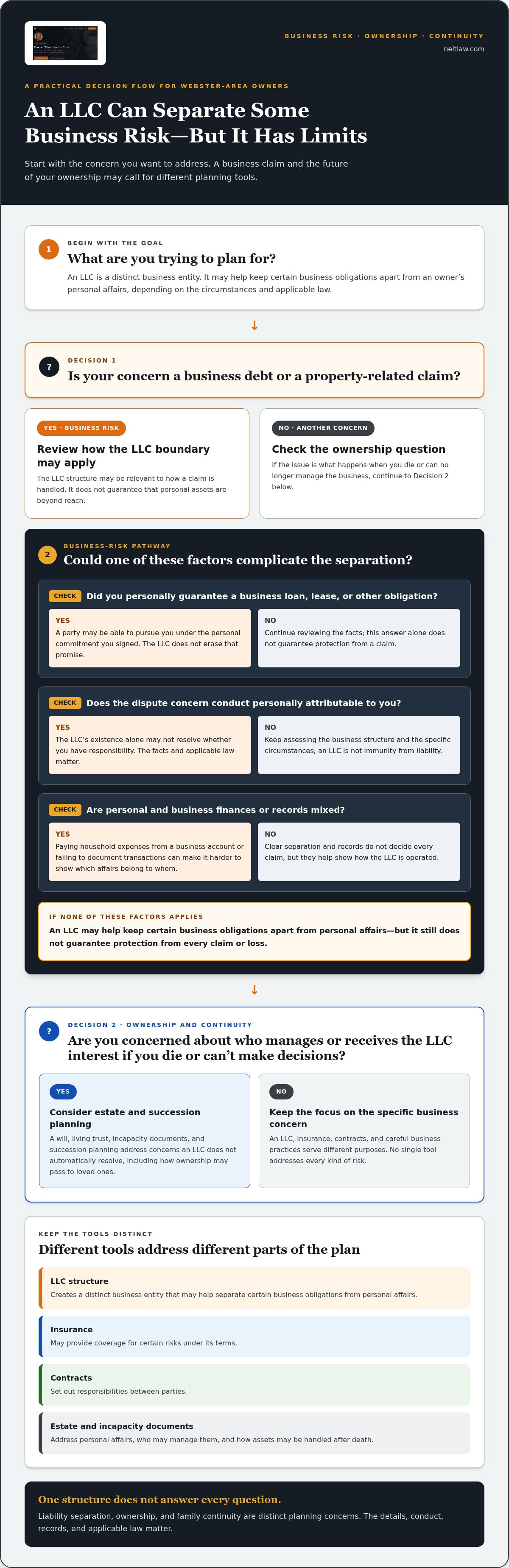
If you’re considering an LLC for asset protection Webster MA, start by naming the concern. Is it a business debt, a property-related claim, or what happens to ownership if you die or become unable to manage the business? These concerns may call for different planning tools.
What does an LLC do for a Webster business or property owner?
An LLC creates a distinct business entity. In practical terms, the business can hold property, enter agreements, and conduct operations in its own name, separate from its owners. Depending on the circumstances and applicable law, that structure may help keep certain business obligations apart from an owner’s personal assets.
Imagine a Worcester County owner who places a rental property in an LLC and operates it through that entity. If a dispute arises from the property, the LLC structure may be relevant to how the claim is handled. It doesn’t guarantee that the owner’s personal assets are beyond reach, and it doesn’t replace careful operations or an individualized legal review.
An LLC serves a different role from insurance and contracts. Insurance may provide coverage for certain risks under its terms, while contracts set out responsibilities between parties. The LLC establishes a business structure. Personal estate documents, such as a will or power of attorney, address other concerns, including who may manage personal affairs or how assets are handled after death.
What does “asset protection” mean in this context?
Here, asset protection means planning with the goal of managing exposure tied to business activity or property ownership. It’s one part of a wider risk-management picture, not a single document that addresses every kind of risk. A general overview of asset protection planning can help explain how legal structures and trusts may fit into that broader picture.
An LLC is a planning tool, not immunity from liability. It doesn’t determine every claim’s outcome, replace insurance, or automatically pass ownership to family members. Estate and succession planning address what may happen to an LLC interest if an owner dies or can’t make decisions. Trust planning and probate considerations may also be relevant, depending on ownership and the owner’s goals.
Keeping these purposes distinct can clarify the next step: understand the LLC’s role in business risk, then consider how ownership fits into your family’s long-term plan. A personalized review can connect those questions without assuming one tool does everything.
How LLC Liability Separation Works, and Where Its Limits Matter
An LLC is intended to keep some business obligations separate from an owner’s personal affairs. That boundary may matter if a claim arises from company activity, but it isn’t automatic protection in every dispute. The agreement, ownership, conduct, and facts behind a claim can all affect the analysis. For a Webster owner, understanding those limits helps set realistic expectations before relying on an LLC as part of an asset protection plan.
Which situations can complicate an LLC liability boundary?
A personal guarantee is one example. If an owner separately agrees to be personally responsible for a business loan, lease, or other obligation, the lender or other party may be able to pursue the owner under that commitment. The LLC doesn’t erase a promise the owner signed in an individual capacity. Review what you’ve signed and who is named as responsible before assuming a business obligation belongs only to the company.
An owner’s own actions can matter, too. If a dispute concerns conduct personally attributable to an owner, the LLC’s existence alone may not resolve whether that person has responsibility. The facts of the event and applicable law shape that question. A business structure isn’t a substitute for acting carefully and meeting relevant obligations.
Records and financial habits deserve attention. Using a business account to pay household expenses, for example, or failing to document transactions between an owner and the company can make it harder to show which affairs belong to whom. These circumstances don’t automatically decide the outcome of a claim. They are reasons to review how the LLC is operated and what records are kept with legal counsel familiar with Massachusetts law.
Tax classification is a separate issue from liability separation. The IRS explains federal LLC tax treatment in its IRS guidelines for LLCs. Those tax rules don’t answer whether a particular owner is protected from a particular claim. Keep the questions distinct when reviewing your structure.
Why is an LLC not a complete asset-protection plan?
An LLC can’t make an existing personal obligation disappear or guarantee protection from every future claim. It also doesn’t replace insurance, clear written contracts, or sound business practices. Each addresses a different concern: insurance may respond to covered losses under its terms, contracts can clarify responsibilities, and everyday practices can help reduce avoidable disputes. Which steps make sense depends on the business and its risks.
Liability separation creates a boundary to plan around, not an absolute shield against claims. A practical review asks whether the business and its records reflect the intended separation, whether the owner has signed personal commitments, and what other risk-management measures are in place. It should also consider how ownership fits into the owner’s broader plans, rather than treating the LLC as the entire plan.
If you’re weighing an LLC for asset protection Webster MA, an individualized review can help distinguish business exposure from personal commitments and identify questions that need closer attention. Northeast Legal Team can discuss how asset protection planning relates to your circumstances and wider family goals.
LLC Alone or LLC Owned by a Trust? Compare the Planning Goals
An LLC and a trust can serve different goals. The LLC provides a structure for owning and operating a business; a trust may help organize who holds an LLC interest and how it is managed or transferred under an estate plan. One doesn’t automatically replace the other. For an owner considering an LLC for asset protection Webster MA, the useful comparison is not simply which option is “safer,” but which planning questions need answers.
| Approach | Main purpose | Ownership and review questions |
|---|---|---|
| LLC-only ownership | Organize business or property ownership through the LLC. | Who owns the membership interest? What does the operating agreement say about management, transfers, and an owner’s departure? |
| Trust holds an LLC interest | Coordinate the ownership interest with trust and estate-planning goals. | Does the trust’s language fit the owner’s intentions? How do the operating agreement, co-owners, transfer terms, and tax considerations affect the arrangement? |
| Broader estate planning | Address business ownership alongside family, incapacity, inheritance, and succession goals. | How do the LLC interest, will, trust, power of attorney, and succession wishes work together? Which documents need individual review? |
When might an owner consider trust ownership of an LLC interest?
An owner may consider having a trust hold some or all of their LLC membership interest as part of a plan for managing or transferring that interest. The trust’s role is distinct from the LLC’s, and the arrangement doesn’t guarantee that probate will be avoided in every situation. The trust terms, ownership records, operating agreement, co-owner rights, tax implications, and transfer limits all deserve individualized review. Trust-based planning can serve different purposes, as discussed in these Massachusetts asset protection planning strategies.
How do succession and incapacity goals change the comparison?
Ownership planning should consider more than what happens after death. If an owner can’t make decisions, the documents and agreements in place may affect who can act, what authority they have, and how the business continues. A trust may address management or transfer intentions, while a power of attorney and the LLC’s governing documents raise separate questions. The right fit depends on the owner’s wishes and business structure.
For a family-run business, clarify who should participate in future decisions and how the owner’s interest should be handled. Include those goals in a coordinated plan rather than relying on assumptions. Business succession planning in Massachusetts focuses on continuity, while estate planning connects that continuity with family priorities and ownership documents.
A Webster, MA Decision Checklist for LLC Asset Protection Planning
A useful planning conversation starts with a clear picture of what you own, how it’s owned, and what you want to protect. For a Webster business or property owner, the same review can connect LLC questions with family priorities and long-term continuity. Use this checklist to organize the facts before deciding what deserves closer legal attention.
What should a Webster owner gather before a planning conversation?
Collect records that show how the business is structured and how its ownership works. Include existing estate documents, since the LLC interest may be part of a larger plan for incapacity, inheritance, or business succession. If you’re in Worcester County, the same preparation can make a local planning discussion more focused without assuming that Webster has separate LLC rules.
- Describe the business, property, and people involved. Note whether the LLC operates a business, owns rental property, or serves another purpose. List each owner and summarize your main concern, such as a business-related claim, property exposure, or what should happen to your interest in the future.
- Gather LLC and ownership records. Bring formation documents, the current operating agreement, ownership records, and any amendments. Note how decisions are made and whether the agreement discusses transfers, a co-owner’s departure, or what happens if an owner dies or becomes unable to act.
- Collect related financial and business documents. Include relevant contracts, loan documents, and information about any personal guarantees. Gather insurance policies or coverage summaries, along with records that help show how business and personal finances are handled.
- Bring your estate-planning documents. Set aside your will, living trust, power of attorney, and other relevant planning records. Note beneficiary designations where they may relate to your goals. These documents can help show whether your current plans address the LLC interest and who may act if you can’t.
- Write down the outcome you want. Clarify whether your priority is managing business-related exposure, keeping operations going, transferring an interest to family, or coordinating several goals. A short list helps distinguish what an LLC addresses from questions that may call for estate or succession planning.
Which questions help clarify the right planning direction?
Use your documents to identify the questions that matter most. Does a concern arise from business operations, property ownership, a contract, or a personal commitment? Do the operating agreement and other documents reflect how you expect decisions and ownership to work? Are there co-owners or transfer terms that affect your plans?
Then consider continuity. If you couldn’t manage the business, who should be able to act, and what authority would they need? If you died, how would you want your ownership interest handled? Your answers can help shape a coordinated review of business ownership and family priorities.
You don’t need to resolve every question before getting guidance. Schedule a free consultation with Northeast Legal Team to discuss your LLC, existing documents, and planning goals.
Coordinate LLC and Estate Planning with Northeast Legal Team
Understanding an LLC’s liability boundary is only part of the decision. You may also want to know how your ownership interest fits into your will, whether a living trust supports your plans, and who could help manage business affairs if you became unable to act. Northeast Legal Team brings estate planning, asset protection strategies, and business succession planning into the same conversation, so business concerns can be considered alongside family priorities.
What can a coordinated planning conversation address?
A review can begin with how the LLC is owned and what your existing documents say. Your will, living trust, and power of attorney each address different planning needs. Looking at them together may help identify questions about who can make decisions, how an ownership interest should be handled, and whether your current documents reflect your wishes.
The discussion can also consider continuity. If you share ownership, what role should co-owners have if you can’t participate? If family members or future beneficiaries may receive an interest, how do your documents and business arrangements relate to that intention? These are personal questions, and the answers depend on your circumstances, the documents in place, and applicable Massachusetts law.
This kind of planning focuses on coordinating an LLC with your wider estate plan. It doesn’t promise a particular legal outcome or assume that one structure suits every owner. For someone considering an LLC for asset protection Webster MA, personalized guidance can help separate questions about business risk from those about family, management, and inheritance.
How to take the next step in Webster
Start with what you already have. Bring your LLC ownership details, operating agreement, relevant contracts, insurance information, and current estate-planning documents. If some records are missing, begin with the questions that concern you most. A conversation can help organize the issues and identify which parts of your plan may need closer attention.
Northeast Legal Team offers a free consultation or assessment to discuss your circumstances and provide personalized recommendations. Webster-area owners can use that time to talk through their concerns, family priorities, and existing documents without needing every answer prepared in advance.
Whether your immediate concern is a business or rental-property risk, future management, or how an ownership interest may pass to loved ones, a thoughtful review can help you consider the next step. Schedule your free consultation with Northeast Legal Team to discuss coordinating your LLC and estate-planning goals.
Make Your Next Planning Step a Clear One
Choosing whether to pursue an LLC for asset protection Webster MA is not only a question about business structure. It’s also a chance to clarify who should have a role in the business and how your plans may support the people you care about. You don’t need to have every answer before taking the next step.
Bring your questions and current documents to a conversation focused on your circumstances. Northeast Legal Team offers estate planning, asset protection strategies, and business succession planning. A review can consider how living trusts and other planning tools relate to your goals, ownership, family priorities, and applicable Massachusetts law.
A free consultation or assessment offers a place to start without pressure to settle every decision at once. Schedule a free consultation with Northeast Legal Team to discuss a plan that feels clearer and more connected to your future.
Frequently Asked Questions
Can an LLC protect my personal assets in Massachusetts?
An LLC may help separate certain business obligations from an owner’s personal affairs, but it isn’t a complete shield. A personal guarantee, an owner’s own conduct, an existing obligation, or the details of a dispute can affect the analysis, as can Massachusetts law. For an LLC for asset protection Webster MA, review ownership and business documents together rather than relying on the company name alone. Individual advice can help clarify how the facts apply.
Is an LLC enough to protect a Webster rental property?
No single ownership structure guarantees that every personal asset is protected from every property-related claim. Consider the property’s title, financing documents, insurance, and how income and expenses are recorded. For example, if a mortgage or insurance policy names an owner personally, those details may raise questions separate from the LLC itself. A Webster property owner can review those records alongside estate-planning goals to understand whether the current arrangement fits the broader plan.
Can I transfer my Massachusetts home into an LLC?
Possibly, but don’t transfer a home based only on a general online rule. A title change may affect mortgage terms, insurance, taxes, ownership arrangements, and estate plans. Before taking action, gather the deed, loan documents, insurance information, and relevant estate records. An attorney can assess how those details interact under applicable rules and whether a proposed transfer fits your circumstances. Reviewing the details first can help you avoid unintended complications.
What happens if I create an LLC after a claim has already arisen?
Creating an LLC or moving property after a dispute begins may not protect assets from an existing obligation and can raise serious legal concerns. Don’t transfer ownership or move assets to avoid a known claim without first getting individualized legal advice. Write down when the issue arose, what documents or notices you received, and what assets or agreements are involved. Those facts can help an attorney assess the situation before you take further steps.
Do I need a separate LLC for each rental property?
There’s no universal answer. The right structure depends on the properties and your priorities. Compare the potential liability-planning goals with the work of maintaining separate ownership and records, along with financing, insurance, co-owners, and future transfer plans. Properties with different owners or financing arrangements, for instance, may raise different questions. If you own multiple properties in Webster, map out each property’s title and obligations before deciding whether one structure fits them all.
Can a trust own my LLC interest in Massachusetts?
A trust may hold an LLC membership interest for estate-planning or continuity purposes, but the arrangement needs coordinated review. The trust document, operating agreement, co-owner arrangements, and tax questions may affect how the interest is handled. Trust ownership doesn’t automatically change the LLC’s liability protections or ensure a particular result. Compare the trust’s goals with the LLC’s ownership and transfer provisions, then get advice based on the documents and applicable Massachusetts law.
Does an LLC protect assets from nursing home costs?
An LLC, by itself, isn’t a general solution for long-term-care planning or eligibility for public benefits. Those questions involve different planning considerations, and timing and personal circumstances can matter. Avoid transferring property based on assumptions about benefits or asset protection. Instead, make a complete list of assets, ownership arrangements, and existing estate documents, then discuss your concerns with an attorney. Northeast Legal Team serves clients in Worcester and Middlesex counties, including Webster-area families.


