

If you’re considering naming a guardian in a will in Massachusetts, you can nominate someone you trust to care for your child if you’re no longer able to. That nomination makes your wishes known, but it doesn’t guarantee the court will appoint your choice. Understanding the difference can help you plan with realistic expectations.
It can be difficult to choose, especially when several relatives or friends could offer your child a loving home. You may also wonder whether the person who raises your child should manage their money or property. These are related decisions, but they don’t have to be assigned to the same person.
This guide explains what a guardian nomination can and can’t do, how Massachusetts courts consider a parent’s choice, and what to weigh when naming a first choice and an alternate. You’ll also learn how guardianship differs from managing a child’s assets and what to discuss when creating or updating your estate plan. Use these points to organize your priorities and prepare practical questions for a legal consultation.
Key Takeaways
- Learn what naming a guardian in a will in Massachusetts involves and how a nomination fits into the court’s review.
- Compare potential guardians by your child’s needs, each person’s capacity, values, location, and available support.
- Use a clear planning sequence to discuss candidates, document your choices, and revisit them as family circumstances change.
- An estate planning attorney can review your guardian nomination alongside your will, trusts, and related documents, but can’t promise a court outcome.
What Naming a Guardian in a Massachusetts Will Means
Parents often want to put one important choice in writing: who they trust to care for their child if they die while the child is still a minor. Thinking about that possibility can be difficult, but recording your wishes can give your family and the court useful guidance during a stressful time.
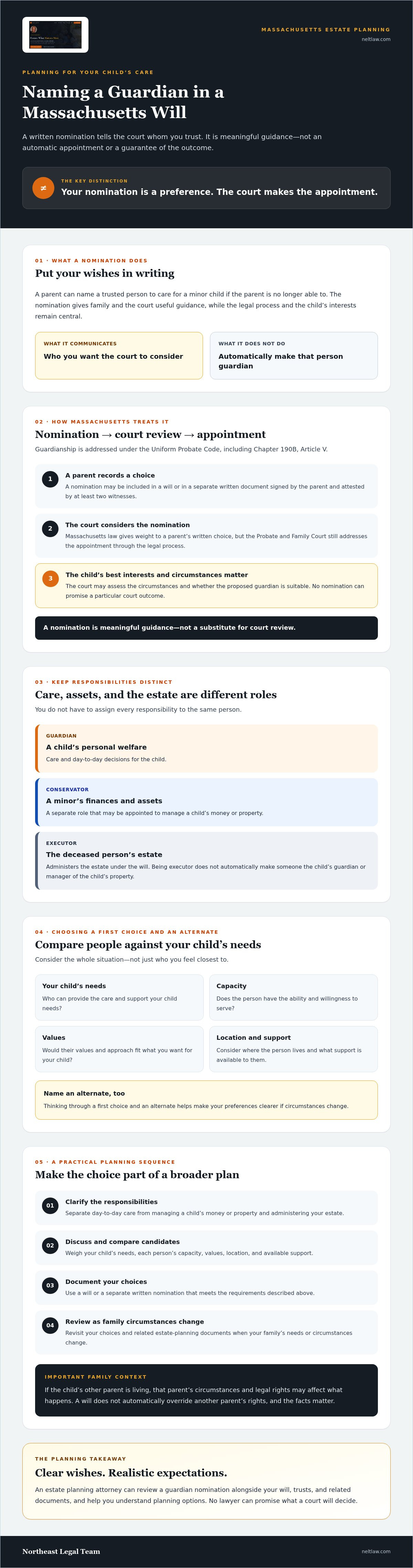
In Massachusetts, a guardian nomination is a parent’s stated choice of a person to care for a minor child, usually made in a will, for the court to consider when deciding whom to appoint. Massachusetts law addresses guardianship under the Uniform Probate Code, including Chapter 190B, Article V. A nomination communicates your preference; it is not a court appointment and does not guarantee a particular outcome. The court’s process and the child’s interests matter. If you’re researching “naming a guardian in a will Massachusetts,” keep that distinction in mind.
Who may need a guardian nomination?
Parents of minor children may want to plan for unexpected circumstances, including the possibility that neither parent can care for the child. The right plan depends on the family. If another parent survives, that parent’s circumstances and legal rights may affect what happens, so a nomination shouldn’t be treated as an automatic replacement. Families with different parenting arrangements or other individual circumstances may benefit from tailored legal guidance.
Guardian of a child versus manager of a child’s property
A guardian’s role concerns a child’s personal welfare, including care and day-to-day decisions. The general concept of a legal guardian can help clarify that role, though Massachusetts law governs local appointments. Managing money or property is a separate concern. Massachusetts law distinguishes a guardian from a conservator, who may be appointed to manage a minor’s finances and assets. Depending on what a child may receive and how it is held, you may want to discuss separate arrangements with an estate planning attorney.
An executor has a different job: administering the deceased person’s estate under the will. Being named executor doesn’t automatically make someone the child’s guardian or give them responsibility for managing the child’s property. Keeping these roles distinct can help you match each responsibility to a person with the appropriate abilities and willingness to serve.
Why the nomination is only one part of planning
A nomination is one part of a family’s plan. When considering “naming a guardian in a will Massachusetts,” think about both the person you trust and the legal process that follows. The court reviews the circumstances rather than treating the nomination as a final appointment. A will can communicate your choice, while related planning documents may address how assets are handled for your child. Reviewing these pieces together can clarify your wishes and help you identify questions to resolve as your family’s needs change.
How Massachusetts Law Treats a Guardian Named in a Will
Massachusetts addresses guardianship under the Uniform Probate Code, including Chapter 190B, Article V. A parent may nominate someone to serve as guardian of a minor child in a will or in a separate written document signed by the parent and attested by at least two witnesses. The nomination has legal significance, but it doesn’t make that person the guardian automatically. The Massachusetts law about guardianship page links to state statutes and practical court resources.
A parental nomination records whom a parent wants the court to consider, while a court appointment is the legal decision that authorizes someone to serve as the child’s guardian. That distinction matters: naming a guardian in a will in Massachusetts communicates your wishes, but it doesn’t guarantee that your nominee will be appointed. The court still has a role in the process.
Does the court have to appoint the person named?
No nomination can promise a particular court outcome. Massachusetts law gives weight to a parent’s written choice, but the Probate and Family Court must still address the appointment through the legal process and consider the child’s best interests. The court may need to assess the circumstances and whether the proposed guardian is suitable. Your nomination is meaningful guidance, not a substitute for that review.
That balance is why both a considered choice and clear, valid documentation matter. For current statutes and related resources, consult the state’s guidance or ask an estate planning attorney to review your documents. A lawyer can explain planning options, but can’t guarantee what a court will decide.
What if the child’s other parent is living?
A surviving parent’s circumstances may affect the court’s analysis. A will doesn’t automatically override another parent’s rights or determine the outcome in every family situation. The facts matter. Disagreement, safety concerns, or unusual family circumstances call for individualized legal advice. If you’re concerned about how your family’s situation may be considered, discuss the details with an attorney.
These rules can feel less certain than parents hope, but making your wishes clear is still a practical step. As part of your Massachusetts estate planning, an attorney can review the nomination alongside your will and related documents, then help identify questions that may need attention.
How to Choose the Right Guardian for Your Child
You may have several people you love and trust, but the best fit depends on your child and each person’s real-life capacity. A close family relationship or financial comfort alone doesn’t show how someone would manage caregiving, routines, or a major family transition.
Use these questions to compare candidates, not to create a universal ranking:
| Consider | Questions to ask |
|---|---|
| Your child’s needs | Who understands your child’s personality, health needs, routines, and important relationships? |
| Candidate’s capacity | Does this person have the time, health, and practical ability to take on caregiving? |
| Values and approach | Would their approach to education, discipline, healthcare, and daily life feel compatible with your hopes? |
| Location | How might a move affect school, siblings, activities, and nearby support? |
| Support network | Who could help the candidate, and would your child stay connected with trusted relatives and friends? |
Which qualities matter when choosing a guardian?
Think beyond who knows your child best today. Consider whether the person can offer stability over time and preserve your child’s important connections, including relationships with siblings, school, and supportive relatives. A candidate’s caregiving style and availability may matter as much as affection. Before naming anyone, talk openly about the responsibility, your child’s needs, and practical questions such as where your child might live. The person’s willingness matters, too.
Choose someone who understands your child, has the capacity to provide steady care, shares your core priorities, and can help preserve the relationships and routines that support your child.
Should you name an alternate guardian?
A first-choice candidate may later become unable or unwilling to serve, so naming an alternate can make your plan more resilient. Ask each person directly whether they’re willing to be considered, and revisit the conversation if circumstances change. Searchers looking for “naming a guardian in a will Massachusetts” may start with the document, but thoughtful choices start with the people and the child’s needs.
Review your choices after major family or health changes, such as a move, a change in a candidate’s capacity, or a shift in your child’s needs. If the person you named is no longer a good fit, update your estate plan with appropriate legal guidance rather than relying on an old document.
Steps to Include a Guardian Nomination in Your Massachusetts Estate Plan
A clear plan starts with family priorities, not paperwork. Before naming a guardian in a will in Massachusetts, consider what would help your child feel supported and which trusted people may be able to provide that care. Then work through these steps:
- Identify your priorities. Note the care, routines, relationships, and values you hope a guardian will preserve.
- Discuss candidates. Talk with your preferred person and an alternate about the responsibility, their willingness, and practical questions such as location and availability.
- Document your choices. Gather your existing will and related estate documents, then ask an attorney how to record your nomination appropriately under current Massachusetts law.
- Review the full plan. Check that your will and other planning documents work together and still reflect your family’s wishes.
A will is an important piece, but it may not address every planning concern. Your estate plan may also include a trust or documents that address financial or healthcare decisions for you. Coordinating these documents can help clarify how your wishes fit together. If you’re comparing planning costs, read this guide to estate planning attorney flat fees. If you’re weighing professional support, this guide to choosing an estate attorney offers questions to consider.
What information should parents prepare?
Bring a short list of potential guardians and alternates, along with questions about whether each person is willing to serve. Note your child’s care needs, daily routines, school or community connections, and important relationships, including siblings and supportive relatives. Gather your current will and any relevant estate documents, such as trust or healthcare planning documents. This information gives the attorney a clearer picture of what you want your plan to accomplish.
When should you review or update the nomination?
Revisit your choices after a move, a change in family relationships, a change in your child’s needs, or a shift in a candidate’s health, availability, or circumstances. If your preferred person can no longer serve, update your plan rather than assuming an older document still reflects your wishes. Ask an attorney how to make changes formally under current Massachusetts requirements.
If you’re ready to discuss how a guardian nomination fits your family’s documents, talk with an estate planning attorney about your circumstances and questions.
Plan Your Guardian Nomination With a Massachusetts Estate Planning Attorney
A guardian nomination is personal, and its effect depends on your family’s circumstances and properly prepared documents. An estate planning attorney can review your will alongside trusts and other relevant planning documents, explain how they work together, and help identify questions to resolve. This support can make it easier to express your wishes clearly, but no lawyer can promise that a court will appoint a particular person.
Parents searching “naming a guardian in a will Massachusetts” may also need to consider who would manage a child’s property and how an existing plan addresses that responsibility. An attorney can discuss possible approaches based on your situation rather than assuming one arrangement fits every family.
Questions to bring to an estate planning consultation
A short list can help you make good use of a planning conversation. Consider asking:
- How might the nomination be considered if my child’s other parent is living?
- Could my child’s property require planning separate from the guardian nomination?
- How should I document an alternate choice, and how can I keep the plan current?
- Do my will, trusts, or other estate planning documents need to be reviewed together?
Bring your existing will and relevant estate documents if you have them. You can also note your preferred guardian and alternate, questions about their willingness to serve, and the family circumstances you want the attorney to understand.
A calm next step for your family
You don’t need every answer before starting. Identifying your priorities and writing down your questions is a useful first step. Northeast Legal Team provides Massachusetts estate planning services, including wills, trusts, powers of attorney, and healthcare directives, and offers a free consultation or assessment to discuss your circumstances and planning questions.
If you live in Middlesex or Worcester County, you’re invited to discuss how a guardian nomination may fit into your broader estate plan. A conversation can help you understand what to review and what questions may call for further attention, without promising a particular court decision.
Take a Thoughtful Next Step for Your Child
Naming a guardian in a will in Massachusetts lets you express whom you trust to care for your child, but it doesn’t guarantee the court will appoint that person. Your nomination is one part of a larger decision. Consider your child’s needs, discuss the responsibility with your chosen person and alternate, and review the nomination as family circumstances change.
It’s also helpful to coordinate your will with the rest of your estate plan. An estate planning attorney can review how your documents fit together, discuss questions about a surviving parent or your child’s property, and explain options for your circumstances without promising a court outcome.
Northeast Legal Team offers flat-fee estate planning services and a free consultation or assessment without obligation. Parents in Middlesex and Worcester counties can use that conversation to discuss their family’s situation and identify next steps. Schedule a free consultation or assessment about estate planning, and take the process one clear decision at a time. Thoughtful planning can help make your wishes easier for loved ones to understand.
Frequently Asked Questions
Can I name a guardian for my child in my Massachusetts will?
Yes, a parent may nominate a guardian for a minor child in a Massachusetts will, subject to the law and court process. A nomination records your choice; it isn’t itself a court appointment. The requirements and effect can depend on the document and your family’s circumstances, so confirm current rules with a Massachusetts estate planning attorney. That’s especially helpful if another parent is living or you expect disagreement about who should care for your child.
Does a Massachusetts court have to appoint the guardian named in my will?
No. Naming someone doesn’t guarantee that person will serve. The court has a role in making an appointment, and the child’s circumstances and applicable Massachusetts law matter. A parent’s nomination can communicate an important preference, but it doesn’t decide the outcome on its own. Treat the nomination as a meaningful planning step, not a promise. Seek legal advice about contested or unusual circumstances.
What happens if my child’s other parent is still alive when I die?
The other parent’s circumstances and legal rights may affect what happens, so naming someone else in your will doesn’t automatically displace that parent. The result depends on the facts and current Massachusetts law, and it can’t be determined from a general rule alone. If you have concerns about safety, caregiving fitness, or family conflict, speak with a Massachusetts attorney about your specific situation and the options available.
Can I name more than one guardian or an alternate guardian?
You can consider naming a preferred candidate and a backup, but ask an attorney to confirm how the document should express your choices and what effect it may have under Massachusetts law. Naming multiple people doesn’t necessarily mean they’ll share caregiving or be appointed together. Talk with each candidate in advance about willingness, availability, and practical expectations. A conversation now can help you choose people who understand the responsibility.
Is a guardian responsible for managing my child’s money, too?
Not automatically. Caring for a child and managing the child’s property can involve separate responsibilities. A guardian nominated for personal care isn’t necessarily the right person to handle every financial matter. The appropriate arrangement depends on the child’s property, your estate documents, and Massachusetts law. Ask an estate planning attorney whether separate property-management planning may be appropriate and how it could coordinate with your will or trust.
Can I change the guardian named in my will later?
You may need to revisit your estate plan if your family circumstances change or a chosen candidate is no longer able or willing to serve. Don’t rely on informal edits or assume a particular change will be valid. Ask a Massachusetts estate planning attorney how to update your will properly under current requirements. It’s also a good time to review connected documents so your broader plan continues to reflect your wishes.
Do I need a lawyer to name a guardian in a Massachusetts will?
Whether legal representation is required depends on current Massachusetts law and the way you prepare the document, so confirm the requirements before acting. An attorney can explain the nomination process, coordinate it with your will, trusts, and related planning, and help address family-specific questions. Guidance may be particularly useful if another parent’s rights are involved, parents disagree, or your child has specific care needs. Northeast Legal Team offers a free consultation or assessment for families in Middlesex and Worcester counties.


