

What if the lowest quote leads to a plan that doesn’t match what you’re trying to protect? The asset protection trust cost depends on more than the document. The trust’s purpose, the assets involved, the work needed to fund it, and possible ongoing administration can all affect the total commitment.
It’s understandable to want a clear price before deciding. But different trusts serve different purposes, and a low-cost quote may not include the guidance or follow-through you need. In Massachusetts, the distinction matters: a revocable living trust generally doesn’t protect your assets from creditors during your lifetime, while an irrevocable trust may involve meaningful changes to your control over those assets.
This guide explains what can affect a trust’s setup and upkeep, what to ask about when reviewing a legal fee, and how to compare proposals. It also covers why transferring assets without understanding the legal and financial consequences can create new concerns, and why Massachusetts-specific advice matters. No trust can promise guaranteed protection, but clear guidance can help you make a more informed choice for your family.
Key Takeaways
- The asset protection trust cost depends on the plan’s scope, asset transfers, and possible ongoing administration, not just the trust document.
- Compare trust options by their purpose and the control they leave you, then consider how your assets may affect the work involved.
- Ask each attorney what the quote includes and excludes, and what funding support and follow-up it provides, before comparing proposals.
- Separate one-time legal work from potential future trustee, tax, accounting, or asset-management expenses.
- Prepare your goals, asset and ownership details, and family needs before seeking an estimate. Northeast Legal Team offers a free consultation or assessment without obligation.
MA Asset Protection Trusts: Cost and Purpose
An asset protection trust is a legal arrangement intended to manage assets in ways that may help address particular risks. The name alone doesn’t tell you what the trust does, which assets it covers, or how much legal work it takes to create and maintain. This Asset-protection trust overview provides general background, but Massachusetts law and your circumstances determine what planning may be appropriate.
Asset protection planning isn’t the same as probate avoidance or tax planning. Those may be separate goals, and one trust may not meet every need. Planning related to long-term care and MassHealth eligibility raises distinct questions about asset transfers and current program rules. No trust defeats every creditor claim or guarantees a particular legal or tax result. In Massachusetts, a self-settled asset protection trust created under state law won’t, on its own, shield the creator’s assets from creditors. Whether a trust is suitable depends on your goals, financial picture, timing, and applicable law.
What is an asset protection trust meant to accomplish?
The phrase can refer to different planning approaches. Some families want to manage exposure to certain risks; others are considering long-term care, probate, or tax questions. These goals aren’t interchangeable. Before discussing a document, identify the concern you want to address and ask an attorney how the proposed trust relates to that goal, including its limits and potential consequences.
Why can two trust quotes cover different work?
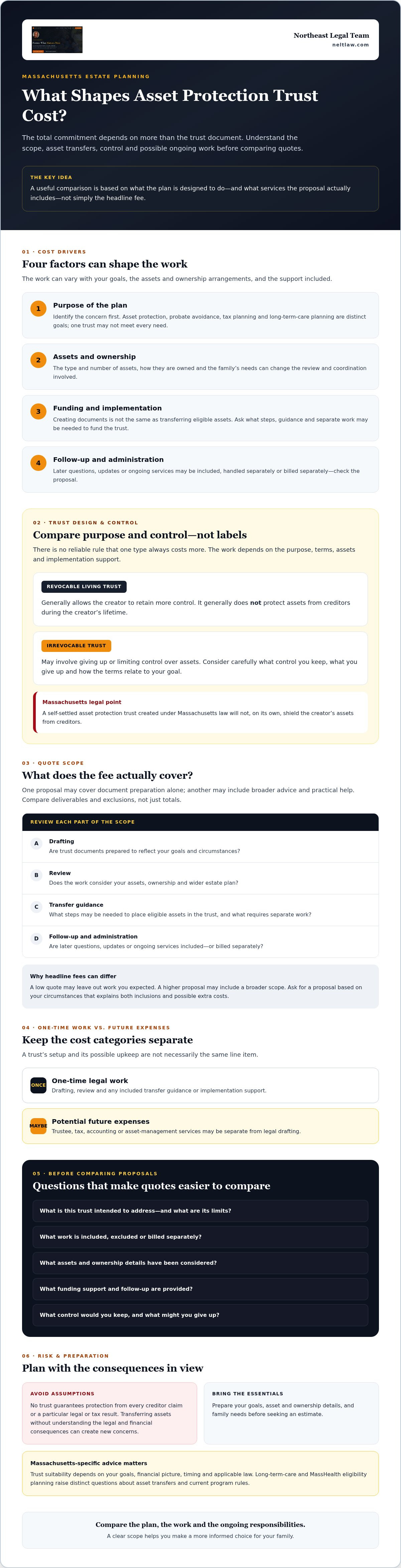
A quote may cover document preparation alone, or it may include broader advice and practical help. Ask whether the proposed scope includes:
- Drafting: Preparing trust documents to reflect your goals and circumstances.
- Review: Considering your assets, how they’re owned, and whether the plan fits your wider estate plan.
- Transfer guidance: Explaining what steps may be needed to place eligible assets into the trust and what requires separate work.
- Follow-up and administration: Clarifying whether later questions, updates, or ongoing services are included or billed separately.
The work can vary with the type and number of assets, ownership arrangements, family needs, and professionals involved. For example, reviewing a home, business interests, and financial accounts may require different coordination than preparing documents without reviewing assets. Trustee, tax, accounting, or asset-management services may also be separate from legal drafting.
A low headline fee may leave out work you expected, while a higher proposal may cover a broader scope. Compare deliverables and exclusions, not just totals. You can’t reliably estimate the asset protection trust cost from a label or general average. Ask for a proposal based on your circumstances that explains what’s included and what may cost extra.
Which trust design and funding choices affect Massachusetts asset protection costs?
The trust’s design should follow your goal, not a label. A legal definition of an asset protection trust describes a particular legal structure, but the term alone doesn’t determine whether a plan fits your circumstances or what work it involves. In Massachusetts, trust design and asset transfers call for careful review of applicable law, ownership arrangements, and the consequences of changing control.
Does an irrevocable trust always cost more than a revocable trust?
There’s no reliable rule that one type always costs more. The professional work depends on the trust’s purpose and terms, the assets involved, and the advice and implementation support included. A revocable living trust generally allows the creator to retain more control, but it doesn’t protect assets from creditors during the creator’s lifetime. An irrevocable trust may involve giving up or limiting control, so consider its design carefully rather than treating it as a stronger version of a revocable trust.
Trusts can serve different purposes, including estate administration planning and, in some cases, planning related to long-term care. Those goals involve different legal and personal considerations. Ask an attorney to explain what control you would keep, what you would give up, and how the proposed terms relate to your goal. No design guarantees protection from claims or a particular benefits or tax outcome.
How do assets and funding affect the work?
Signing a trust document may not complete the plan. Funding means taking appropriate steps to align eligible assets with the trust. The process depends on what you own and how it’s titled. Real estate, financial accounts, and business interests can each raise different questions about ownership, transfer steps, and coordination with other advisers.
More assets or more complex ownership arrangements may require additional review and follow-through. Ask which assets the attorney expects to address, who handles transfer guidance, and whether related tasks or adviser fees are separate. Don’t transfer property based on a general checklist alone. A change in ownership can have legal, tax, or benefits consequences that require advice based on current Massachusetts rules and your circumstances.
If your main concern is MassHealth eligibility and long-term care planning, look for a dedicated Medicaid asset protection trust cost guide. That question is distinct from general creditor protection, and eligibility and transfer issues should be reviewed under current rules. For a matter-specific discussion, explore Massachusetts asset protection planning and ask how your goals and asset mix shape the proposed work.
How to compare asset protection trust quotes without relying on misleading averages
A headline fee tells you what one proposal appears to cost, not whether it covers the work you need. To compare the asset protection trust cost across attorneys, describe your goals and assets, then ask each attorney to price a similar scope. A proposal for document preparation alone isn’t directly comparable to one that includes asset review, funding guidance, and follow-up.
Be cautious if a proposal promises broad or guaranteed protection. No trust can eliminate every risk, and a sweeping claim deserves a clear explanation of what the plan does, what it doesn’t do, and how Massachusetts law applies. For background on different trust purposes, see Understanding Your Asset Protection Trust, then discuss how your circumstances may differ.
What should an asset protection trust proposal spell out?
Ask for an itemized description of the work, including documents, planning discussions, and revisions. Check whether the proposal includes an asset review, instructions for transferring or coordinating ownership, and communication with other advisers, or whether those services are separate.
A useful trust proposal identifies both included work and important exclusions. It should also explain how future questions are handled, whether amendments are covered, and what ongoing administration may require. If a proposal uses broad terms such as “complete planning,” ask what that means in practical terms.
Which questions reveal the real scope of the fee?
- Who will do the work? Ask who prepares and reviews the plan, and who you can contact with implementation questions.
- What could change the scope? Ask how additional assets, complicated ownership, or new planning needs may affect the work or require separate services.
- What funding help is included? Clarify whether you’ll receive transfer instructions, hands-on coordination, or only the trust documents.
- How will Massachusetts-specific issues be addressed? Ask how the attorney will assess relevant state law, explain uncertainty, and identify questions that need separate tax, benefits, or financial advice.
Make a simple comparison chart listing each proposal’s deliverables, exclusions, funding support, and follow-up. Mark unclear items and ask for clarification before deciding. If one quote is lower, find out whether it covers a narrower scope rather than assuming it offers the same service for less.
Ask the attorney to explain the reasoning behind the proposed plan in plain language. You should understand what the trust is intended to do, what control you may give up, and what work remains after signing. Clear answers help you compare proposals on substance and make a decision with fewer surprises.
What ongoing costs and legal risks should Massachusetts families consider?
The trust document is only one part of the commitment. After it’s signed, the trust may need ongoing attention. The work depends on its terms, the assets it holds, transactions over time, and your family’s circumstances. Implementation and administration can matter as much as drafting. Ask which services are included in the initial legal work and which may require separate professional help later.
What may trustees and families need to manage over time?
Depending on the trust, a trustee may need to keep records, manage assets, communicate with beneficiaries, and make distributions according to the trust terms. Families may also need help coordinating tax filings, accounting, or asset management. These tasks vary by trust. A trust holding one type of asset may require different administration from one with varied assets or regular transactions.
Before deciding, ask who is expected to handle each responsibility, whether professional trustee or other services may be needed, and how you’ll learn about future work outside the drafting engagement. Don’t assume ongoing services are included or that every trust will require the same services or expenses. Clarifying expectations can help you plan for the full commitment rather than focusing only on the initial asset protection trust cost.
Can transferring assets create legal or benefits complications?
It can raise questions that depend on the asset, timing, purpose, ownership, and applicable law. A transfer may affect more than the trust itself, so don’t move property or change account ownership based on a general rule or someone else’s experience. Ask an attorney to review proposed steps before acting, especially if you’re concerned about existing or anticipated creditor claims, taxes, or eligibility for public benefits.
MassHealth and Medicaid planning deserves particular care. Eligibility and the treatment of transfers depend on current rules and individual facts, so get current, Massachusetts-specific legal guidance before relying on a strategy. If your main concern is long-term care planning, ask an attorney about Massachusetts Medicaid asset protection trust costs and related eligibility questions.
For help reviewing how trust administration and asset transfers may relate to your goals, discuss Massachusetts asset protection planning with Northeast Legal Team. A conversation can help clarify the scope of the work and questions to resolve, without promising a particular fee or outcome.
How to get a Massachusetts asset protection trust cost estimate that fits your goals
A useful estimate starts with your circumstances, not a generic price range. Before speaking with an attorney, clarify what you want to address, what you own, and which questions you need answered. This helps the attorney explain possible options and the work each may involve, without assuming a trust is automatically the right fit.
What should you prepare before discussing trust costs?
You don’t need to share sensitive financial details publicly or arrive with every document perfectly organized. A simple checklist can make the discussion more focused:
- Your goals: Note the concern you hope to address, such as creditor exposure, long-term care planning, probate, or another estate planning need.
- Your assets and ownership: List broad categories, such as real estate, accounts, or business interests, and note how each is currently owned.
- Your timeline and family needs: Mention when you hope to put a plan in place and any family circumstances that may affect your decisions.
- Existing documents: Gather current trust, will, or other estate planning documents, if available.
- Your questions: Write down concerns about transfers, control, funding, administration, benefits planning, and which services a proposed fee would include.
This preparation helps an attorney understand your asset mix and identify issues that may need more review. Avoid moving assets or changing ownership before you’ve received advice specific to your situation.
How can a consultation clarify the next step?
Northeast Legal Team offers a free consultation or assessment without obligation. Use the conversation to explain your goals and ask which trust options may fit, why they may be appropriate, and what trade-offs they involve. Request a clear description of the proposed work, including document preparation, asset review, transfer guidance, follow-up, and any separate services or outside professionals you may need.
The firm advertises flat-fee pricing for estate planning packages and probate administration, but that doesn’t confirm that those packages include asset protection trust work. Ask directly whether the current estate planning offering covers the trust planning you’re considering, and request a matter-specific scope rather than assuming a flat fee applies.
After the discussion, you should have a clearer sense of what questions remain and what work an estimate would cover. Northeast Legal Team serves families in Middlesex and Worcester counties. If you’re considering an asset protection trust, a conversation with an attorney can help you understand options and costs in light of your Massachusetts circumstances, without pressure to choose a particular plan.
Take the Next Step Toward a Clearer Estate Plan
The right plan starts with your goals and circumstances, not a trust label or headline quote. The asset protection trust cost depends on the work involved, including trust design, asset review and transfers, and possible ongoing administration. Before comparing proposals, ask what each includes, what falls outside its scope, and how it addresses your Massachusetts circumstances.
A trust may not be right for every family, and no plan can promise a particular protection or outcome. A thoughtful conversation can help you understand the trade-offs and decide what questions to resolve before moving assets or choosing a plan.
Northeast Legal Team offers a free consultation or assessment without obligation. The firm advertises flat-fee pricing for estate planning packages and probate administration, but confirm directly whether any package includes the trust work you’re considering. Serving families in Middlesex and Worcester counties, the team can discuss your goals and asset mix. Schedule a free, no-obligation estate planning consultation to explore your options and take the next step with greater confidence.
Frequently Asked Questions
How much does an asset protection trust cost in Massachusetts?
There’s no reliable one-size-fits-all figure for an asset protection trust cost. The total depends on the trust’s purpose, assets, legal work, funding support, and possible administration. Ask for a written scope that separates document preparation from implementation and future services. Its flat-fee pricing applies to estate planning packages and probate administration, so confirm whether a specific trust is included. The firm serves Middlesex and Worcester counties.
What factors affect the cost of setting up an asset protection trust?
The work can depend on your family’s goals, the assets an attorney needs to review, and how those assets are owned. A plan involving real estate, financial accounts, or business interests may require different review and coordination. Ask whether funding guidance and communication with other professionals are included. Trustee, tax, or accounting work may be separate. Request the assumptions and services behind each proposal so you can compare scope, not just headline fees.
Is an irrevocable trust more expensive than a revocable trust?
Not necessarily in every case. The legal work depends on the trust’s purpose, terms, assets, and implementation needs, not only on whether it’s revocable or irrevocable. These structures can serve different goals and affect how much control you retain. Ask an attorney to explain which options may fit your circumstances, what trade-offs they involve, and what each proposal includes. That makes comparisons more meaningful than assuming one trust type always costs more.
Does the cost of an asset protection trust include transferring assets?
It may not. Preparing trust documents and taking steps to coordinate or transfer assets are distinct parts of planning. The process can vary depending on the asset and how it’s owned. Ask whether the proposal includes funding instructions, help with retitling, and coordination with financial or tax professionals. Clarify which steps you’ll handle yourself and which require separate services, so you understand what remains after the documents are signed.
Can an asset protection trust protect my assets from every creditor?
No. A trust shouldn’t be presented as guaranteed protection from every creditor claim. The result may depend on its terms, the assets involved, timing, applicable law, and your individual facts. In Massachusetts, a self-settled trust created under state law won’t, on its own, shield the creator’s assets from creditors. Before moving assets, speak with an attorney about the risks and limits of the strategy you’re considering.
Are there ongoing costs after an asset protection trust is created?
There may be, depending on the trust terms and the assets it holds. Future work could involve trustee responsibilities, recordkeeping, distributions, tax coordination, accounting, or other professional advice. Not every family will need the same services. Ask the attorney to distinguish the initial legal scope from possible future administration and related professional work. Understanding these potential responsibilities can help you plan beyond document preparation and avoid assumptions about what is included.
Does an asset protection trust affect MassHealth or Medicaid eligibility?
It can raise benefits-planning questions, but the answer depends on current rules, trust terms, timing, asset type, and your circumstances. Don’t rely on a general online explanation or transfer assets based on an assumption. Ask an attorney familiar with Massachusetts planning to review your goals and verify current MassHealth and Medicaid requirements before making decisions. Benefits planning should be considered separately from general creditor protection because the purpose and applicable rules may differ.
What should I ask an attorney before paying for an asset protection trust?
Ask what the fee covers, which documents and revisions are included, and whether asset review, funding guidance, and follow-up are part of the scope. Clarify who will do the work, what could require separate services, and how future questions are handled. Ask the attorney to explain the plan’s limits and risks in relation to your goals. A clear proposal describes the recommended work without promising a particular protection outcome.


