

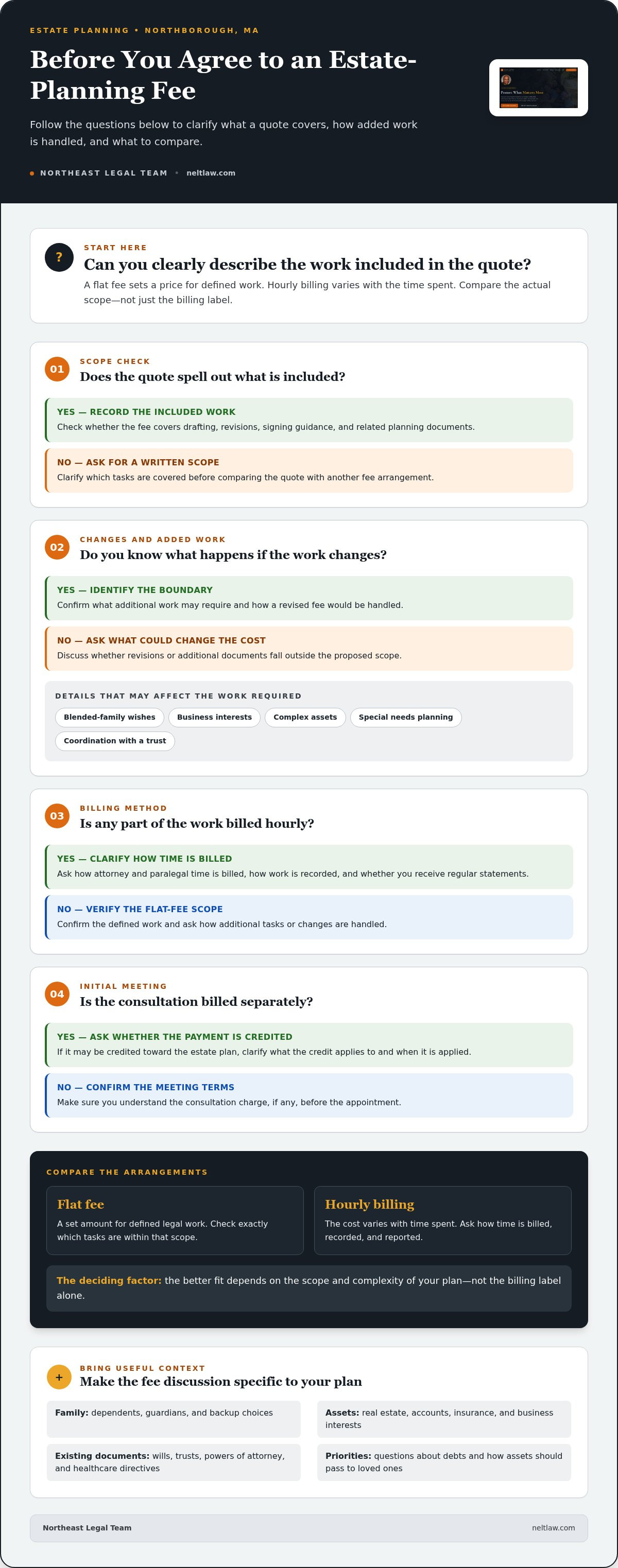
A flat-fee will lawyer in Northborough, MA charges a set amount for defined legal work, while hourly billing varies with the time spent. Compare what each arrangement includes: ask whether drafting, revisions, signing guidance, and related planning documents fall within the quoted scope, and how additional work is handled.
It’s reasonable to want cost clarity before making decisions about your family’s future. Planning can feel especially important after a marriage, a new child, a change in health, or another major life event, when your wishes or responsibilities may have shifted.
This article explains what to ask about flat fees, what information to bring to an estate-planning meeting, and how a will differs from a revocable trust. It also covers when legal guidance can help you put your wishes in writing and create a plan suited to your circumstances.
Key Takeaways
- Before discussing a flat fee, clarify which documents, revisions, signing guidance, and follow-up work the fee covers.
- Prepare for your meeting by organizing information about your assets, family, current documents, and planning priorities.
- Ask about the lawyer’s estate-planning experience and how the attorney-client relationship will work throughout the process.
- A will or revocable trust may suit different needs; your family situation, assets, and goals can help guide the choice.
- Consider legal guidance when illness, an accident, or a major life change raises questions about who will manage your affairs.
Is there anything I should do to prepare for my initial estate planning meeting?
Yes. Before meeting an estate-planning lawyer in Northborough, gather a clear picture of your family, property, and priorities. You don’t need every document in perfect order. A short list of questions and key details can make the conversation more useful.
Start by noting who depends on you and what you want your estate plan to accomplish. Parents of minor children can identify potential guardians and backup choices. Business owners can note who should manage operations if they become unable to do so. These details help the lawyer understand the people and responsibilities your plan should address.
Bring existing wills, trust documents, powers of attorney, and healthcare directives, if you have them. Add a basic inventory of real estate, accounts, insurance, and business interests. For a Northborough household, include property held jointly or shared with relatives. You can also note debts and questions about how assets should pass to loved ones.
Ask how the initial meeting is billed before the appointment. Some fee arrangements credit the meeting payment toward the estate plan if you proceed. Clarify what the credit applies to, when it is applied, and whether the quoted flat fee covers drafting, revisions, and signing guidance. Discussing costs at the outset helps you understand the scope before work begins.
How do flat-fee will prices compare with hourly estate-planning fees in Northborough? A flat fee sets a price for defined work, while hourly billing varies with time spent. The better fit depends on the scope and complexity of your plan, so compare what each arrangement includes rather than relying on the billing label alone.
What factors can increase the cost of preparing a will in Massachusetts? Costs may rise when a plan involves blended-family wishes, business interests, complex assets, special needs planning, or coordination with a trust. Revisions and additional documents can also affect the work required. Ask which tasks fall within the proposed scope.
How often should a Massachusetts will be reviewed or updated? Revisit it after a major life event, such as marriage, a new child, a death in the family, or a significant change in assets. Periodic reviews can also help keep names, choices, and instructions aligned with your current wishes.
Before the meeting, prepare questions about guardianship, decision-makers, and how your legacy should pass. Massachusetts residents can begin thinking about estate planning at age 18, when planning for healthcare and financial decisions may become relevant. Bring your notes, then use the meeting to identify which documents fit your circumstances.
What Questions Should I Ask When Trying To Find a Will Lawyer in Northborough?
Ask questions that clarify the attorney’s experience, billing approach, communication, and planning process. The answers can help you decide whether the lawyer understands your interests and explains your rights in plain language.
Checking Lawyer Experience and Credentials
Ask how the attorney handles estate-planning matters like yours. A parent may need guidance about guardianship choices, while a business owner may need a plan coordinated with business interests. Ask who will draft the documents, answer questions, and handle revisions. You can also verify the attorney’s status through an official Massachusetts lawyer directory and confirm the name matches the person you meet.
Comparing Rates and Consultation Pricing
Ask whether the lawyer bills hourly or charges a flat fee for a defined scope. If billing is hourly, ask how attorney and paralegal time is billed, how work is recorded, and whether you receive regular statements. Clarify whether the consultation has a separate charge and whether that amount is credited toward later work. Request a written explanation of included tasks and possible additional charges.
Discuss the attorney-client relationship as part of the process. Ask who your main contact will be, how to share updates, and how the lawyer will explain decisions before documents are finalized. A clear process matters if your wishes change or you need to revise a draft. For instance, if your chosen guardian later cannot serve, ask how replacement instructions can be handled.
Ask how a power of attorney fits into the plan. A power of attorney declaration can name someone to handle healthcare and/or financial decisions if you become unable to do so. Discuss who you trust, what decisions the person may handle, and how the document relates to your other instructions. This helps you understand how planning can address needs beyond distributing property after death.
Bring these questions to the meeting and note the answers:
- Which documents and revisions are included in the quoted scope?
- Who prepares the drafts, and who reviews them with you?
- How will the attorney explain choices affecting your family or business?
- What changes could require added work or a revised fee?
Listen for direct answers tied to your circumstances, not broad assurances. If the lawyer describes a process you understand, you can compare the scope and communication style more confidently. You can also discuss your estate-planning questions as you consider the next step.
Finding wills lawyers in Northborough, Massachusetts
For Northborough residents, finding suitable will-planning guidance starts with identifying the decisions your documents should support. List your family priorities, property concerns, and questions about wills or trusts. Then look for Massachusetts-specific estate-planning guidance, because state rules shape how a will is prepared and signed.
Massachusetts will requirements include three key steps: the will must be written, signed, and witnessed. Treat each step as part of the planning process, not a last-minute formality. A lawyer can explain how to prepare the document and signing process for your circumstances. Keep the signed original with your important records and tell your chosen representative where it is stored.
Northborough households can compare a lawyer’s focus with their actual needs. A parent with children may want to discuss who should care for them and how the instructions fit together. Someone with a home, savings, or other assets may need to explain how those holdings are titled. A business owner can raise succession concerns. These examples help define the work before documents are drafted.
Ask how the lawyer considers wills and trusts together. A will records instructions for property and family decisions, while a trust is another planning document that may serve different goals. The right discussion depends on the assets involved, the people you want to protect, and the level of planning you seek. A trust should not be treated as an automatic substitute for a will.
Northborough is in Massachusetts, so local residents should focus on estate-planning guidance grounded in Massachusetts law rather than relying on a generic form. The practical value is a plan built around state requirements and your household’s circumstances. A family balancing minor children, property, and long-term care concerns, for example, may need to discuss several connected documents, not only a will.
To organize your search, write down the questions you want answered and compare the scope of the proposed work. Consider whether the discussion covers:
- How Massachusetts signing and witness requirements apply to your will.
- Whether your family situation calls for discussing a trust alongside a will.
- How your children, assets, and chosen decision-makers fit into the plan.
- What documents and steps are included in the work.
These details make a first conversation more focused. They also help you see whether the planning process addresses your legacy, family responsibilities, and assets in a connected way. Bring your notes and existing estate documents, such as an older will or trust, so the discussion can begin with your current plan rather than assumptions.
Situations that may require a wills lawyer
A major change can make an old will feel disconnected from your life today. In Northborough, an accident or illness could leave you dependent on others, making clear instructions about your wishes and decision-makers especially important. A wills lawyer can help identify gaps and organize the next steps around your situation.
Changes in your household deserve a fresh look. After a new child arrives, parents may want to name a guardian and consider how instructions can support the child’s future. Marriage, separation, or a death in the family can also affect who you want to inherit or serve as executor. Write down what changed and which choices need reconsideration before an estate-planning discussion.
Health needs can also make planning more pressing. If illness could leave you unable to communicate or manage your affairs, discuss whom you trust to act and what documents may express your wishes. A family caring for a relative with special needs may need to consider how an inheritance fits that person’s ongoing support. Your goals and family circumstances shape the questions to address.
Business owners have another reason to review their plans. If a business depends on your daily decisions, identify who could manage its affairs and what should happen to your ownership interest. An executor may handle estate matters, so consider whether your chosen person understands the role and can manage the responsibilities. Bring a list of business interests and succession questions to the meeting.
Changes in assets can alter how your plan works. Buying or selling a home, receiving an inheritance, or acquiring a business interest may affect what you want to pass on and to whom. Review how assets are titled and whether your current documents reflect your wishes. A lawyer can help you discuss whether your will works alongside your other estate-planning documents.
Reviewing does not always mean replacing everything. Intellestate Law recommends reviewing a Massachusetts estate plan every three to five years, or after a major life event. A review can help spot outdated names, changed family circumstances, or instructions that no longer fit. Bring your existing will and note the changes since it was prepared.
Consider arranging legal guidance if you have no will, your family responsibilities have changed, or an illness raises questions about future care. Before the discussion, note your priorities, potential executor, and any concerns about children, a business, or a family member’s needs. That list gives the conversation a clear starting point and helps you decide which planning steps matter most now.
Which Northborough, MA lawyers offer flat-fee will preparation?
Estate-planning attorneys may offer will preparation for a flat fee, meaning a set charge for defined work. A flat-fee will lawyer in Northborough, Massachusetts, should explain what the agreed scope covers before drafting begins. That clarity helps you understand the service, not just its billing label.
The flat fee is tied to the work described in the agreement. A straightforward will may involve different work from a plan addressing blended-family wishes, business interests, or a trust. If the requested work changes, the scope and fee may need to be revised. Ask how the agreement handles revisions and additional documents.
The fee depends on your circumstances and the scope of work. Factors can include family needs, asset arrangements, the documents involved, and requested revisions. A parent naming guardians may have different planning needs from a business owner coordinating succession concerns. Ask how the proposed work addresses your particular goals.
Before work starts, make sure the written agreement explains:
- Which will and related documents are included.
- Whether revisions and signing guidance are part of the scope.
- Who prepares and reviews the drafts with you.
- How added requests or changes affect the agreement.
These details help distinguish a defined flat-fee engagement from hourly billing. With hourly billing, the amount depends on the time recorded for the work. With a flat fee, the agreed amount applies to the stated scope, while work outside that scope may be treated separately. The agreement is the clearest way to understand the distinction.
Ask how the attorney will address Massachusetts signing requirements and your particular instructions. A will must be written, signed, and witnessed under the requirements described for Massachusetts. If your plan names an executor and guardian, for instance, confirm how those choices appear in the draft and how you can review them before signing.
Flat-fee preparation may be a practical fit when your needs are clearly defined. If your family situation involves several connected documents, special needs planning, or business succession, describe those needs at the outset. This gives the attorney a fuller picture before defining the work’s scope. A useful conversation should leave you understanding the next step and the responsibilities involved.
Use your initial discussion to describe your priorities and ask for the scope in writing. If you’re ready to discuss will preparation and planning needs, request a will-planning discussion.
Northeast Legal Team: Wills & Estate Plans
Northeast Legal Team helps turn estate-planning questions into clear documents that reflect your wishes. If you’re ready to prepare a will or your family’s circumstances call for broader planning, its Wills & Estate Plans address those goals. Living Trusts may also be part of a plan, while a Power of Attorney and Healthcare Directives can record who should make decisions if you’re unable to do so.
Consider discussing your situation if you have a new child, changed family responsibilities, or questions about who should manage your affairs. Bring your priorities and existing planning documents to help guide the conversation. You can discuss which documents fit your needs and how the planning process can address your wishes.
Contact Northeast Legal Team to discuss your estate-planning needs.
Take the Next Step Toward a Plan That Fits
Estate planning can start with one decision you’ve been putting off: who should speak for you, or what you want your family to understand about your wishes. Choosing a flat-fee will lawyer in Northborough, MA, is one part of that process. Focus on finding a clear path from your priorities to documents you understand and can keep current.
Northeast Legal Team offers Wills & Estate Plans, Living Trusts, and Power of Attorney services. These tools can help address your instructions for your estate and the people you trust to make decisions. You don’t need every detail settled before beginning. A conversation can help identify the questions that matter most and decide which planning step feels manageable now.
Contact Northeast Legal Team to discuss your estate-planning needs. A thoughtful first step can bring your wishes into clearer focus and help you move forward with greater confidence.
Frequently Asked Questions
Do you charge hourly or is there a flat fee for your services?
Northeast Legal Team offers fixed fees for drafting and executing estate-planning documents, including wills, trusts, and powers of attorney. The agreement defines the work covered, so compare its scope rather than assuming every document or later change is included. If you’re in Middlesex County or Worcester County, describe your planning goals and request a quote based on the documents you need.
How Can a Lawyer Help Me With a Will?
A lawyer can help turn your wishes into clear instructions and identify choices that need careful wording. For example, you may want a primary beneficiary and an alternate in case the first person can’t inherit. An attorney can also help align executor choices with the responsibilities involved and review how your will fits with other planning documents. This can make your intentions easier for loved ones to understand.
Is there a fee for the first meeting?
Northeast Legal Team offers a free consultation or assessment, where you can discuss your situation and receive personalized recommendations without obligation. Use the meeting to describe your priorities, such as who should manage your affairs or how your family’s needs may shape your documents. You can also ask what a proposed plan covers and how the fee is determined.
What Are Some Examples of Situations Where I Might Need a Wills Lawyer?
Consider legal guidance when your circumstances raise questions that a basic document may not address clearly. A blended family, for example, may need to express how different relatives should benefit, while a business owner may want to coordinate personal and business succession plans. A family supporting someone with special needs may also need to consider how an inheritance fits broader planning goals.
What Could Happen if I Don’t Hire a Wills Lawyer?
Without legal guidance, unclear wording or overlooked details can leave loved ones uncertain about your intentions. Naming an executor without discussing the role, for example, may leave that person unprepared for important responsibilities. A document that doesn’t reflect your current family or assets may also create confusion during estate administration. Careful review can help clarify your instructions, though it can’t prevent every disagreement.
What is the typical flat fee for a simple will in Northborough, Massachusetts?
The fee for a will depends on the work involved and is provided after a quote request. Factors include your family circumstances, the instructions you want included, and whether the plan involves related documents or revisions. A “simple” will can mean different things for different households, so describe your needs and review the written scope before deciding whether it fits.
What does a flat-fee will package include, such as a power of attorney or health care proxy?
A flat-fee agreement should identify the documents and tasks it covers. A power of attorney or healthcare directive is separate from a will, and its inclusion depends on the agreed scope. Northeast Legal Team offers these documents as estate-planning services. Review the written description of the proposed work to see which documents are included and which are handled separately.
Can a Massachusetts resident prepare a valid will without a lawyer?
The Massachusetts requirements described for a will are that it be written, signed, and witnessed; lawyer drafting is not identified as one of those steps. However, meeting formal requirements doesn’t ensure the document clearly addresses your wishes. If your plan involves minor children, a business, or several beneficiaries, legal review can help identify unclear instructions before they create difficulty for your family.


