
Your relationship alone may not give your partner legal authority if you become ill or ensure they inherit your property. Massachusetts does not recognize common-law marriage, so estate planning for unmarried partners with children in Sutton, MA can put your wishes for medical decisions, incapacity, and inheritance into clear legal documents.
It’s understandable to expect a committed partner to be able to step in during a crisis. But without the right documents, that may not happen automatically. Your children’s care and financial security may also require specific instructions.
This article explains what Massachusetts law means for unmarried partners, how domestic partnership status relates to those protections, and how planning can address medical decisions, finances, guardianship, and inheritance. You’ll get a clearer picture of how to protect the family you’ve built.
Key Takeaways
- Massachusetts doesn’t recognize common-law marriage, so a committed relationship alone doesn’t give partners the legal protections of marriage.
- A healthcare proxy and durable power of attorney address different needs: medical decisions and financial or legal matters.
- Without a will or trust, inheritance follows state intestacy rules, which may leave an unmarried partner without a share.
- Review beneficiary designations, property ownership, and plans for your children together so your documents reflect your wishes.
Do you offer inclusive estate planning services?
For estate planning for unmarried partners with children in Sutton, MA, coordinate beneficiary forms, account ownership, property titles, and instructions for children. Reviewing these records together can help ensure your documents reflect the people you intend to protect.
Retirement and Life Insurance Beneficiaries
A beneficiary designation names who receives funds from a retirement account or life insurance policy after the account holder dies. These forms matter because an outdated designation may send assets to someone other than your intended partner or children. Review each account and policy after family changes. For example, a former beneficiary may still be listed after you decide to provide for your children differently.
Trust Beneficiaries
A trust can be named as a beneficiary so assets are managed according to instructions for its beneficiaries. This can help parents direct how money supports children rather than leaving them to manage assets directly. Match each account’s beneficiary form to the trust’s terms. If a form names a person directly while the trust names the children, the documents may conflict.
For a family member with a disability, a Special Needs Trust can set aside funds without affecting eligibility for SSI, Medicaid, or other public benefits. Its terms can reflect the person’s needs and benefit eligibility, helping parents plan financial support while preserving access to those programs.
Include digital accounts in your plan. Written instructions can explain how your partner may access important accounts, such as records needed to manage household affairs. Keep instructions current as accounts change, and store them with your estate-planning documents.
A coordinated estate plan for unmarried partners with children in Sutton, MA should bring beneficiary forms, trust terms, ownership records, and digital-account instructions together. Review them after family changes so your documents continue to reflect your wishes.
Can My Partner Make Medical Decisions For Me If I Am Hospitalized?
In Massachusetts, an unmarried partner needs appropriate documents to make medical decisions for an incapacitated partner. Parents can name proposed guardians for minor children in their estate plans, discuss the role with them, and identify backup guardians.
Partner Authority in Healthcare Decisions
A healthcare directive records your wishes and can give a chosen person authority to act on your behalf. Without appropriate documents, your partner may lack authority to make medical decisions if you become incapacitated. Naming your partner can give them a defined role in care discussions. Choose someone who understands your preferences and can communicate them clearly to your medical team.
Health Care Proxies
A Massachusetts health care proxy names an agent to make medical decisions for the person who created it. This document can name your partner as that agent, rather than relying on your relationship alone to establish authority. You can choose someone else if that better suits your circumstances. Keep your proxy aligned with your current wishes, and make sure your chosen agent knows where to find it.
Wills, Trusts, and Powers of Attorney
A will can name a proposed guardian for your children and direct how your property should pass. A trust can set instructions for managing assets for children. A durable power of attorney covers financial and legal matters, not healthcare decisions. You may name the same partner as your healthcare agent and financial agent, or choose different people for those roles.
Review these documents after a change in health, a new child, or a shift in family structure. Revisit your guardian choices, backup names, and decision-making agents together. Discussing the proposed guardian’s willingness to serve can help prevent uncertainty during a difficult transition. A coordinated review of healthcare and financial documents can help keep each person’s role clear and consistent with your wishes.
Does Massachusetts Recognize Common Law Marriage or Domestic Partnerships?
Massachusetts does not recognize common-law marriage, and an unmarried relationship alone does not create spousal inheritance rights. A domestic partnership label does not make a partner a legal spouse under intestacy rules. The Massachusetts General Court identifies the Massachusetts Uniform Probate Code as governing intestate succession.
If a parent dies without a will and has no legal spouse, the estate passes to children, parents, or siblings under Massachusetts intestacy rules. An unmarried partner is not among those recipients, so children may inherit while the surviving partner receives no intestate share.
That rule can affect blended families. A child who is not the deceased partner’s biological or legally adopted child cannot inherit from that partner through the parent-child relationship alone. Formal adoption establishes the legal relationship relevant to inheritance.
Parents can use a will or trust to name intended beneficiaries and set out how a child’s inheritance should be managed. For example, a trust can direct a trustee to manage funds for a child’s needs instead of leaving the child to manage an inheritance directly. Parents can specify who will manage the funds and what purposes they should serve.
Probate costs, filing fees, and timelines in Worcester County depend on estate assets, required filings, real estate, and administration needs. These factors determine the filings and steps involved. A straightforward estate and a complex or contested estate may require different processes.
In Sutton, what happens to a jointly owned home depends on how its title is held. A home titled as joint tenants with rights of survivorship passes automatically to the surviving partner. With tenancy in common, each partner’s share passes through probate unless a will or trust directs otherwise.
Review the deed alongside any will or trust, because the title affects the surviving partner’s rights to the home. For children’s inheritance, ensure the documents identify who receives assets and how those assets should be managed.
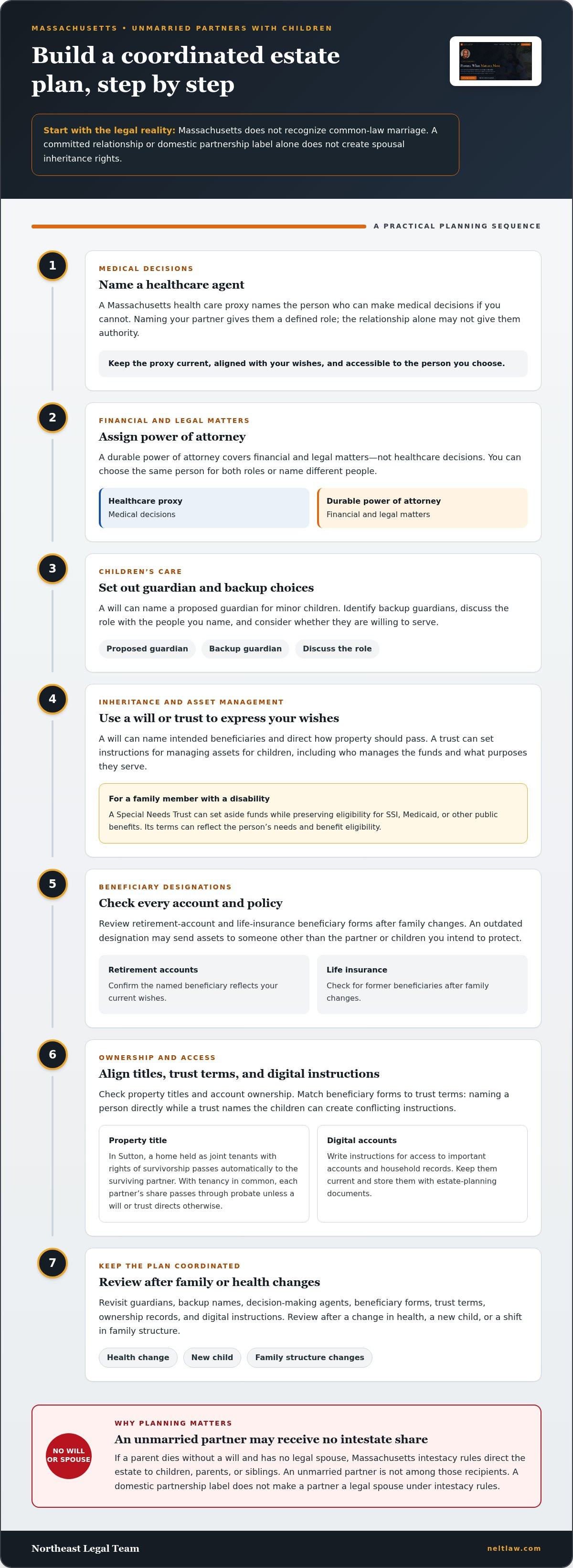
Legal protections for unmarried partners in illness, incapacity, or death
In Massachusetts, unmarried partners do not receive automatic legal protection when illness, incapacity, or death disrupts family life. A relationship alone does not authorize one partner to manage the other’s bills, sign papers, or inherit assets. Separate documents address separate needs, so planning works best when medical authority, financial access, and inheritance instructions fit together.
During incapacity, a durable power of attorney can authorize a chosen agent to handle financial and legal matters. Massachusetts references this authority under M.G.L. c.190B §5-501. A health care proxy serves a different purpose by naming someone to make medical decisions. Partners may choose each other for both roles or appoint different people based on their needs.
At death, a will or trust can name an unmarried partner and other intended beneficiaries. But written instructions should align with beneficiary forms and asset ownership. For example, a life insurance designation naming a former beneficiary may conflict with a will naming the current partner. Coordinating these records helps clarify who receives each asset.
Home ownership creates another important distinction. If the deed names partners as tenants in common, a deceased partner’s share generally passes through probate unless a will or trust directs otherwise. A home titled as joint tenants with rights of survivorship passes automatically to the surviving partner. Ownership terms also affect whether creditors may pursue jointly titled property for a partner’s debt.
Children need planning alongside partner protections. Parents can name proposed guardians and backups, while a will or trust can guide how funds support children. Review those choices after changes in health, family structure, property title, or beneficiary forms. Plan for partner and family protections by coordinating authority, asset instructions, and care arrangements in one estate plan.
Northeast Legal Team: Wills & Estate Plans
Northeast Legal Team helps unmarried parents turn their wishes into coordinated estate documents. Wills & Estate Plans can address intended inheritance and guardianship choices, while Living Trusts can provide instructions for managing assets for children. Healthcare Directives and Power of Attorney documents address decision-making if a partner becomes incapacitated.
Consider planning support when your family needs to name trusted decision-makers, provide for children, or align instructions for assets. A review can clarify your wishes for care, finances, and inheritance, especially after changes in health or family circumstances.
To discuss estate planning for your family, contact Northeast Legal Team.
Make Your Family’s Wishes Part of the Plan
Your family’s needs can change as children grow, health shifts, or financial responsibilities evolve. Set aside time with your partner to discuss the people you trust, the decisions you want respected, and the support your children may need. Those conversations can help turn personal priorities into a plan that reflects the life you’re building together.
For families considering estate planning for unmarried partners with children in Sutton, Massachusetts, Northeast Legal Team can shape Wills & Estate Plans, Living Trusts, and Power of Attorney documents around those priorities. The goal is to make your intentions clear and give loved ones useful guidance when circumstances change.
When you’re ready to discuss a plan for your family, contact Northeast Legal Team. A thoughtful next step can help you move forward with greater clarity and care.
Frequently Asked Questions
Do Unmarried Couples Pay More In Taxes On Inheritances?
Unmarried partners don’t receive the unlimited marital deduction available to married couples for estate tax purposes. Massachusetts estate tax may affect estates worth over $2 million, according to the Massachusetts Department of Revenue. That figure concerns the estate’s value, not a fixed tax bill for each person inheriting. For a Sutton family, asset ownership and the estate’s overall value help shape potential tax considerations.
How often can I update my estate plan as my child’s needs change?
Review your plan whenever your child’s health, benefits eligibility, or family circumstances change. For example, a new diagnosis or a change in public-benefit eligibility may affect how an inheritance should be managed. As your child grows, revisit who you’ve named to manage funds and whether the instructions still fit. Treat major family changes as a prompt to review related documents together.
What Are Common Estate Planning Mistakes Unmarried Couples Make?
Common mistakes include assuming a partner can act automatically, leaving an outdated beneficiary form in place, and overlooking how a deed affects a home. For example, one partner’s will may name a child while the life insurance form still names someone else. Parents may also overlook backup guardian choices or assume a non-biological child inherits without formal adoption. Compare documents and property titles together.
What Happens If My Partner Dies Without A Will In Massachusetts?
If your partner dies without a will and has no legal spouse, Massachusetts intestacy rules direct property to children, parents, or siblings, not an unmarried partner. The Massachusetts General Court identifies the Massachusetts Uniform Probate Code as governing intestate succession. A surviving partner may therefore need to address housing and household finances separately. If a child isn’t legally adopted by the deceased, that child can’t inherit from them as their child.
What estate planning documents should unmarried partners with children in Massachusetts have?
Consider a will, a health care proxy, a durable power of attorney, and trust planning where appropriate. Each serves a distinct purpose: naming proposed guardians, appointing medical and financial decision-makers, or setting instructions for managing assets. Also review retirement and insurance beneficiary forms, since those designations operate separately from a will. A coordinated set of documents can address different needs without relying on one document to do everything.
How do Massachusetts wills, trusts, and beneficiary designations protect children and an unmarried partner?
A will can name intended beneficiaries and proposed guardians, while trust terms can guide how funds support children. Beneficiary forms direct certain account or policy proceeds, so review them alongside the will and trust. For instance, if a child is named directly on an account, that form may not match instructions for trust-managed funds. Coordinating these records helps make your intentions clearer to your family.


