

A trust can be part of an estate plan, but it is not the only way to document your wishes and help your family manage important decisions. An elder law attorney in Hopedale, MA can help you consider estate planning, powers of attorney, health care proxies, probate, and estate administration in light of your needs.
Questions about setting up a trust often lead to practical concerns: who can manage your affairs if you cannot, how your wishes will be communicated, and what happens to an estate after a loved one dies. These are personal decisions, and it is understandable to want clear answers before taking the next step. This article explains how common planning documents work, how probate and estate administration fit in, and what to consider when seeking legal guidance. You will get a clearer picture of the options and questions that can help make the process more manageable for you and your family.
Key Takeaways
- Compare wills and trusts in light of how you want assets managed and passed on to loved ones.
- Choose trusted decision-makers for financial and health care matters, and make your instructions clear in the right documents.
- Understand the main steps involved in settling a will, from identifying assets to addressing responsibilities for beneficiaries.
- Organized records and clear communication can help make estate administration more manageable for family members.
- Look for legal guidance that can address your planning needs and explain a practical next step for your circumstances.
Estate planning
A Massachusetts elder law attorney can coordinate wills, trusts, and powers of attorney, then explain how those documents affect probate. To prepare, list your assets, family responsibilities, and priorities for future care.
Wills, Trusts, and Powers of Attorney
A will names beneficiaries and can nominate a guardian for minor children. A trust can set instructions for managing assets, including when a beneficiary receives them. A power of attorney names someone to handle financial matters if you cannot act. Compare each document’s role, then make sure your choices and instructions work together.
Gift and estate tax rules may also inform planning. According to the Internal Revenue Service, a person may give up to $19,000 annually to another person without filing a gift tax return. The Internal Revenue Service states that the lifetime gift tax exemption is $13,990,000 as of 2025. The Internal Revenue Service states that the federal lifetime gift tax exemption is set to increase to $15,000,000 in 2026.
Medicaid and MassHealth Planning
MassHealth planning considers income, assets, care needs, and eligibility rules when preparing for possible long-term care. Gather account statements, property records, insurance details, and information about regular expenses. These records clarify your financial picture and help identify questions to address before a care decision becomes urgent.
For nursing home care, consider how care may be paid for and how a spouse or another household member could be affected. Avoid transferring assets based on a general rule or a relative’s experience. Instead, review each asset’s timing, ownership, and purpose in the context of your family’s circumstances.
Long-Term Care Planning
Long-term care planning connects your future care preferences with the people and resources available to support them. Consider whether you would prefer care at home, help from relatives, or a nursing home if your needs change. A written plan can identify whom to contact, where key records are kept, and which resources may support care.
Review your plan after a change such as a diagnosis, move, marriage, or major shift in household finances. For example, an older adult moving closer to a child may need to update property records and decision-maker information. Clear instructions help relatives understand your priorities before they need to make difficult arrangements.
Planning for Adult Children and Special Needs Minors
Parents can use estate documents to explain how assets should support adult children and who should manage funds intended for a child. For a minor, a will can nominate a guardian, while a trust can provide instructions for managing inherited property. Consider the child’s age, support needs, and whether the proposed decision-maker can serve.
When a child has a disability, planning should account for ongoing care and the role of trusted relatives. Special needs planning can organize instructions for future support and asset management. List the child’s care providers, routines, and important records, then discuss how a guardian or trustee would use that information.
Durable powers of attorney and health care proxies
Compare attorneys by how clearly they explain financial decision-making documents, health care proxies, and the steps involved in preparing them. Ask how they will learn your priorities, explain each document’s purpose, and help identify decision-makers suited to your circumstances.
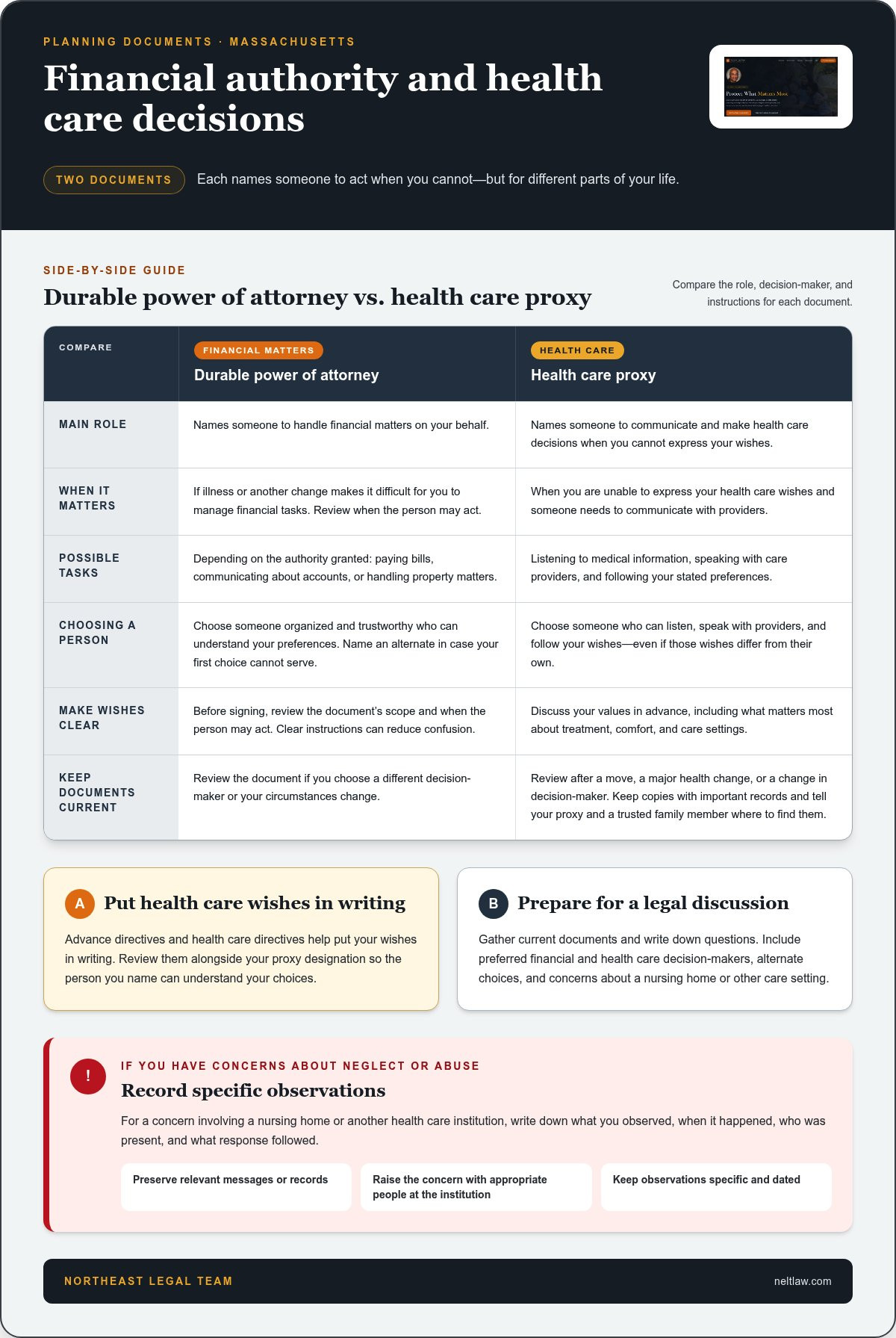
A durable power of attorney names someone to handle financial matters on your behalf. Depending on the authority granted, this may include paying bills, communicating about accounts, or handling property matters. Choose someone who is organized, trustworthy, and able to understand your preferences. Name an alternate in case your first choice cannot serve. Before signing, review the document’s scope and when the person may act. Clear instructions can reduce confusion if illness or another change makes it difficult for you to manage financial tasks.
A health care proxy names someone to communicate and make health care decisions when you cannot express your wishes. Choose a person who can listen to medical information, speak with care providers, and follow your stated preferences, even if those preferences differ from their own. Discuss your values before naming them. For example, explain what matters most to you about treatment, comfort, and care settings. This context can help the proxy make decisions that better reflect your wishes.
Advance directives and health care directives help put your wishes in writing. Review them alongside your proxy designation so the person you name can understand your choices. Keep copies with important records, and tell your proxy and a trusted family member where to find them. If you move, experience a major health change, or choose a different decision-maker, review and update the documents as appropriate. A health care directive can guide conversations with relatives and providers, while a proxy gives someone responsibility for communicating your choices.
Concerns about neglect or abuse in a nursing home or other health care institution call for prompt, careful action. Write down what you observed, when it happened, who was present, and what response followed. Preserve relevant messages or records, and raise the concern with the appropriate people at the institution. Elder law attorneys may assist seniors and families with matters involving abuse in health care institutions. Specific, dated observations can help clarify what happened and what guidance your family needs next.
Prepare for a legal discussion by gathering your current documents and writing down questions. Include the names of your preferred financial agent and health care proxy, any alternate choices, and concerns about a nursing home or other care setting. An attorney can explain how financial authority differs from health care decision-making and identify gaps between your documents. For focused guidance on power of attorney planning, consider how the document should reflect your wishes and who you trust to act.
Probate law and settling a loved one's will
After a death, the will, asset records, and family responsibilities help shape the next steps. Organizing these documents can clarify what the estate contains and what needs attention.
Wills and Probate
A will records a person’s instructions for distributing property and can name someone to handle estate matters. Probate is the process of addressing a will and settling assets that require estate administration. Start by locating the latest will, death records, account information, and property documents. A clear inventory helps the person handling the estate identify questions and organize information for a legal consultation.
Probate and Trust Administration
Probate administration and trust administration involve different documents and responsibilities. The person managing an estate may need to identify assets, keep records of transactions, address bills, and communicate with beneficiaries. A trustee follows the trust’s written terms when managing property held in that trust. One reported probate matter lasted 16 or 17 months, so keeping a dated record of documents and actions can help families follow progress.
Avoiding Probate
Some estate plans use trusts to manage assets and direct their distribution outside the probate process. Whether an asset is held by a trust, jointly owned, or covered by a beneficiary designation affects how it is handled. Review account ownership and beneficiary records alongside the will. A trust that exists only on paper may not address assets that were never transferred into it.
As a practical starting point, make an inventory listing each asset, its current owner, and the related document. Include bank and investment accounts, real estate records, insurance information, and trust papers. Compare the inventory with the will and note any missing or outdated details. This gives the family a clearer picture before contacting institutions or arranging a consultation.
The person managing an estate should keep correspondence, statements, and decisions together in a secure file. Record when each institution was contacted and what information it requested. For example, if a bank asks for estate documents, note the request and response date. Organized records help relatives see which matters remain open and avoid repeated searches for paperwork.
Families can also clarify who will communicate with beneficiaries and share updates. Choose one point of contact, list the people who need information, and keep messages factual. If a will, trust, or asset record seems inconsistent, flag the issue rather than making assumptions. These steps help the family prepare focused questions and support orderly administration.
Estate administration
Settling an estate can involve financial records, family concerns, and real estate decisions. A careful inventory helps the person handling the estate identify tasks involving property, accounts, and ongoing expenses. Keep the will, trust papers, account statements, and property records together. This gives relatives a shared starting point for organizing questions and responsibilities.
Residential real estate may need attention during estate administration. For a family home, gather the deed, insurance papers, utility information, and records about a mortgage or repairs. The administrator can review the relevant estate documents to determine who has authority to make property decisions. If the home may be sold, transferred, or retained, record the reasons and who would be affected.
Commercial real estate can add business records and operational concerns to an estate’s property matters. Collect leases, management agreements, insurance information, and records of income or upkeep. These documents help clarify the property’s current use and ongoing obligations. If one beneficiary expects to keep the property while another prefers a sale, document each person’s concerns and the options under discussion.
Real estate disputes may arise over ownership records, property condition, access, or differing family expectations. Start by gathering the deed, relevant correspondence, photographs, and maintenance records. Create a dated summary of the disagreement and list the decisions that remain unresolved. For example, if relatives disagree about who may enter a home, record the concern and review the estate documents before acting.
An estate plan can guide how property should be handled, but the administrator still needs an accurate picture of each asset. Compare property records with the will or trust, and note any differences in ownership or instructions. Keep receipts for estate-related expenses and save written communications about property decisions. These steps create a clear record for family members and support orderly estate administration.
MassHealth concerns can also make property and financial records relevant to family planning. Keep benefit correspondence, account records, and property documents together, then note questions about how a care arrangement may affect household finances. Do not assume that a property decision automatically changes eligibility or benefits. Reviewing the estate plan and records can help families identify what needs attention.
For each residential or commercial property, prepare a brief file with ownership documents, current use, known concerns, and pending decisions. Share it with the people responsible for estate matters. If a disagreement remains, use the documents and written timeline to frame a focused legal discussion. Clear records help relatives distinguish immediate property tasks from longer-term estate decisions.
Which elder law attorneys serve Hopedale, Massachusetts?
Residents seeking an elder law attorney in Hopedale, MA can compare legal guidance based on the matters they need addressed. Start by matching your priorities, such as a will, power of attorney, or probate, with the attorney’s areas of work. A focused match helps keep the first conversation relevant to your family’s situation.
For an initial comparison, write down the questions you need answered. One family may need to update an estate plan after a move, while another may need help understanding an open probate matter. Look for explanations that connect each legal document to its practical purpose. For example, ask how a will, trust, and power of attorney relate to your goals.
Communication matters, too. Notice whether the attorney explains unfamiliar terms in plain English and listens to your family’s concerns before suggesting next steps. Bring a short list of priorities, current documents, and relevant family details. If an adult child is helping a parent, clarify who should receive updates and take part in discussions. These steps help establish shared expectations from the start.
Ask how the legal work would be organized for your specific matter. An estate planning discussion may focus on your wishes, decision-makers, and existing documents. A probate discussion may begin with the will, estate records, and tasks already completed. If special needs planning is relevant, explain the person’s support needs and who currently helps manage important decisions.
Practical fit also means understanding how questions are handled and what information will be useful in the next discussion. Prepare a concise timeline for a probate matter, or gather the documents you want reviewed for planning. Note unresolved issues, such as a decision-maker you may need to replace or unclear property records. Specific details help keep the conversation focused.
Before moving forward, make sure you understand the proposed scope of work and the next steps for your matter. A clear explanation should distinguish estate planning from probate administration and identify which documents need attention. Take notes during the discussion, then review them with any family members involved in the decision.
If you’re ready to discuss estate planning or probate questions connected to Hopedale, schedule a conversation about your legal needs. Bring your questions and any relevant documents, so the discussion can focus on the decisions you’re facing.
Northeast Legal Team: Wills & Estate Plans
Northeast Legal Team helps individuals and families put important wishes into clear legal documents. If you are creating a plan or reviewing documents after a change in your family, finances, or care needs, discuss which options fit your goals.
Wills & Estate Plans can set out how you want your estate handled. Living Trusts provide another way to organize assets and instructions. A Power of Attorney identifies someone to manage financial matters if you cannot act, while Healthcare Directives communicate your health care wishes. Together, these documents help clarify who should act and what guidance they should follow.
Gather any existing documents and note the decisions you want to address. To discuss your planning needs, contact Northeast Legal Team.
Make your next step a clear one
Planning can begin with a simple question: what would you most want your family to understand if you could not explain it yourself? Write down that priority, name the people you trust, and note unresolved questions about your wishes. This gives an elder law attorney in Hopedale, MA a useful starting point for a focused discussion, whether you are planning ahead or responding to a change in your family’s needs.
Northeast Legal Team offers Wills & Estate Plans, Living Trusts, and Power of Attorney to help individuals and families put important decisions into legal documents. Bring existing paperwork and your questions so the conversation can focus on what matters to you, rather than trying to solve everything at once.
When you’re ready to take that step, contact Northeast Legal Team to discuss your goals. A thoughtful plan can give your family clearer direction and help you move forward with greater confidence.
Frequently Asked Questions
Questions About Establishing A Trust?
Establishing a trust starts with deciding what it should accomplish, such as organizing assets for a beneficiary or setting instructions for future use. List your property, intended beneficiaries, and any conditions you want considered. Then clarify who will manage the trust and how its terms should reflect your priorities. After signing, review which assets need to be transferred into it. A trust document alone does not organize property it never holds.
What elder law services do attorneys near Hopedale offer?
Services include estate planning, living trusts, powers of attorney, health care directives, probate, and estate administration. Northeast Legal Team serves clients in Middlesex and Worcester counties and also offers business succession and special needs planning. A free consultation can help you discuss which concerns to address. For convenience, the firm offers online bill pay for invoices. Bring a short list of questions to keep the conversation focused on your family.
What Massachusetts Medicaid MassHealth eligibility and long-term care planning rules should seniors know?
MassHealth eligibility depends on the applicant’s financial circumstances, care needs, and type of care. Before considering an application, gather income records, account statements, property information, insurance documents, and household expense details. For example, planning for a married applicant may raise questions about a spouse’s resources and ongoing living costs. Keep copies of MassHealth correspondence and note deadlines or requested documents so your family can track each step.
What are the steps to plan for nursing home care and protect assets in Massachusetts?
Start by identifying likely care preferences, reviewing income and assets, and organizing ownership and benefit records. Then discuss how a care plan may affect a spouse, home, and other financial responsibilities. Northeast Legal Team states, “It’s crucial to take action at least five years in advance to secure full protection.” Treat planning as an early conversation, not a last-minute property transfer. Timing, ownership, and care needs all matter.
What legal documents should older adults in Massachusetts prepare for health care and finances?
Consider a will, a durable power of attorney, and a health care proxy or health care directive. Each serves a different purpose: documenting estate instructions, naming someone to handle financial matters, or recording health care wishes and naming a trusted decision-maker. Review the names and contact details in each document, and tell the people you choose where copies are kept. If you already have documents, compare them with your current wishes and family circumstances.


