

What if the hardest part of settling an estate isn’t one court form, but knowing which responsibility comes next? After a death, families may be grieving while also sorting through estate assets, deadlines, and differing expectations. A probate administration attorney can help clarify the personal representative’s duties and map out practical next steps.
It’s understandable to wonder whether you need legal support, what you’re responsible for, and how to keep family members informed. This article explains the personal representative’s role, what Massachusetts probate may involve, and questions to ask an attorney so you can make decisions with greater confidence.
You’ll also learn when legal guidance may be especially helpful, what documents to gather before a conversation, and how to look for support familiar with estates in Middlesex or Worcester County. Northeast Legal Team assists families with probate and estate administration in those counties and offers a free consultation or assessment to discuss their circumstances.
Key Takeaways
- Understand how probate administration may help manage an estate through the Massachusetts court process.
- A probate administration attorney can help a personal representative clarify responsibilities, paperwork, and next steps.
- Whether legal guidance is useful depends on the estate’s complexity, family circumstances, and your comfort handling the process.
- Prepare for a consultation by gathering available estate documents and noting your questions, known assets, and family concerns.
- Compare potential support by asking about communication, service scope, local familiarity, and fee structure.
What a Probate Administration Attorney Does for a Massachusetts Estate
After a death, even routine paperwork can feel like a lot to manage. Probate administration is the court process that may be needed to address an estate, confirm who has authority to act, and guide the handling of property under Massachusetts law. Not every asset necessarily goes through probate. Whether a court proceeding is needed depends on how assets are held, whether beneficiaries are named, and the circumstances of the estate.
A probate court may oversee matters such as a will and the distribution of estate assets. For a general overview of the probate court and its role, see this background resource. In Massachusetts, the Probate and Family Court handles probate matters. The process and level of court involvement can vary, so confirm which rules and steps apply to your situation with a qualified Massachusetts attorney.
What does a probate administration attorney handle?
A probate administration attorney can help the personal representative understand the process and plan next steps. Depending on the estate and the agreed scope of legal services, that guidance may include preparing or reviewing court filings, organizing information about assets, addressing required notices, and explaining estate administration responsibilities. The attorney provides legal advice, while the personal representative remains responsible for carrying out their role. Legal support can clarify obligations, but it doesn’t remove every task or all court involvement.
For example, if an estate includes several accounts, property, and unpaid bills, the representative may need to gather records and determine how each item should be handled. Counsel can help identify questions to resolve and explain the relevant process. The right plan depends on the facts of the estate, not a single checklist.
Who is the personal representative in Massachusetts?
The personal representative is the person appointed to administer the estate under applicable law. A will may name someone to serve, but the appointment process and authority should be confirmed with the Probate and Family Court or a Massachusetts attorney. Once appointed, the representative is responsible for administering the estate, including tracking assets and following applicable court requirements.
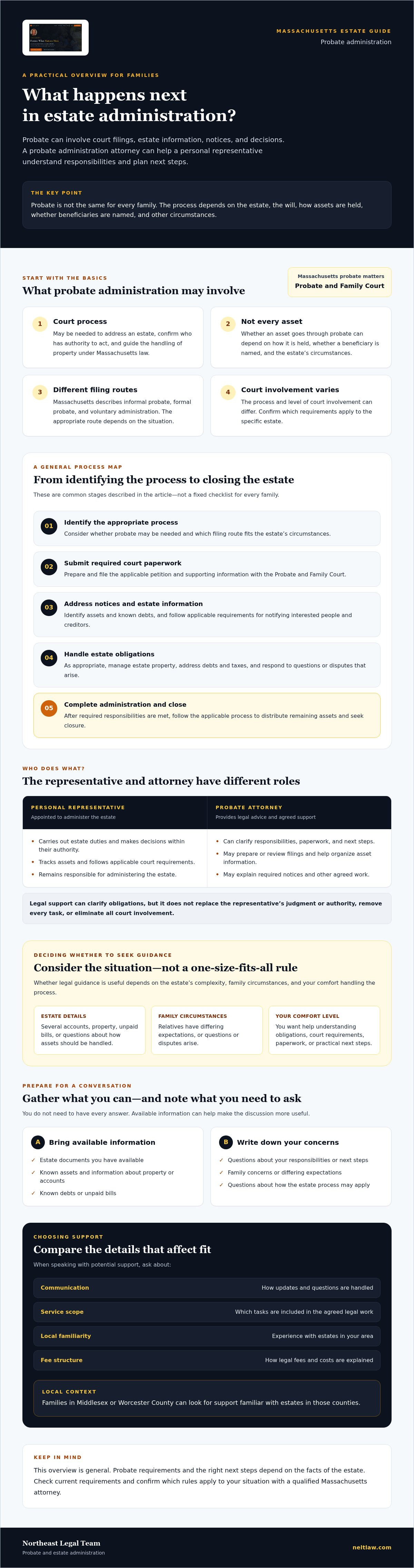
The representative and attorney have different roles. The representative makes decisions and carries out estate duties, while the attorney advises on legal requirements and may assist with filings and other agreed work. This distinction matters if relatives have different expectations: a lawyer can explain the representative’s responsibilities but doesn’t replace the representative’s judgment or authority. Families in Middlesex or Worcester County can discuss their circumstances with a local probate and estate administration provider, including which responsibilities they may want help understanding.
How Massachusetts Probate Administration Typically Moves From Filing to Closing
Probate does not follow one set of steps for every family. The path depends on the estate, the will, and other circumstances. Massachusetts probate matters are handled through the Probate and Family Court, and the state describes different routes, including informal probate, formal probate, and voluntary administration. The court’s File for probate of an estate resource offers an official starting point. A probate administration attorney can help the personal representative understand which steps may apply.
As a general overview, the process may move through these stages:
- Identify the appropriate process. Consider whether the estate may require probate and which filing route fits its circumstances.
- Submit the required court paperwork. The personal representative or their attorney prepares and files the applicable petition and supporting information with the Probate and Family Court.
- Address notices and estate information. The representative identifies assets and known debts, then follows applicable requirements for notifying interested people and creditors.
- Handle estate obligations. As appropriate, the representative manages estate property, addresses debts and taxes, and responds to questions or disputes that arise.
- Complete administration and close the estate. After required responsibilities are met, the representative follows the applicable process to distribute remaining assets and seek closure.
These steps are a general overview, not a substitute for checking current requirements. For example, Massachusetts law generally requires a will in someone’s possession to be filed with the Probate and Family Court within 30 days of learning of the death. The deadline to initiate most standard probate proceedings is generally three years after death, while a personal representative cannot file a closing statement until at least six months after appointment. Creditor claims and the estate’s circumstances can also affect when final distributions are appropriate. Confirm which rules apply to the specific estate with a Massachusetts attorney.
What information should a personal representative gather?
Start with what’s available. Useful records may include the original will, a death certificate, account or property information, known debts, and contact details for heirs or beneficiaries. These are examples, not a requirement that every family have every document ready. An attorney can help identify which records matter and what to do if something is missing.
What can affect the timeline of probate?
Complex assets, missing records, creditor matters, and disagreements among interested family members may add steps or delay progress. Court procedures and the route used can also affect timing, so there is no guaranteed schedule for every estate. If you’re unsure what to address first, discuss the estate’s circumstances with Northeast Legal Team’s probate and estate administration services for support in Middlesex or Worcester County.
When a Probate Administration Attorney May Be Especially Helpful
An estate may seem straightforward if there’s a will and one person has agreed to serve. But a will doesn’t answer every practical question. The personal representative may still need to coordinate records, court filings, assets, and family communication. Whether to work with a probate administration attorney depends on the estate, the family’s needs, and how comfortable the representative feels handling those responsibilities.
Which estate circumstances can make legal guidance useful?
Consider getting legal guidance if the estate includes real estate, documents are missing or unclear, several beneficiaries need information, or there are questions about debts or creditor claims. These details don’t automatically mean a dispute or complication will arise. They are reasons to ask how the circumstances may affect the estate and what steps may be appropriate under Massachusetts law.
Family members may also have different understandings of the will, the assets, or the representative’s decisions. A lawyer can explain the representative’s role and help identify questions that need attention. For local court information, the Massachusetts Probate and Family Court page describes the court’s work, including probate matters. Confirm the legal significance of a particular asset, document, or family concern with qualified counsel.
Can a personal representative manage probate without an attorney?
Some personal representatives may handle parts of an estate administration themselves, depending on the case and their capacity. An attorney isn’t automatically required for every individual serving as a representative. However, Massachusetts law may require legal representation when the appointed personal representative is a corporation or business entity. Confirm how the rule applies to the specific appointment with a Massachusetts attorney.
For an individual, the practical question is whether the work feels manageable alongside other responsibilities. Consider whether you have time to track court requirements, gather and review records, communicate with interested family members, and follow through on estate tasks. If you’re unsure, legal guidance can clarify what you’re responsible for and which issues need attention. You can ask whether assistance is available for the full administration or for specific questions, and what the proposed fee covers.
A consultation doesn’t commit you to a particular course. It can help you understand the estate’s needs and compare them with your time, confidence, and available support. Northeast Legal Team offers a free consultation or assessment for families discussing probate administration in Middlesex and Worcester Counties. Bring your questions and explain what feels unclear, then decide what level of support fits.
How to Prepare for a Probate Attorney Consultation in Middlesex or Worcester County
You don’t need to have every detail sorted out before speaking with an attorney. A short list of what you know, what concerns you, and what you’re unsure about can make the conversation more useful. A probate administration attorney can help identify which information matters to your family’s situation and what may need follow-up.
What to bring to an initial probate discussion
Gather what’s reasonably available. You might bring:
- The will or other estate papers, if you have them
- A death certificate, if available
- A preliminary list of known assets, such as accounts or real estate
- Information about known debts or bills
- Names and contact information for heirs or beneficiaries, if known
- A few notes about immediate concerns, family circumstances, and questions
This is a helpful starting point, not a checklist every family must complete. If a document is missing or you don’t know the full picture of the estate, explain that. An attorney can help identify what additional information may be needed.
Northeast Legal Team offers a free consultation or assessment for families in Middlesex and Worcester Counties. Schedule a free consultation with Northeast Legal Team to discuss your circumstances.
Questions to ask a probate administration attorney
Use the discussion to understand what support may fit and what responsibilities will remain yours as personal representative. Consider asking:
- What does your probate administration support include? Which filings or administrative steps may be covered, and which tasks would remain with me?
- Who will handle communication? How will I receive updates, share documents, and get answers to questions during the matter?
- How are fees structured? Does the firm offer flat-fee pricing, and what circumstances might change the scope or fee?
- What should I focus on first? Which questions or records are most important to address based on what I’ve shared?
Northeast Legal Team advertises flat-fee pricing for probate administration services. Ask what the fee covers and whether particular circumstances could affect the work involved. For more on what to clarify about pricing and scope, read Flat Fee Probate Attorney Massachusetts: Predictable Support for Your Family. A clear discussion can help you understand the proposed support before deciding how to proceed.
Finding Probate Administration Support That Fits Your Massachusetts Family
The right level of legal help depends on the estate and what the personal representative feels prepared to handle. A clear conversation can help you understand your options without assuming every family needs the same support. As you compare providers, consider whether the guidance is understandable and the proposed service fits your actual needs.
How to assess whether a probate attorney is the right fit
A probate administration attorney should be able to explain the process in plain language, listen to your concerns, and answer questions without making you feel rushed. Before moving forward, ask about:
- Communication: Who will be your main contact, and how will you receive updates or answers?
- Service scope: What work is included, and which responsibilities remain with the personal representative?
- Local familiarity: Has the attorney handled estates with circumstances similar to yours in Massachusetts?
- Fees: How is the work priced, what does the arrangement cover, and what could affect its scope?
Ask directly about experience with features of your estate, such as real estate, unclear records, or questions among beneficiaries. The answer can help you assess whether the attorney understands the issues you’re facing, but no particular approach can guarantee an outcome. Make sure you understand the attorney’s role and fee arrangement before deciding.
What Northeast Legal Team can discuss with your family
Northeast Legal Team provides probate and estate administration assistance to families in Middlesex and Worcester Counties. During a free consultation or assessment, you can describe the estate, the questions on your mind, and the kind of help you’re considering. The firm advertises flat-fee pricing for probate administration services. Ask about the current terms and what work is included for your circumstances.
You don’t need every answer before starting the conversation. A useful first step is to explain what feels uncertain and ask what support may fit. Talk with Northeast Legal Team about probate administration to discuss your family’s situation.
Take the Next Step Toward a Clearer Probate Plan
Probate can involve court filings, estate records, and responsibilities that may feel difficult to sort through while your family is grieving. The personal representative remains responsible for administering the estate, but legal guidance can help clarify duties and identify practical next steps. The process depends on the estate’s circumstances, so the right level of support will differ from family to family.
Northeast Legal Team provides probate and estate administration assistance to families in Middlesex and Worcester Counties. The firm offers a free consultation or assessment and advertises flat-fee pricing for probate administration services. Ask what the current fee arrangement covers and whether the scope could change based on your estate’s needs.
A conversation with a probate administration attorney can help you understand your questions and options without having every document or answer ready. Schedule a free consultation with Northeast Legal Team to discuss your circumstances and the support you may need. One clear next step can make the process feel more manageable.
Frequently Asked Questions
What does a probate administration attorney do in Massachusetts?
A probate administration attorney advises the personal representative on estate responsibilities and the Massachusetts court process. Depending on the agreed scope, the attorney may help prepare or review court filings, organize information about assets and debts, and explain notice requirements and next steps. The personal representative remains responsible for administering the estate. The specific support needed depends on the estate, so ask what legal work is included and which tasks you’ll handle.
Do I need an attorney to administer an estate in Massachusetts?
Not every individual personal representative is required to hire an attorney, but legal guidance may be useful depending on the estate’s complexity and your comfort with the responsibilities. Massachusetts generally requires a personal representative that is a corporation or business entity to be represented by an attorney. Confirm how the rules apply to your circumstances. If you’re unsure, a conversation with counsel can help you understand your responsibilities and options.
How long does probate administration take in Massachusetts?
A standard, uncontested informal probate may take about 12 to 14 months to close. That’s an estimate, not a promise. Creditor matters, missing information, complex assets, disagreements, and court procedures can affect timing. Massachusetts has a one-year creditor claim period, which may influence when final distributions are appropriate. Ask an attorney how your estate’s circumstances may affect its timeline.
What documents should I bring to a probate attorney consultation?
Bring what you have, but don’t delay a conversation because your records aren’t complete. Helpful items may include the will, a death certificate, a preliminary list of assets, information about known debts, and contact details for heirs or beneficiaries. You can also bring questions and notes about immediate concerns or family circumstances. The attorney can help identify what else may be relevant after learning more about the estate.
Can a probate administration attorney help if family members disagree?
Yes. A probate administration attorney can explain the personal representative’s role, clarify relevant court steps, and advise on legal questions raised by a disagreement. For example, family members may have different understandings of a will or how estate information should be shared. The attorney can explain options based on the circumstances, but can’t guarantee an outcome or ensure relatives will agree. Share concerns early so counsel can assess what guidance may help.
How are probate administration attorney fees structured?
Fee arrangements depend on the attorney and the estate. Northeast Legal Team advertises flat-fee pricing for probate administration services, but the scope and current terms should be confirmed directly with the firm. Before proceeding, ask what work is included, what responsibilities remain with the personal representative, and whether circumstances could change the scope or fee. A clear explanation can help you understand the arrangement before deciding whether it fits your needs.
Where can I find probate administration help in Middlesex or Worcester County?
Northeast Legal Team provides probate and estate administration assistance to families in Middlesex and Worcester Counties, Massachusetts. The firm offers a free consultation or assessment, where you can discuss the estate and ask what support may fit. Bring any available documents and note your main questions, but you don’t need a complete file to start a conversation. Confirm the current consultation terms and service scope directly with the firm.


