

What if a trust meant to simplify your family’s future leaves important questions unanswered? Choosing a family trust lawyer Harvard MA families can talk with openly is a chance to start with your goals, not a stack of documents. It’s understandable to want to make things easier for loved ones while wondering whether a trust fits your assets, how it’s maintained, and what happens if plans aren’t clear.
A family trust can be a useful part of an estate plan, but it isn’t a one-size-fits-all solution or a substitute for every other document. The right approach depends on what you want to protect, who should manage your affairs, and how your instructions should work together.
This guide explains what a trust may help accomplish, where its limits matter, and how it compares with wills, powers of attorney, and healthcare directives. You’ll also learn what to discuss with counsel in Harvard, including how assets are transferred into a trust and how legal guidance can help shape a coordinated plan around your family’s wishes.
Key Takeaways
- Clarify what you want your plan to accomplish before deciding whether a family trust fits your goals and assets.
- Understand why signing trust documents and transferring assets into the trust are separate steps.
- Compare how wills and trusts handle assets and administration, and consider how they may work together in one estate plan.
- When speaking with a family trust lawyer Harvard MA families can turn to, look for clear explanations, coordinated planning, and a process that reflects your circumstances.
- Gather information about your assets and priorities before a consultation to make the conversation about living trusts and your broader estate plan more useful.
What a family trust lawyer in Harvard, MA can help your family plan
Families often want loved ones to have clear instructions, not uncertainty about who should manage assets or how family members should benefit. A trust can help put those directions in writing, but its usefulness depends on the terms, the assets placed in it, and the family’s circumstances. A family trust lawyer Harvard MA residents consult can help connect the legal choices to the goals behind them.
A family trust is a legal arrangement that allows a trustee to manage and distribute assets for the benefit of people or organizations named in the trust document. The person creating the trust sets its terms, which describe how the trustee should handle the property and when beneficiaries may receive it. For a basic overview of what a trust is and the roles involved, see this general explanation; applying those ideas to a Massachusetts estate plan calls for attention to your specific situation.
What does a family trust do for loved ones?
A trustee follows the trust document when managing property held in the trust. The document can identify beneficiaries and set out when or under what conditions distributions should occur. For example, a family may want instructions that provide for a beneficiary over time rather than leaving every decision open-ended. The trust can offer a framework, but its terms and proper funding matter. Whether it supports goals such as ongoing management or particular distribution plans requires individualized legal analysis.
When might a Harvard family consider a trust?
A trust may be worth discussing if your priorities include organized asset management, continuity in how property is handled, or clearer instructions for family members. Massachusetts residence or ownership of property in the state can shape planning considerations, but neither automatically means a trust is the right choice. The relevant question is how the tool fits your family’s goals and the rest of your estate plan.
Families differ. One may have straightforward wishes and a small number of beneficiaries; another may need to consider a business, children at different life stages, or more detailed distribution instructions. Those differences can affect whether a trust is useful and what its terms should address. A discussion with counsel can help clarify the purpose you want the trust to serve, which assets may belong in it, and how it could work alongside other planning documents.
How a Massachusetts family trust works, from drafting to funding
Creating a trust involves more than preparing and signing a document. The plan needs to reflect your family’s priorities, use terms that express those priorities clearly, and address how the intended assets will be connected to the trust. A family trust lawyer Harvard MA families work with can help guide each step and flag questions that call for asset-specific review.
What happens during trust planning and document preparation?
The planning conversation starts with your goals. Who should benefit? Who would manage the trust property? Should distributions happen at once or follow directions set out in the document? An attorney can use your answers to prepare terms that explain the trustee’s role, identify beneficiaries, and describe how property should be managed and distributed.
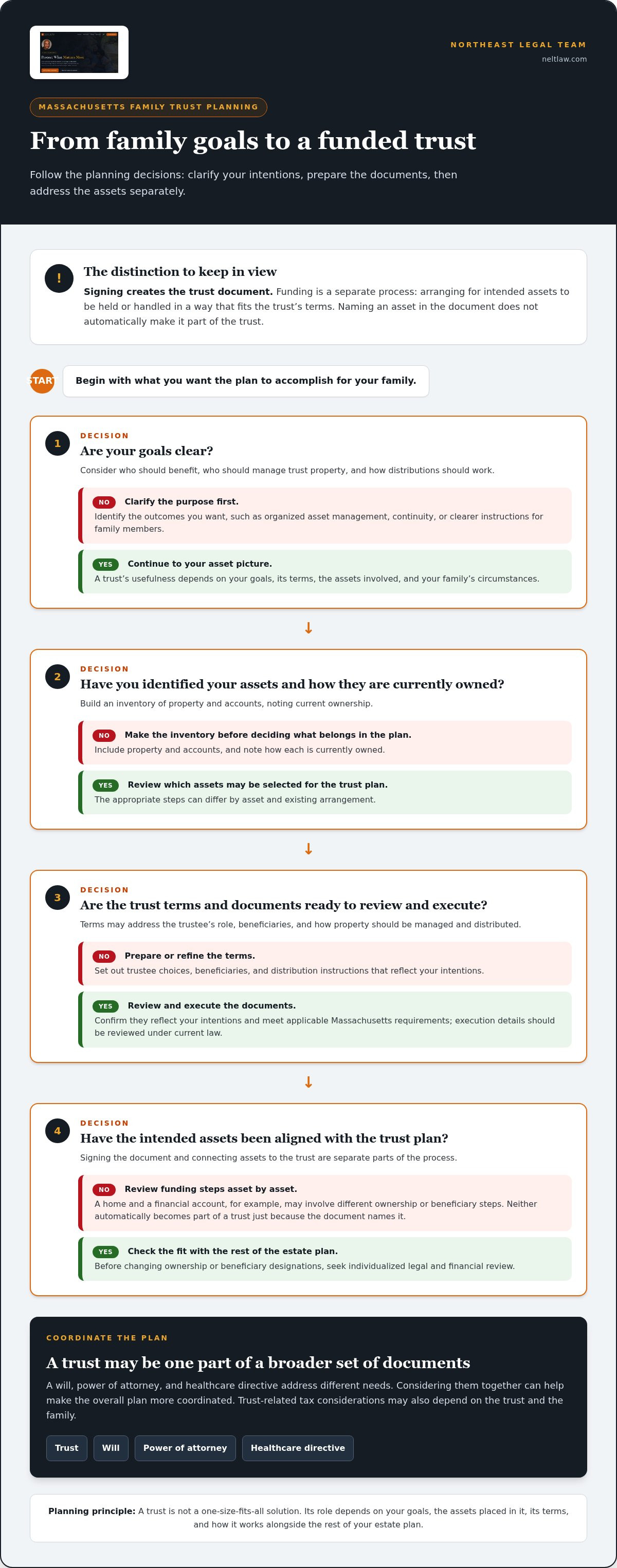
A typical process moves through these steps:
- Clarify goals: Decide what you want the plan to accomplish for your family.
- Identify assets: Make an inventory of property and accounts, noting how each is currently owned.
- Prepare terms: Set out trustee choices, beneficiaries, and distribution instructions.
- Review and execute documents: Confirm that the documents reflect your intentions and meet applicable Massachusetts requirements. Execution details should be reviewed under current law.
- Fund the trust: Take appropriate steps to align selected assets with the trust plan.
Trust planning may also involve a will, power of attorney, or healthcare directive. These documents address different needs, so considering them together can help make the overall plan more coordinated. Trusts may also have tax considerations; the IRS provides an overview of the tax implications of trusts, though how those issues apply depends on the trust and the family.
Why does trust funding matter after signing?
Signing creates the trust document, but funding is the separate process of arranging for intended assets to be held or handled in a way that fits its terms. A home and a financial account, for example, may involve different ownership or beneficiary steps. Neither automatically becomes part of a trust just because the document names it. The right approach depends on the asset, existing arrangements, and current Massachusetts rules.
Before changing ownership or beneficiary designations, seek individualized legal and financial review. A transfer can affect more than the trust plan, and broad instructions may not fit every asset. To discuss how a living trust could fit alongside your other estate-planning documents, you can explore estate planning guidance from Northeast Legal Team.
Family trust or will: how to compare the options for your situation
A will and a trust can both record instructions for your property, but they work differently and address different planning needs. A trust doesn’t automatically remove every asset from probate. The result can depend on how property is owned, beneficiary designations, and whether the trust plan is properly carried out. A family trust lawyer Harvard MA families consult can help assess these details in the context of current Massachusetts trust law.
| Planning consideration | Will | Trust |
|---|---|---|
| Purpose | States instructions for distributing property and can name a person to manage the estate process. | Sets terms for a trustee to manage and distribute property held in the trust. |
| Asset handling | May direct how property in the estate is distributed, subject to applicable law and ownership arrangements. | Applies to property arranged under the trust; assets don’t move into it automatically just because the document is signed. |
| Administration | Typically guides estate administration through the applicable probate process. | Provides management instructions for trust property. Probate effects depend on what property is actually held in the trust and other details. |
| Planning role | Can address instructions that a trust may not cover, depending on the plan. | Can establish ongoing management or distribution terms for included assets. |
What can a trust address that a will may not address in the same way?
A will and trust communicate instructions through different legal arrangements. A will generally directs how estate property should be handled, while a trust gives a trustee instructions for property held under its terms. Neither tool is best for every Massachusetts household, and a trust alone doesn’t guarantee that all property avoids probate. Ownership, beneficiary designations, and proper planning all matter.
Which family and asset factors should guide the decision?
Consider how property is titled, who your beneficiaries are, whether anyone may need tailored support, and whether you want someone to manage assets over time. Incapacity planning also deserves attention, but it isn’t a trust-only question; powers of attorney and healthcare directives may address other needs. Specialized asset-protection goals call for separate analysis, including the considerations discussed in this Medicaid asset protection trust overview.
Legal-service fees are another practical factor. Flat-fee planning can make document costs more predictable; the firm’s Massachusetts estate-planning flat-fee guide explains that approach. A tailored review can help you compare options without assuming one document must do every job.
How to evaluate a family trust lawyer serving Harvard, Massachusetts
Choosing counsel is about more than getting a trust document drafted. Look for estate-planning work that includes living trusts and related documents, clear explanations of options and tradeoffs, and a defined process from the first conversation through signing and follow-up. A family trust lawyer Harvard MA families consult should also take time to understand their priorities, assets, and family circumstances rather than treating every plan as the same.
Local relevance means applying Massachusetts planning context to your situation in Harvard, not assuming that every household has identical needs. Northeast Legal Team works on estate planning documents, including living trusts, wills, powers of attorney, and healthcare directives. Its flat-fee document services can make legal-service fees more predictable. For additional criteria to consider, review this estate attorney evaluation checklist.
What should a first conversation about trust planning cover?
A little preparation can make the discussion more useful. Bring or make notes about:
- Your priorities for managing and distributing family assets.
- Broad categories of assets, such as real estate, accounts, or business interests.
- People you may want to name as trustees or beneficiaries, and any needs that could affect them.
- Existing wills, trusts, powers of attorney, or healthcare directives.
- Questions about funding, signing, updates, and who handles each next step.
A productive conversation should clarify which options may fit and what tradeoffs to consider before documents are prepared. Northeast Legal Team offers a free consultation or assessment without obligation, giving families a low-pressure opportunity to discuss their needs and explore how trust planning may fit within a broader estate plan.
How can clear fees and communication reduce planning stress?
Flat-fee document services can make legal fees easier to anticipate, while a clear explanation of scope helps you understand what the work covers. Discuss which documents are included in the proposed plan, what signing steps you’ll need to complete, and what responsibilities remain after the documents are prepared. A trust may also require attention to asset transfers, so be sure the process explains how those steps relate to the plan.
Not every family needs the same documents. The goal is to understand the work, communication, and next steps before moving forward, so the plan can reflect your circumstances. Schedule a free consultation or assessment to discuss your estate-planning priorities with Northeast Legal Team.
Your next steps with a family trust lawyer near Harvard, MA
Estate planning doesn’t have to happen all at once. Start by collecting what you already have, then identify the questions you most want answered. A family trust lawyer Harvard MA families speak with can help you understand whether a living trust fits your priorities and how it may work alongside other estate-planning documents.
What to gather before discussing a family trust
You don’t need a complete inventory or a finished plan before starting. A broad overview is enough to make the first conversation more focused. If you have them, gather:
- Existing wills, trusts, powers of attorney, and healthcare directives.
- A general list of property and accounts, including any real estate or business interests.
- Your priorities for family members and other intended beneficiaries.
- Questions about choosing a trustee, funding a trust, coordinating documents, and responsibilities after signing.
Consider what you want loved ones to understand or be able to do if you can’t manage your affairs yourself. Note any changes in your family, property, or wishes that may make older documents worth reviewing. These details help counsel see the plan as a whole, not just as a request for one document.
How Northeast Legal Team can help you move forward
Northeast Legal Team works with families on living trusts and other estate-planning documents, including wills, powers of attorney, and healthcare directives. A free consultation or assessment can help clarify your priorities, discuss relevant planning options, and identify questions that need closer review. From there, you can consider a plan tailored to your circumstances rather than assuming every family needs the same documents.
A first discussion can bring your concerns into focus and help you understand possible next steps. You can talk through how a living trust might fit with the rest of your estate plan, what information may be needed, and which choices are yours to make. The process can move at a manageable pace, with room to review options before deciding how to proceed.
If you’re in Harvard and ready to discuss your family’s wishes, schedule a free estate-planning consultation. There’s no obligation to move forward; the conversation can simply help you find a clearer path for planning.
Take the Next Step Toward a Plan That Fits
A family trust can help set clear directions for managing and distributing assets, but its usefulness depends on the terms, the assets included, and your family’s goals. Remember that signing a trust and funding it are separate steps, and a trust may work alongside a will, powers of attorney, and healthcare directives as part of a coordinated estate plan.
Choosing a family trust lawyer Harvard MA families can speak with openly gives you room to discuss your priorities and understand your options before deciding what documents make sense. Northeast Legal Team offers flat-fee estate-planning document services and a free consultation or assessment without obligation. The first conversation can help clarify your questions and possible next steps.
Schedule a free estate-planning consultation and take one manageable step toward instructions that reflect your wishes. With thoughtful guidance, you can make a plan that feels clearer for you and your loved ones.
Frequently Asked Questions
What does a family trust lawyer do?
A family trust lawyer helps you decide whether a trust fits your goals, prepares trust terms, and explains how the plan works with other estate documents. A family trust lawyer Harvard MA families consult can discuss who will manage trust property, who may benefit, and how distributions should work. The lawyer can also help identify funding questions and explain which steps need attention for specific assets.
Do I need a trust if I already have a will in Massachusetts?
Not necessarily. A will and a trust serve different purposes, and having a will doesn’t automatically mean you need a trust. A will can provide instructions for estate property, while a trust can set terms for managing property placed in it. Your assets, beneficiaries, and preferred management arrangements help shape the choice. A review of your existing documents can show whether they work together or need updating.
Does a family trust avoid probate in Massachusetts?
A trust doesn’t automatically keep every asset out of probate. The effect depends in part on how property is owned, whether it was properly transferred to the trust, and whether beneficiary designations apply. Property not arranged under the trust may be handled through a different process. A Massachusetts estate-planning lawyer can review your assets and plan to explain what probate considerations may apply to your circumstances.
What happens if I sign a trust but do not fund it?
The trust document may state your instructions, but signing it and funding it are separate steps. If intended property isn’t appropriately connected to the trust, the trustee may not be able to manage it under those terms. Funding steps vary by asset. For example, a home and a financial account can involve different ownership or beneficiary arrangements, so get individualized guidance before making changes.
Can a family trust include a home in Harvard, Massachusetts?
A home may be considered for inclusion in a trust, but whether and how to arrange that depends on its ownership, the trust terms, and applicable transfer requirements. Don’t assume a signed trust automatically changes a property’s ownership. A lawyer can review the home’s title and your broader plan, then explain potential steps and considerations for your situation in Harvard and under Massachusetts law.
How much does a family trust lawyer cost in Massachusetts?
Fees depend on the scope of the legal work and the documents your plan requires, so there isn’t one amount that applies to every family. Northeast Legal Team offers flat-fee legal services for estate-planning documents, which can make fees more predictable. Before work begins, discuss what the fee covers, which documents are included, and whether follow-up or other planning needs fall within that scope.
What should I bring to a family trust consultation?
Bring any existing wills, trusts, powers of attorney, and healthcare directives, along with a broad overview of your property and accounts. Note your priorities, intended beneficiaries, and questions about trustees, funding, or coordinating documents. You don’t need a perfect inventory to begin. Northeast Legal Team offers a free consultation or assessment without obligation for families in Middlesex and Worcester Counties, Massachusetts, to discuss relevant planning options.


