

A missing will does not leave a family without a way forward. Estate administration still needs to address the person’s property and who receives it, which can be difficult to manage during a time of loss. A will and trust lawyer in Ashland, MA can explain estate planning options and help families understand what happens when someone dies without a valid will.
It’s understandable to want clear answers about protecting your wishes and making things easier for the people you love. This article explains how wills and trusts support an estate plan, what legal guidance can involve, and how estate administration proceeds without a valid will. You’ll also learn how powers of attorney and healthcare directives can help plan for decisions during your lifetime, so you can consider steps that fit your family’s needs.
Key Takeaways
- Learn how probate helps carry out a will’s instructions and what an attorney can do to support the process.
- See how an estate plan can organize who manages your affairs and how your wishes are recorded.
- Understand the different roles a will and a trust can play in directing the care and distribution of assets.
- Find out how estate administration proceeds when there’s no valid will, including how state law affects who inherits.
Searching for a wills lawyer?
For families in Ashland, Massachusetts, probate is the process of handling an estate after someone dies. A probate attorney can help carry out the wishes expressed in a will and guide an executor through paperwork, court steps, and questions about distributing property. If you’re choosing a will and trust lawyer in Ashland, MA, ask how they support both probate and estate administration.
A useful first step is to identify what the estate includes and which documents are available. A lawyer can review the will, gather information about property and debts, and clarify which tasks need attention. The work depends on the estate’s assets, the documents left behind, and whether anyone challenges the will. These details shape the process more than a general checklist can.
Probate can take time, adding strain for loved ones who are managing practical matters during a loss. A will can make a person’s instructions clear and help reduce confusion about who should act and how property should be distributed. It does not mean every estate avoids probate or proceeds without complications.
When considering probate representation, focus on the support needed at each stage. An attorney can explain court-related steps, help organize estate information, and address questions that arise during administration. If family members disagree about an instruction, legal guidance can clarify what the will says and what needs attention. This support is especially useful when the estate or family circumstances are complex.
Guardianship concerns can also shape planning when a family has minor children. A lawyer can discuss how those wishes fit into an estate plan, alongside instructions for property and decision-making. To ensure documents reflect your priorities, explain them clearly. For Ashland residents, planning can connect future arrangements with practical probate support, whether you’re preparing ahead or administering an estate now.
Estate planning
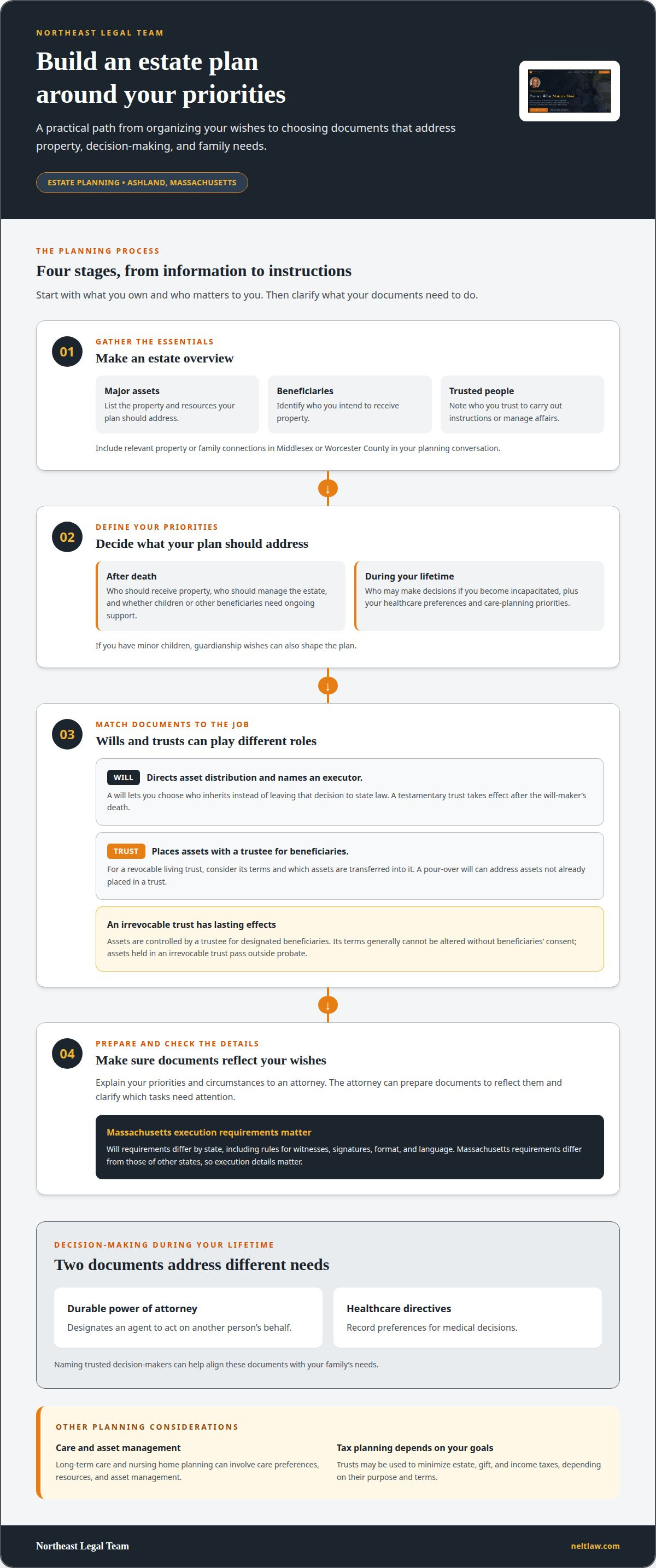
An estate plan connects your property, family priorities, and instructions for future decisions. For Ashland residents, planning starts by identifying what needs protection and which documents can express your wishes.
Ashland Estate Planning Services
Estate planning in Ashland can organize documents about who should receive property and who may make important decisions. Will requirements differ by state, including rules for witnesses, signatures, format, and language. If you own property or have family connections in Middlesex or Worcester County, include those details in your planning conversation. A personalized plan should reflect your circumstances and goals.
List major assets, intended beneficiaries, and people you trust to carry out your instructions. This gives an attorney a practical starting point for discussing your estate plan. A will lets you choose who inherits your assets rather than leaving that decision to state law, and clear directions can reduce confusion among family members.
Planning for Ashland Residents
Ashland residents can plan for decision-making during incapacity as well as after death. A Massachusetts durable power of attorney designates someone to act as an agent on another person’s behalf. Healthcare directives can record preferences for medical decisions. Naming trusted decision-makers helps align these documents with your family’s needs.
Long-term care and nursing home planning can involve care preferences, resources, and asset management. Discuss these priorities as part of your plan, particularly if supporting a family member is important. An irrevocable trust places assets under a trustee’s control for designated beneficiaries. Its terms generally cannot be altered without beneficiaries’ consent, so consider the lasting effect carefully.
Estate, gift, and income tax planning depends on your assets and goals. A focused discussion can consider how planning choices may affect your family and property. Trusts may be used to minimize estate, gift, and income taxes, depending on their purpose and terms. To explore how Wills & Estate Plans can support your goals, begin with the decisions you want your documents to address.
Wills and trusts
A will names an executor and directs asset distribution; a trust places assets with a trustee for beneficiaries. The better fit depends on your wishes, property, and how you want assets managed.
Wills for Married Couples
Separate wills let each spouse record individual wishes and identify who should receive their assets. They can also provide for a surviving spouse and, eventually, pass assets to children. During a consultation, discuss how each will should address shared property, separate property, and family circumstances. Don’t assume one spouse’s document reflects the other’s intentions.
Last Wills and Testaments
A last will and testament is a legal document that directs asset distribution after death. A simple will can name an executor to carry out its instructions. A testamentary trust will creates a trust that takes effect after the will-maker’s death and manages assets for intended beneficiaries.
For Massachusetts revocable living trusts, consider the trust terms and which assets are transferred into it. A pour-over will can address assets not already placed in a trust; assets held in an irrevocable trust pass outside probate.
Creating a Will or Trust
Start by listing assets, intended beneficiaries, and people you trust to manage your affairs. Then explain your priorities to an attorney, including whether beneficiaries need ongoing support. The attorney can prepare documents that reflect your wishes and circumstances. Massachusetts will requirements differ from those of other states, including rules for witnesses, signatures, format, and language, so execution details matter.
Choosing a Wills and Trusts Lawyer
When looking for a will and trust lawyer in Ashland, Massachusetts, consider whether they clearly explain wills, trusts, and probate. An attorney should use the consultation to understand your goals and explain how proposed documents address them. For reviews, look for specific comments about communication, document preparation, and guidance through estate matters rather than relying on star ratings alone. Ask how the attorney’s approach fits your circumstances.
Estate administration when there is no valid will
When someone dies without a valid will, loved ones still face practical questions about the estate. Which assets need attention? Who can take steps to manage them? How will property be distributed? The answers depend on applicable law and the estate’s details. In Massachusetts, legal guidance can help families understand these questions without assuming an outdated or incomplete document controls.
Start by assembling a clear picture of the estate. Identify bank accounts, real property, personal belongings, debts, and any documents that may affect ownership. For example, a jointly held home may need different attention from an account held only in the deceased person’s name. This distinction helps establish what must be addressed through estate administration.
Next, family members need to understand who may handle estate matters and what authority applies. Don’t rely on family expectations alone to determine who can act. A probate attorney can review available records, explain relevant steps, and help organize information for administration. If relatives disagree about an asset or their roles, legal guidance can clarify the issue and keep decisions focused on the estate.
Without a valid will, the deceased person’s written instructions may not provide a reliable guide to distribution. Applicable inheritance rules and family circumstances shape the questions that need answers. Relatives may need to establish which family relationships matter and whether particular assets pass through the estate. An attorney can explain how these factors affect the process in Massachusetts, rather than relying on assumptions based on another state.
Keep records of important documents, asset information, and communications among loved ones. That organized record can help clarify what has been identified and what still needs attention. Estate plans prepared during life can give family members clearer instructions; after a death without a valid will, probate and estate administration focus instead on handling the situation that exists. For help understanding the next steps, discuss estate administration and the questions affecting your family.
Northeast Legal Team: Wills & Estate Plans
Northeast Legal Team helps individuals and families put clear estate instructions in place and plan for important decisions. If you’re preparing a will, considering a living trust, or need to name someone to act on your behalf, the firm’s attorneys can help shape documents around your priorities. Powers of attorney and healthcare directives can address financial and medical decisions during your lifetime.
If a loved one has died without a valid will, probate and estate administration guidance can help you understand the steps involved. Consider seeking support before a major family or financial change, or when you’re responsible for handling an estate and need a clearer path forward.
Take the Next Step at Your Own Pace
A useful next step is to decide what you most want your plan to make clear. It might be who should make important decisions, how your wishes should guide future choices, or what your family may need to understand if circumstances change. Naming that priority can make a conversation with a will and trust lawyer in Ashland, MA more focused and personal.
You don’t need to have every answer ready before asking for guidance. Bring your most important questions, along with concerns about a current plan or an estate that needs administration. A thoughtful discussion can help you understand the available options and choose a practical direction for your family.
Contact Northeast Legal Team to discuss the next step that fits your situation. Planning can begin with one clear question, and you can move forward at a pace that feels manageable.
Frequently Asked Questions
What are the Massachusetts requirements for a valid will and witness signatures?
Massachusetts will requirements include rules about the document’s format, language, signatures, and witnesses. Because requirements differ between states, a form prepared for another state may not fit Massachusetts rules. Before signing, have the execution steps reviewed for your circumstances, especially if the will was created elsewhere or already signed. Properly prepared documents help make your intentions clearer to the people handling your estate.
will vs living trust in Massachusetts: which is better
Neither is universally better; the choice depends on your wishes, property, and how you want assets managed. A will names an executor and directs distribution, while a living trust places transferred assets with a trustee for beneficiaries.
Massachusetts revocable living trust rules and probate avoidance
For a Massachusetts revocable living trust, consider the trust terms and which assets are transferred into it. A pour-over will can address assets not placed in the trust; assets in an irrevocable trust pass outside probate.
Ashland MA estate planning attorneys reviews and ratings
Look for specific reviews describing communication, document preparation, and guidance through estate matters rather than relying on star ratings alone. Ask how the attorney’s approach fits your circumstances.


