

Family conflict after a death often grows from uncertainty as much as disagreement. Estate planning to reduce family conflict in Worcester County means documenting your wishes clearly, choosing someone capable and fair to carry them out, and helping relatives understand what to expect. Thoughtful planning makes responsibilities and decisions easier to follow.
It’s understandable to want to protect your family without making difficult conversations harder. This article explains how clear wills and trusts can reduce ambiguity, what to consider when choosing an executor or trustee, and how talking with family can prevent surprises. You’ll also learn how estate planning attorneys serving Worcester County can help tailor a plan to your family, including blended families, dependents, and family businesses.
Key Takeaways
- Choose an executor or trustee for their judgment, organization, and willingness to follow your instructions, not simply because they’re a relative.
- Clear, current documents can reduce uncertainty about who receives assets, who makes decisions, and how family circumstances are handled.
- A thoughtful family conversation can prepare loved ones for your choices, especially when an inheritance may be unequal or sentimental belongings are involved.
- When a family member with special needs depends on ongoing support, specialized planning can help address their needs as part of a broader estate plan.
Choosing an executor or trustee
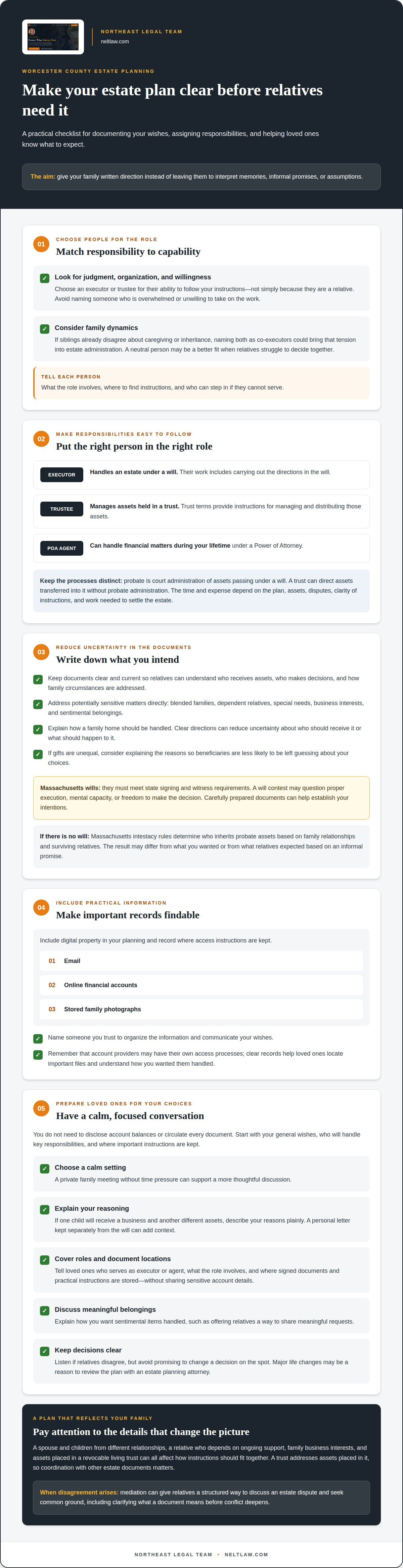
Choose an executor for sound judgment, organization, and willingness to follow your instructions. A relative may understand family dynamics, but closeness alone doesn’t make someone the right choice. If siblings already disagree about caregiving or inheritance, naming both as co-executors could bring that tension into estate administration. A neutral person may be a better fit when relatives struggle to make decisions together.
Probate and trust administration follow different processes, so the time and expense depend on the plan and the assets involved. Probate involves court administration of assets passing under a will. A trust can direct assets transferred into it without probate administration. Disputes, unclear instructions, and the work required to settle the estate can all affect the process.
Massachusetts wills must meet state signing and witness requirements. A will contest may question whether the document was properly executed or whether the person had the mental capacity and freedom to make the decision. Clear, carefully prepared documents can help establish the person’s intentions. An estate planning attorney can explain how Massachusetts requirements apply to the will and the circumstances of its signing.
Match each role to its purpose. An executor handles an estate under a will; a trustee manages assets held in a trust; and an agent under a Power of Attorney can handle financial matters during your lifetime. Tell each person what the role involves, where to find instructions, and who can step in if they can’t serve. Avoid choosing someone who is overwhelmed or unwilling to take on the responsibility.
Include digital property in your planning. List examples such as email, online financial accounts, and stored family photographs, then record where access instructions are kept. Name someone you trust to organize this information and communicate your wishes. Account providers may have their own access processes, so clear records can help loved ones locate important files and understand how you wanted them handled.
How Can Estate Plans Reduce Family Conflict?
A clear estate plan gives relatives written direction instead of leaving them to interpret memories or make assumptions. For estate planning to reduce family conflict in Worcester County, the plan should reflect your family’s actual relationships and priorities.
Common Causes of Estate Disputes
Disputes can arise from unclear documents, outdated beneficiary choices, or uncertainty about personal belongings. For example, relatives may disagree over a family home if the plan doesn’t explain who should receive it or how it should be handled. Unequal gifts can also cause hurt or suspicion if beneficiaries don’t understand the reasons. Addressing blended families, dependent relatives, special needs, and business interests directly makes instructions easier to interpret.
Mediation can give relatives a structured way to discuss an estate disagreement and seek common ground. It may help clarify what a document means before conflict deepens.
Intestacy and Family Disputes
Intestacy means someone dies without a will directing the distribution of probate assets. In Massachusetts, state intestacy rules determine who inherits based on family relationships and surviving relatives. The outcome may differ from what the person wanted, especially if family members expected an informal promise to guide distribution.
Planning documents your intended choices instead of leaving relatives to guess. A written plan is especially useful when your family includes a spouse and children from different relationships, or a relative who depends on ongoing support.
Revocable Trusts and Probate
A Massachusetts revocable living trust can help avoid probate for assets transferred into it and provide instructions for their distribution. Clear trust terms give beneficiaries a shared reference for how assets should be managed and distributed. The trust only addresses assets placed in it, so coordination with other estate documents matters.
Estate planning to reduce family conflict in Worcester County may include a trust when privacy, distribution instructions, or family circumstances make it a useful fit. Massachusetts estate tax thresholds and rates depend on the estate and applicable rules; the estate’s taxable value and asset composition are important factors in assessing potential liability.
Is it better to talk to my family about my estate plan?
Usually, yes. A calm conversation can help loved ones understand your plan before grief and probate bring urgent decisions. You don’t need to disclose account balances or share every document. Start by explaining your general wishes, who will handle key responsibilities, and where important instructions are kept. For example, tell adult children whom to contact if you become unable to manage your affairs.
Choose a setting that supports a calm discussion, such as a private family meeting without time pressure. Explain the reasons for your decisions rather than inviting relatives to negotiate them. If one child will receive a business and another different assets, describe your reasoning plainly. A personal letter kept separately from the will can provide context without crowding the legal document with explanations.
- Share who has a role, such as serving as executor or agent, and explain what that role involves.
- Describe where your signed documents and practical instructions are stored, without circulating sensitive account details.
- Discuss how you want sentimental belongings handled, such as offering relatives a way to share meaningful requests.
- Tell loved ones that major life changes may prompt you to review your plan with an estate planning attorney.
Keep the conversation focused on your wishes and the reasons behind them. If relatives disagree, listen without promising to change a decision on the spot. For example, acknowledge that a child feels surprised by an unequal gift, then explain the context and point to the written plan. Clear, consistent communication can prevent family members from relying on conflicting memories.
Some details are personal, and you can set boundaries. You might tell relatives that a trust provides for a dependent without sharing private financial terms. If family relationships are strained, speak individually with the people who need to understand their responsibilities. A brief follow-up note can summarize the conversation and say where the relevant documents are stored.
Estate planning lawyers serving Worcester County
An estate planning lawyer can translate family priorities into coordinated documents and explain how each choice works. In Worcester County, planning may involve a home, retirement assets, a family business, or a dependent relative. The lawyer connects your wishes to clear instructions, so relatives aren’t left interpreting conflicting documents during an already difficult time.
Look for a planning conversation that begins with your circumstances, not a standard package. A recent marriage, blended family, child with special needs, or business successor can change what your plan should address. A lawyer can review existing documents, identify gaps, and help align your will, trust, and decision-making documents with your goals. For example, a parent may want to provide for a current spouse while preserving an inheritance for children from an earlier relationship.
Local experience matters because an attorney should understand the Massachusetts rules relevant to your plan and explain how your documents work together. A Worcester County estate planning attorney profile describes a lawyer with 16 years of experience and a J.D. from Massachusetts School of Law. Credentials alone don’t show whether a lawyer listens well, so notice whether the discussion addresses your family structure and explains choices in plain language.
Before planning begins, gather existing wills, trusts, beneficiary information, and a short list of concerns. The attorney can use these materials to understand your current arrangements and discuss changes after marriage, a birth, a death, or a major financial shift. Ask how the plan handles personal belongings, who will carry out your instructions, and what circumstances should prompt a review. These answers turn a broad wish to protect your legacy into practical decisions.
If your documents no longer reflect your family or inheritance goals, discuss your estate planning needs and begin shaping a plan around your wishes.
Northeast Legal Team: Special Needs Planning
Northeast Legal Team helps families include a loved one with special needs in a thoughtful estate plan. This planning can clarify who will manage assets, how family members should carry out your wishes, and how support fits alongside an inheritance. Depending on your circumstances and goals, a will, living trust, or power of attorney may address related decisions.
Consider special needs planning when a dependent family member may need ongoing support, when relatives’ responsibilities need clarification, or when an existing plan no longer reflects your family. A conversation can help organize your priorities and identify the documents that fit them. Contact Northeast Legal Team to discuss special needs planning for your family.
Give your family a clearer path forward
The next step can be simple. Start by identifying the decision you most want settled, such as who can manage your affairs or how you want your legacy handled. A focused conversation can turn that priority into a plan your family can understand and follow.
Thoughtful estate planning to reduce family conflict in Worcester County begins with choices that reflect your relationships and wishes. Northeast Legal Team can help you develop Wills & Estate Plans, Living Trusts, and Power of Attorney documents around those priorities. Start with the question or family concern that matters most to you.
Contact Northeast Legal Team to discuss your estate planning needs. A considered plan can help your loved ones move forward with greater clarity and care.
Frequently Asked Questions
How Do I Protect My Assets for My Heirs?
Begin by matching your assets with the people and purposes you want them to support. For example, plans for a home, savings, and a family business may address different needs. Discuss ownership, beneficiary designations, and protective structures as one coordinated picture. In Worcester County, an estate planning attorney can help align these choices with your wishes and explain how each part supports your family’s goals.
How Do You Structure Your Plan to Avoid Fights?
Organize your plan around clear decisions: what each asset is meant to support, who will carry out that intention, and what should happen if that person can’t serve. For example, a plan might name a backup decision-maker and set a specific purpose for funds intended for education. A written summary of these choices can help relatives understand the plan without guessing at your priorities.
What About Complicated Situations Like Blended Families or Digital Assets?
Address each situation directly rather than relying on a general plan. In a blended family, identify the needs your plan should balance, such as supporting a spouse while preserving a family heirloom for a child. For digital assets, create an inventory of account types and note where access instructions are kept. Review these details after major family or financial changes so your plan continues to reflect your circumstances.
What Are the Core Tools for Preventing These Conflicts?
A will, living trust, Power of Attorney, and healthcare directive address different planning needs. For example, a healthcare directive can record your preferences for medical decisions, while a Power of Attorney names someone to handle financial matters during your lifetime. Consider how these documents work together, including who can act and where instructions are kept. A coordinated plan helps reduce gaps between separate decisions.
What Will Happen to My Business When I Die?
Your business’s future depends on the succession arrangements you make and the people prepared to carry them out. A plan can name a key employee or another integral person if a relative isn’t the right successor. A buy-sell agreement may also set transfer terms. For example, an agreement could allow a buyer to pay siblings their share from company profits over time.
When Should Legacy Planning in Worcester County Begin?
Legacy planning can begin when you have something meaningful to pass on, including in your twenties. It can cover more than financial assets, including family stories, values, or charitable intentions. Starting early gives you room to shape those wishes over time. Revisit the plan as family relationships, responsibilities, or finances change, so the legacy you intend to leave remains clear and relevant.


