

Removing a trustee in Massachusetts generally requires a court order unless the trust document provides another removal process. Under Massachusetts law, a court may remove a trustee for cause, including a serious breach of trust, and may order temporary protections while a removal request is pending. The trust’s terms and the effect on its beneficiaries both matter.
It’s understandable to worry that trust assets could be at risk while a dispute is being heard. Filing a removal petition does not automatically take control away from the current trustee, but a court may order protective relief, such as restricting certain transactions or appointing a temporary co-trustee. This article explains who may petition, what legal grounds a Massachusetts court may consider, and how a successor trustee can be chosen. It also explains how temporary orders can help protect trust property while the court decides what should happen next.
Key Takeaways
- A single beneficiary may petition for removal, and Massachusetts form MPC 266 can also request a successor trustee.
- Courts weigh the trust’s terms and the circumstances, including serious breaches, impaired administration, and whether removal serves beneficiaries’ interests.
- A named backup trustee may take over; if the trust doesn’t name a successor, the court may appoint a suitable replacement.
- While a petition is pending, the current trustee generally remains in control unless the court orders protective relief.
What Is the Process of Removing a Trustee?
Removing a trustee in Massachusetts usually requires a Probate and Family Court order unless the trust provides another removal method. The court considers the trust’s terms, the evidence, and the beneficiaries’ interests.
Court Proceedings for Trustee Removal
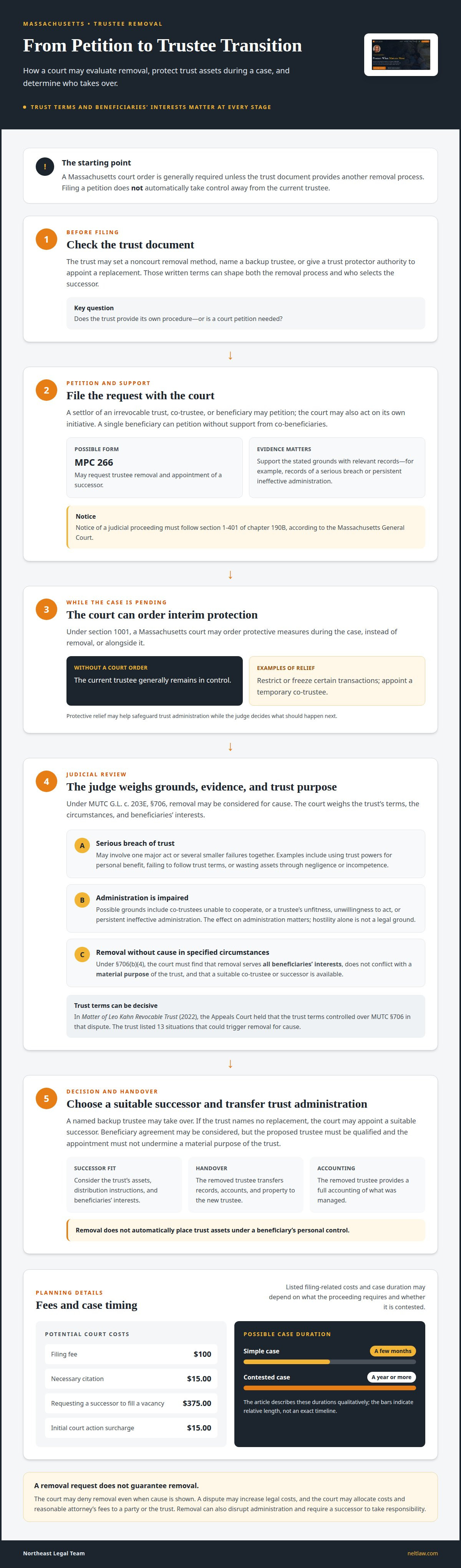
A court proceeding asks a judge to decide whether removal is justified and who should take over. Under MUTC G.L.c. 203E, §706, a court may remove a trustee for cause, including a serious breach of trust. Form MPC 266 may request removal and appointment of a successor. A single beneficiary may petition without co-beneficiaries’ support; the court may also initiate removal.
Interim Relief During Removal Proceedings
Interim relief protects trust administration while the removal case is pending. Under section 1001, a Massachusetts court may order protective measures during the case, instead of removal, or alongside it. For example, the court may freeze certain transactions or appoint a temporary co-trustee. Without an order, the current trustee generally retains control, so requested protection can matter when assets face immediate risk.
Petitions, Notice, and Evidence
A settlor of an irrevocable trust, co-trustee, or beneficiary may petition; a court may act on its own initiative. Notice of a judicial proceeding must follow section 1-401 of chapter 190B, according to the Massachusetts General Court. Evidence should support the stated grounds, such as records showing a serious breach or persistent ineffective administration. The filing fee is $100; a necessary citation costs $15.00, and requesting a successor to fill a vacancy adds $375.00. If this is the initial court action, a $15.00 surcharge applies. Cases may take a few months if simple, or a year or more if contested.
Alternatives and Noncourt Removal
Depending on the trust and the court’s orders, alternatives may address a trustee problem without seeking removal. A court may impose protective relief while a petition proceeds, and it can deny removal even when cause is shown. Beneficiaries generally cannot remove a trustee themselves unless the trust document authorizes a noncourt process. A dispute can increase legal costs, and the court may allocate costs and reasonable attorney’s fees to a party or the trust. Removal may also disrupt administration and require a successor to take responsibility.
Massachusetts legal grounds for trustee removal
Massachusetts General Laws chapter 203E, §706 governs trustee removal under the Massachusetts Uniform Trust Code. Massachusetts adopted its version of the code in 2012. The statute gives courts several grounds to consider, while the trust’s own terms may shape how those grounds apply. In Matter of Leo Kahn Revocable Trust, 102 Mass. App. Ct. 38 (2022), the Appeals Court held that the trust terms controlled over MUTC §706 in that dispute.
Under §706(b)(1)-(3), a court may remove a trustee for a serious breach of trust. That may involve one major act or multiple smaller failures that together show serious misconduct. Examples include using trust powers for personal benefit, failing to follow trust terms, or wasting assets through negligence or incompetence. Evidence should connect the conduct to the trustee’s duties and the trust’s administration, not merely show disagreement with a decision.
Removal may also be considered when co-trustees cannot cooperate and their conflict substantially impairs administration. A trustee’s unfitness, unwillingness to act, or persistent ineffective administration may also provide grounds. The key question is whether the trustee can carry out the trust’s purpose and protect beneficiaries’ interests. Hostility alone is not a legal ground; the circumstances and their effect on administration matter.
Section 706(b)(4) also allows removal without cause in specified circumstances. The court must find removal serves all beneficiaries’ interests, does not conflict with a material purpose of the trust, and that a suitable co-trustee or successor is available. In Matter of Leo Kahn Revocable Trust, the trust listed 13 situations that could trigger removal for cause. That example shows why the settlor’s written terms deserve close attention before choosing a legal ground. For future clarity, trust and estate planning can address who may act and what happens if a trustee must leave.
Appointment of a suitable successor trustee
Replacing a trustee requires a plan for who will manage the trust next. Start with the trust document: it may name a backup trustee or give a trust protector authority to appoint one. Some trusts assign appointment power to someone other than the person who removed the prior trustee. Those terms can determine who selects the successor and help prevent uncertainty during the transition.
If the document names a successor, that person often takes over after removal. If it names no replacement, the court may appoint one. A Massachusetts court may consider appointing a successor when beneficiaries agree, the proposed trustee is qualified, and the appointment does not undermine a material purpose of the trust. Agreement alone is not enough if the proposed choice conflicts with the trust’s purpose.
Suitability matters because the successor must administer the trust according to its terms and protect beneficiaries’ interests. For example, a proposed trustee may need to manage the trust’s particular assets and follow its distribution instructions. A court weighs the proposed person’s qualifications against the trust’s needs, rather than treating a substantial family disagreement as the only factor. The trust may also give a trust protector authority to appoint a replacement.
After removal, trust assets do not automatically pass into a beneficiary’s personal control. The removed trustee must transfer the trust’s records, accounts, and property to the new trustee and provide a full accounting of what was managed. This handover gives the successor a record of the trust’s administration and helps preserve continuity. It also clarifies which property belongs to the trust.
Form MPC 782 is a proposed decree and order for a petition to resign, remove, or appoint a successor trustee. A clear appointment order can identify the successor and formalize the change in responsibility. If the trust names a replacement, the court’s order and the trust terms help guide the transition; if it does not, the court may choose a qualified successor who can serve the trust’s purposes.
Temporary orders to protect trust assets
Filing a trustee removal petition does not automatically change who controls trust assets. In Massachusetts, the current trustee generally remains in control while the case is pending unless the court orders otherwise. That gap can matter if a disputed sale, transfer, or investment could affect the trust before the judge decides whether removal serves the beneficiaries’ interests.
Under Massachusetts General Laws chapter 203E, §1001, the court may order protective relief while a removal request is pending. It may also grant protection instead of removing the trustee or alongside removal. Possible measures include freezing certain transactions or appointing a temporary co-trustee. These orders address immediate administration concerns without deciding the final removal question.
A useful request connects the concern to a specific safeguard. For example, if the trustee plans to sell trust property during the dispute, the petition can explain the proposed transaction and request an order restricting it. If a deadlock between co-trustees prevents essential administration, a temporary co-trustee may help maintain trust operations. The requested measure should match the risk described.
Temporary protection and final removal serve different purposes. A court may consider a serious breach of trust, unfitness, or a substantial change in circumstances when deciding whether to remove a trustee. An interim order addresses what needs protection during the case. For instance, restricting one transaction can preserve an asset while allowing other trust administration to continue.
Trust beneficiaries should understand that raising concerns alone does not stop a transaction; court-ordered relief changes the trustee’s authority. A focused request explains the threatened harm, identifies the trust asset or administrative task, and states the protection sought. If trust structure and asset safeguards need attention, discuss asset protection planning as part of preserving the trust’s intended purpose.
Northeast Legal Team
Northeast Legal Team helps individuals and families understand how a trustee dispute may affect their trust and broader estate plan. If you’re considering removal, questions about the trust’s terms, a successor, or protection for beneficiaries can be difficult to untangle. The team’s estate planning and probate assistance can help clarify how those issues relate to the documents and administration involved.
Support may also help when a trustee change prompts a review of the trust or other planning documents. Wills & Estate Plans and Living Trusts can help record your wishes and organize future decisions. Each situation depends on its documents and circumstances.
For help with your estate planning or probate questions, contact Northeast Legal Team for a free consultation.
Take the Next Step Toward a Clear Plan
A trustee dispute can raise questions beyond the current disagreement: whether the trust still reflects your intentions, how a successor will carry out its terms, and what planning could prevent similar uncertainty later. Before deciding how to proceed with removing a trustee in Massachusetts, consider how the trust documents and the beneficiaries’ needs fit together.
Northeast Legal Team offers Wills & Estate Plans, Living Trusts, and Power of Attorney. These planning tools can help individuals and families set out their wishes and prepare for future decisions. If you’re unsure how a trustee concern fits with your broader estate plan, a conversation can help identify the issues that need attention and a practical next step.
Contact Northeast Legal Team to discuss your estate planning questions. A thoughtful plan can help you move forward with greater clarity and care.
Frequently Asked Questions
What are the Grounds that Allow Removal?
Grounds for removal may include serious misconduct, inability to administer the trust effectively, or circumstances in which a change would serve beneficiaries’ interests. A judge may still deny removal as an equitable decision, even if the petitioner presents grounds for cause. For example, evidence of a poor decision alone may carry less weight than proof that ongoing conduct seriously harms trust administration.
Which Trustees Can Be Replaced?
A serving trustee may be considered for replacement, including one trustee in a group of co-trustees. The question is whether the person’s conduct or circumstances meet a removal ground or a process allowed by the trust. For example, a co-trustee who cannot work with another trustee may be considered for removal if their deadlock substantially impairs administration. A suitable replacement must also be available when required.
Who is a Trustee and What are They Supposed to Do?
A trustee is a person or entity responsible for managing property held in a trust for its beneficiaries. The trustee administers those assets according to the trust’s terms and purpose. For example, if the document directs distributions under specific conditions, the trustee manages the property and follows those instructions rather than treating the assets as personal property.
What legal grounds justify removing a trustee in Massachusetts?
Massachusetts law allows removal for a serious breach, substantially impaired administration from co-trustee conflict, unfitness, unwillingness, or persistent ineffective administration. A court may also consider removal without cause under MUTC §706(b)(4), subject to beneficiary interests, the trust’s material purpose, and availability of a suitable successor. The trust’s own terms can affect which grounds and procedures apply.
How does a beneficiary request trustee removal in Massachusetts Probate and Family Court?
A beneficiary may petition individually, without co-beneficiaries joining, using Massachusetts Probate and Family Court form MPC 266. The petition can request removal and appointment of a successor. It should identify the reason for the request and provide relevant support, such as trust records or communications. Notice of the proceeding follows section 1-401 of chapter 190B, according to the Massachusetts General Court.
Can a trust document specify a process for removing a trustee in Massachusetts?
Yes. A trust document may authorize a trust protector, family member, or another named person to remove and replace a trustee, subject to the document’s terms. It may also name a successor or assign appointment authority to someone other than the person removing the trustee. In Matter of Leo Kahn Revocable Trust, the Massachusetts Appeals Court held that trust terms controlled over MUTC §706 in that dispute.


