

Estate settlement in Winchendon often takes about a year, though a straightforward estate may be settled in a few months. How long an executor has to settle an estate in Winchendon, MA depends on factors such as creditor claims, taxes, property sales, and disputes among beneficiaries. The executor, also called the personal representative, administers the estate and distributes assets according to the will.
It’s understandable to want a clear timeline, especially when family members are waiting for answers or an inheritance. This guide explains how creditor claim periods and executor responsibilities affect the process, and how Massachusetts probate procedures fit in. You’ll see why some estates move more quickly than others and which steps may extend settlement, without assuming every estate follows the same schedule.
Key Takeaways
- Plan for settlement to depend on the estate’s assets, tax matters, and any disagreements, rather than a single fixed timeline.
- Keep creditor notice and claim deadlines in view before deciding when distributions can safely move forward.
- Organize estate records and resolve debts and taxes before distributing assets to beneficiaries.
- Understand the Massachusetts probate filing timeline and procedures so you can manage the next steps with greater confidence.
How Long Does Estate Settlement Take?
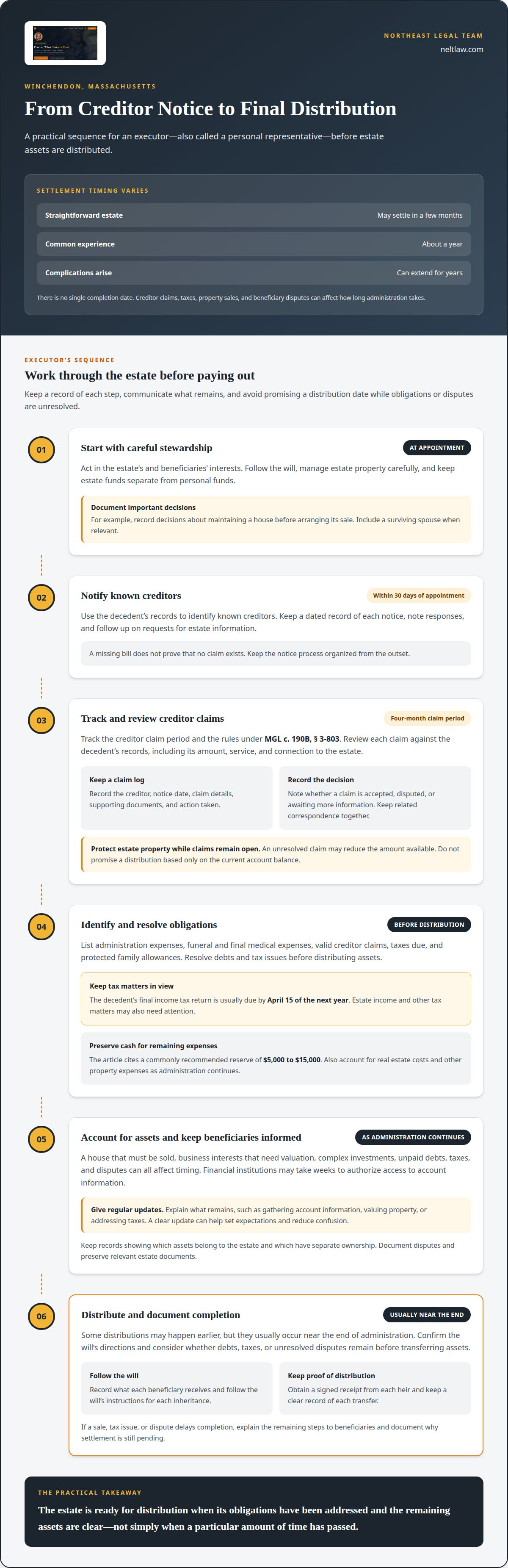
There is no single completion date for every estate. A simple estate may take a few months, while settlement commonly takes about a year and can extend for years when complications arise. If you’re asking how long an executor has to settle an estate in Winchendon, the practical answer depends on the work still required to administer the estate.
- Act in the estate’s and beneficiaries’ interests. The personal representative is a fiduciary, so manage estate property carefully and follow the will. For example, document decisions about maintaining a house before arranging its sale. Include a surviving spouse when relevant, and avoid treating estate assets as personal funds.
- Give beneficiaries clear, regular updates. Explain which steps remain, such as gathering account information, valuing property, or addressing taxes. Financial institutions may take weeks to authorize access to account information. A short update explaining that an account is still being reviewed can help set expectations and prevent confusion.
- Track tax obligations. The decedent’s final income tax return is usually due by April 15 of the next year, according to the Internal Revenue Service. Estate income and other tax matters may require additional attention before the representative can complete administration. Keep tax documents with the estate’s records and account for outstanding filings.
- Address disagreements before distribution. A beneficiary dispute or challenge to a will can prolong probate, sometimes for months or years. Record the issue, preserve relevant estate documents, and explain how the dispute affects next steps. If beneficiaries disagree about an asset, avoid promising a distribution date before the issue is resolved.
- Make distributions when the estate is ready. Some distributions may happen before administration ends, but distributions usually occur near the end. Before transferring assets, confirm the will’s directions and consider whether debts, taxes, or unresolved disputes remain. A clear record of each distribution helps show how the executor fulfilled their obligations.
Creditor notice and claim periods
Creditor notices and claims affect when an executor can safely distribute estate assets. Track deadlines, review claims, and keep the settlement timeline grounded in the estate’s obligations.
-
Provide Creditor Notice
Notify known creditors within 30 days of appointment, and keep a dated record of each notice. This step gives creditors information about the estate and helps establish an orderly process for reviewing claims. Use the decedent’s records to identify known creditors, and avoid treating a missing bill as proof that no claim exists. Note any response and follow up on requests for estate information.
-
Review Claims and Claim Periods
Track the four-month creditor claim period and the rules under MGL c. 190B, § 3-803. Review each claim against the decedent’s records, including the amount, service, and connection to the estate. If a creditor asserts a debt, document whether the estate recognizes it or disputes it. Ask an attorney to help assess a complicated claim before paying it from estate assets.
- Keep a claim log. Record each creditor’s name, notice date, claim details, supporting documents, and the action taken. For example, if a utility provider sends a final bill, save it and note whether the estate paid or disputed it. A consistent log helps the personal representative track outstanding claims and explain decisions to beneficiaries.
- Protect estate property while claims remain open. Keep records showing which assets belong to the estate and which have separate ownership. Don’t promise a distribution based only on the current account balance. An unresolved claim may reduce the amount available, and an unsupported payment can raise questions about how the executor handled estate funds.
- Address disputed claims carefully. Keep correspondence and documents together, and record why a claim is accepted, challenged, or awaiting more information. If disputes make it difficult to manage the creditor process, probate and estate administration can help address the steps involved.
Estate administration obligations before distribution
An executor may need more time when debts, taxes, real estate, or beneficiary disputes remain unresolved. In Massachusetts, estate distributions usually come near the end of administration, after obligations are addressed and the remaining assets are identified.
-
Assess Distribution Timing Factors
Review the estate’s assets and outstanding obligations before estimating when beneficiaries may receive an inheritance. A house that must be sold, business interests that need valuation, or complex investments can slow the transfer. Unpaid debts, tax matters, and disputes also affect timing. If children or a spouse rely on a family allowance, account for that protected need before treating every asset as available for distribution.
-
Plan Distributions and Resolve Debts
List administration expenses, funeral and final medical expenses, valid creditor claims, taxes due, and protected family allowances. Resolve debts and tax issues before distributing assets, because paying beneficiaries first can leave the estate unable to meet its obligations. Keep sufficient cash for remaining expenses; a commonly recommended reserve is $5,000 to $15,000. Consider real estate costs and other property expenses as administration continues.
-
Distribute Inheritances and Record Completion
Follow the will’s instructions when transferring each inheritance, and record what each beneficiary receives. Some distributions may happen before administration ends, but they’re usually among the final steps. Obtain a signed receipt from each heir as a record of distribution. If a sale, tax issue, or dispute delays completion, explain the remaining steps to beneficiaries and document why settlement is taking longer.
An executor may need more time when estate obligations or unresolved issues prevent final distribution. Keep administration moving, record each decision, and explain delays so beneficiaries understand what remains before the estate can close.
Massachusetts estate administration procedures
Massachusetts probate involves court filings, an estate inventory, and records of administration. Organize each document as the estate moves through probate.
-
Identify the Court Handling the Estate
File Winchendon estate matters with the Worcester County Probate and Family Court. Use the correct court name on petitions and related documents, and keep copies with the estate records. Massachusetts probate proceedings include appointing a personal representative and administering property. If there is no valid will, the court appoints an administrator to act for the estate.
-
File the Estate Inventory and Account
Prepare an inventory of the estate’s assets and complete it within one year. The inventory identifies property under administration, including real estate and financial accounts. Keep a separate account of estate transactions, including income received, bills paid, and distributions made. File the account according to the probate court’s directions, and retain supporting documents to explain each transaction.
- Start the probate filing process. In Massachusetts, the probate petition should be filed within 3 years, according to the Massachusetts General Court. The executor also files the will and other required documents with the probate court. Keep records of submissions and court responses together, so the personal representative can track which steps remain before administration advances.
- Use the governing probate framework. Massachusetts probate law is established under Chapter 190B of the Uniform Probate Code, according to the Massachusetts General Court. This framework covers estate administration for people who left wills and those who did not. Assets held in trusts may pass outside probate, so distinguish those assets from property the court-supervised estate must administer.
For help organizing court filings, inventory records, and estate accounts, get support with probate administration.
Northeast Legal Team: Wills & Estate Plans
Northeast Legal Team helps with probate and estate administration when court filings, creditor claims, or beneficiary questions make the next steps difficult to organize. If you’re serving as executor in Winchendon, legal guidance can help you understand the process and keep required tasks moving.
For families planning ahead, Wills & Estate Plans can document how assets should be handled and who should carry out those wishes. Living Trusts, Power of Attorney, and Healthcare Directives can address other parts of future planning. The right tools depend on your family’s circumstances and goals.
For guidance with estate administration or a plan for your family, schedule a free consultation with Northeast Legal Team.
Take the Next Step With Confidence
How long an executor has to settle an estate in Winchendon, MA is only part of deciding what to do next. As personal representative, keep clear records, communicate with beneficiaries, and identify what remains before the estate can close. A steady process helps you make informed decisions as issues arise.
If you’re planning for your family, consider who should manage important decisions and how your wishes should be documented. Northeast Legal Team offers Wills & Estate Plans, Living Trusts, and Power of Attorney to help families prepare for the future. Thoughtful planning can give loved ones clearer direction when circumstances change.
For guidance with estate administration or future planning, contact Northeast Legal Team. You can take the next step at a pace that feels manageable.
Frequently Asked Questions
What Is an Executor of an Estate in Massachusetts?
In Massachusetts, a will names an executor to handle the estate; if there’s no valid will, the probate court appoints a personal representative. For a Winchendon estate, that person manages estate matters rather than personally owning the property. Their work may include organizing records, addressing estate obligations, and carrying out the will’s directions for beneficiaries.
How Long Does It Take to Distribute an Estate?
Distribution usually happens near the end of estate administration, although some assets may be distributed earlier. Timing depends on whether assets are ready to transfer and whether tax, property-sale, or ownership questions remain. For example, a cash bequest may be simpler to transfer than a house that must be sold before proceeds can be divided among beneficiaries.
How long does probate usually take in Massachusetts?
Massachusetts probate often takes about a year, while a straightforward estate may take a few months. The type of probate, taxes, creditor matters, real estate sales, and disputes can all affect the timeline. A will challenge can keep proceedings open longer than routine document gathering, so distinguish ordinary administration from contested matters that need resolution.
What Must Be Paid Before Beneficiaries Receive Anything?
The estate must account for administration expenses, funeral and final medical expenses, valid debts and creditor claims, taxes due, and protected family allowances. For example, treat an outstanding medical bill as an estate obligation rather than informally deducting it from one beneficiary’s share. Keep payment records so the estate account shows what it owed and paid.
How long does informal probate take in Massachusetts?
Informal probate has no single completion date for every Massachusetts estate. The timeline depends on the estate’s assets, creditor claims, taxes, and whether real estate must be sold. For example, a property sale or beneficiary disagreement can keep administration going after probate begins because those matters affect what can be transferred.
How long does formal probate take in Massachusetts?
Formal probate can continue for months or years when legal disputes, such as a will challenge or disagreement among beneficiaries, need resolution. The estate’s assets, taxes, creditor claims, and property sales also affect the schedule. Gathering documents alone won’t resolve these issues, so administration may continue while outstanding matters affect whether assets are ready for distribution.


