

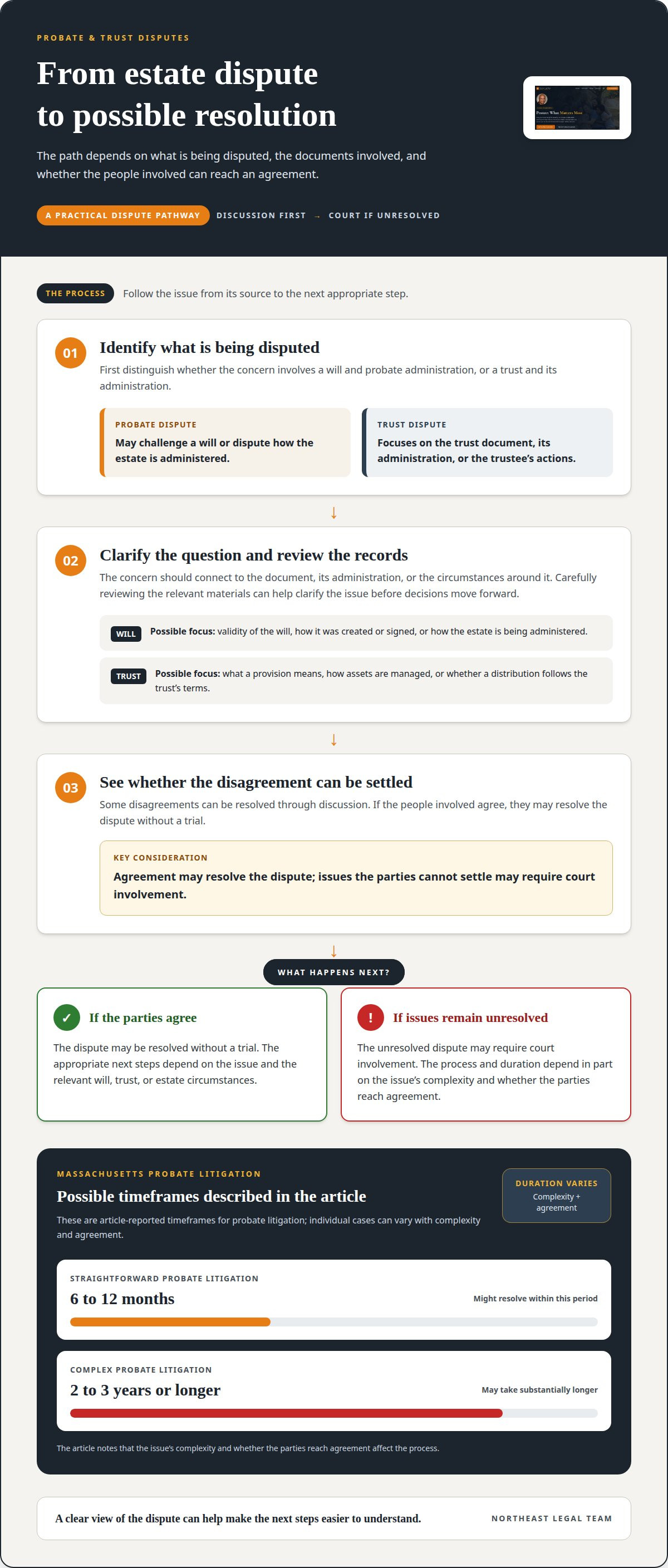
A probate dispute does not always have to end in court. If the people involved can agree, they may resolve the disagreement without a trial; issues they cannot settle may require court involvement. A probate law firm serving Ashby, MA, can explain the options and guide you through the process.
It is understandable to feel uncertain when grief and estate questions overlap. Knowing what may happen next can make decisions more manageable. This article explains ways to resolve probate disputes, what estate administration involves, and common grounds for contesting a will. It also explains how wills and trusts affect an estate and help carry out someone’s wishes. Understanding these steps can help you see what may apply to your situation and when legal guidance could help.
Key Takeaways
- Probate disputes may be resolved through agreement, while unresolved issues can move into court proceedings.
- Understanding the administrator’s role can help clarify the steps involved in managing an estate.
- Possible grounds for contesting a will include concerns about its validity or the circumstances in which it was created.
- When considering attorney reviews and ratings, look for information that helps you assess experience and fit for your probate matter.
Wills and trusts
Ashby is served by the Middlesex Probate and Family Court. A will names intended beneficiaries and a personal representative to manage the estate through probate. A trust holds assets under written terms and names a trustee to manage or distribute them. The appropriate structure depends on the assets, family circumstances, and the person’s wishes.
Trust administration follows the trust document, rather than the will’s probate process. The trustee identifies trust assets, follows the document’s instructions, and manages distributions to beneficiaries. For example, a trust may direct the trustee to provide support over time instead of distributing assets outright. The trustee’s authority and next steps depend on the trust’s terms. Disagreements may concern a provision’s meaning, asset management, or a distribution. Reviewing the document carefully can clarify the issue before decisions move forward.
Probate litigation and trust litigation concern different parts of an estate. Probate litigation may challenge a will or dispute how the estate is administered. Trust litigation focuses on the trust document, its administration, or the trustee’s actions. Some disagreements can be resolved through discussion; unresolved disputes may require court involvement. Straightforward probate litigation cases in Massachusetts might resolve within six to 12 months. Complex probate litigation disputes can take two to three years or longer. The issue’s complexity and whether the parties reach agreement affect the process.
Review wills and trusts after major family or financial changes, such as a marriage, a new child, or a change in intended beneficiaries. Confirm that the chosen personal representative and trustee still fit the plan, and that the documents reflect current wishes. A 2005 Massachusetts Supreme Judicial Court ruling found an adopted child was not entitled to share in an estate like a natural child when the law in effect when the trust was drafted did not treat adopted children as natural born. That example shows why older trust language and its drafting context can matter. An updated review can identify provisions that may no longer match a family’s intentions.
Probate administration
Probate administration organizes an estate’s affairs and moves assets toward appropriate distribution. The steps depend on the will, the estate’s assets, and whether anyone disputes the process.
Personal Representatives and Administrators
A personal representative manages estate administration. An administrator may serve when a personal representative was not named or appointed through a will. The work can include identifying assets, addressing debts, communicating with beneficiaries, and keeping records of decisions. The role requires close attention to both the will and the estate’s circumstances.
Before taking action, clarify who has authority and what the court process requires. For example, someone managing a home, bank accounts, and unpaid bills needs a clear record of each asset and obligation. An attorney can represent a personal representative in court filings, estate matters, and disputes. Organized records help explain decisions to beneficiaries and the court.
Probate Costs and Filing Fees
Massachusetts probate costs and court filing fees depend on the filings involved and the estate’s needs. Court fees relate to filing type, while legal expenses depend on the work required, such as document preparation, asset questions, or contested issues. The cost of legal representation depends on the case and is given after a quote request.
Consider the likely work involved, not just the filing. An estate with unclear records or disagreements may require more administration than one with straightforward paperwork. Keep court filing fees separate from legal fees and other estate expenses so each cost has a clear purpose. No single amount applies to every estate.
A practical administration process starts with locating the will and identifying who is authorized to act. Then organize information about assets and debts, and track filings, communications, and decisions in one record. If a question arises about an account or beneficiary, document it before making a distribution. These steps help the representative keep the process orderly and explain how the estate is being handled.
Legal guidance can help clarify filing responsibilities and administration choices. Probate administration guidance can help representatives understand the work ahead and keep estate decisions organized.
Common grounds for contesting a will
A will contest challenges the document’s validity or the circumstances in which it was created. Disappointment about an inheritance alone is different from a specific concern. For example, a beneficiary may question whether the person understood the document, whether someone pressured them, or whether the signed version reflects their wishes. The concern should relate to evidence about the will, its preparation, or the circumstances around signing.
One possible issue is lack of testamentary capacity: whether the person understood they were making a will, what property they owned, and who could reasonably inherit. Medical records, communications, and witness observations from around the signing date may help explain the person’s condition. A diagnosis alone does not settle the question. The timing and the person’s understanding of the specific document matter.
Undue influence is another concern. It involves an allegation that pressure or manipulation overcame the person’s independent choices. For example, questions may arise if a relative controlled access to the person and arranged a sudden change that benefited themselves. The surrounding facts matter, including who helped prepare the will and whether the change differed from earlier estate plans.
Fraud or forgery may also be alleged. Someone might claim that a signature was falsified or that the signer received false information about the document’s contents. The original will, drafts, correspondence, and testimony from people involved may help clarify what happened. A disputed signature or confusing instruction deserves careful review before assumptions influence family decisions.
Improper execution is another possible basis for a challenge. The concern may relate to how the document was signed or witnessed. A consultation can help organize the timeline, identify the version being challenged, and connect concerns to available records. Keep relevant drafts, messages, and witness names together. This helps distinguish a validity issue from conflict over the estate plan’s outcome. A clear account of the concern also helps counsel explain possible next steps, including whether the dispute can be resolved without continued litigation.
Ashby MA probate attorney reviews and ratings
Online reviews can offer clues about communication, but a star rating alone cannot show how an attorney will handle a specific probate matter. When considering legal help for an estate in Ashby, focus on details in reviews: do they mention clear explanations, timely updates, or help understanding court paperwork? A review about a personal representative’s experience may be more relevant than a general comment about service.
Look for recurring themes across reviews rather than treating one account as decisive. Several reviewers, for example, might describe difficulty getting updates, while others praise careful explanations. Consider when each review was posted and whether it concerns probate or another legal matter. Reviews reflect individual experiences, not a promise about how another estate will proceed.
Use this short checklist to assess what you read:
- Identify whether the review discusses probate, estate administration, or a different legal matter.
- Look for specific examples, such as help understanding a filing or a beneficiary dispute.
- Compare repeated comments about communication, organization, and clarity.
- Read the response to criticism, if one appears, for a professional and respectful tone.
Reviews and ratings are only one part of choosing an attorney. Consider whether the attorney’s work aligns with your needs, such as managing estate paperwork or addressing disagreements among beneficiaries. A review about a straightforward estate may not explain how the attorney handles contested issues. Focus on the nature of your matter.
Prepare a few focused points for a consultation. Explain the estate’s main concern, such as uncertainty about a filing, questions about the personal representative, or tension between beneficiaries. Then consider whether the attorney’s explanations make the next steps understandable. This conversation can help you assess communication and fit more directly than a rating alone. Choose based on the estate’s needs, not just the highest score.
A lawyer’s professional background may be one factor readers consider alongside reviews and the estate’s specific needs.
Northeast Legal Team: Probate & Estate Admin
Northeast Legal Team helps individuals and families with probate and estate administration when settling an estate feels complex or disagreements arise. Legal support can help a personal representative understand the work involved, organize estate matters, and address questions about carrying out a loved one’s wishes.
Planning ahead can clarify how assets should be managed and who can make important decisions. Wills & Estate Plans and Living Trusts put those wishes into written plans, while a Power of Attorney sets out decision-making authority during life. The next step depends on whether you are administering an estate now or planning for the future.
For guidance with probate administration or estate planning, contact Northeast Legal Team to schedule a free consultation.
Take the next step with a clear plan
Before deciding what to do, identify your most pressing need: settling an estate, addressing a concern about a will, or preparing for future family needs. That focus can make a conversation with a probate law firm serving Ashby, MA, more useful. It gives you a clear place to begin without requiring you to resolve every question at once.
Northeast Legal Team helps with probate and estate administration, as well as future planning through Wills & Estate Plans, Living Trusts, and Power of Attorney. These services address different needs, from managing an estate to recording wishes and decision-making authority. A practical next step is to explain your main concern and what you hope to protect. You can then discuss which legal work fits your situation.
Contact Northeast Legal Team to talk through your probate or planning needs. Taking one informed step can help bring greater clarity to the decisions ahead.
Frequently Asked Questions
Can probate disputes be resolved without going to court?
Parties may resolve a probate dispute by agreeing on a practical solution. They can identify the disputed issue, share relevant records, and discuss an outcome, such as how to handle an estate expense. Put any agreement in clear written terms so everyone understands what was decided. If disagreement remains, court involvement may be needed.
What are the most common grounds for contesting a will?
Common grounds include concerns about the person’s capacity, undue influence, fraud, forgery, or improper signing procedures. The key is to connect the concern to evidence rather than relying on disappointment about an inheritance. For example, a difference between a disputed provision and earlier drafts may raise questions about how the will was prepared. Records and witness accounts can provide useful context.
How to file a probate case in Massachusetts
Locate the will and identify who is authorized to act. Organize information about the estate’s assets and debts, then track filings, communications, and decisions. Filing responsibilities depend on the court process and the estate’s needs.


