

What if you discovered that the Commonwealth of Massachusetts has a pre-set plan for your home and savings that could cost your family over $180,000 in taxes? For many families in Middlesex and Worcester counties, the state's default approach leads to a probate process that can drag on for eighteen months or longer. If you've felt a sense of dread while looking at complex legal forms, you're not alone. Using a comprehensive estate planning checklist massachusetts residents can trust is the first step toward replacing that confusion with a clear, supportive path forward.
It's natural to want your loved ones to stay out of a public courtroom, yet the difference between a will and a trust often feels like a riddle. You deserve a plan that protects your legacy without the stress of unpredictable legal bills. This guide offers a step-by-step walkthrough of the 2026 legal landscape. We'll cover how to navigate the $2 million estate tax threshold and how to ensure your medical wishes are honored through a valid Health Care Proxy. We'll show you how to build a legally valid plan that provides a sigh of relief for your family through predictable, flat-fee solutions.
Key Takeaways
- Learn why the state's default laws rarely match your wishes and how to take control of your legacy through the Massachusetts Uniform Probate Code.
- Identify the five essential documents in our estate planning checklist massachusetts guide that help your family avoid the long, public probate process.
- Understand the $2 million state estate tax threshold and how to protect the value of your home in Middlesex or Worcester county.
- Gain clarity on selecting the right fiduciaries to make medical and financial decisions if you are ever unable to speak for yourself.
- Discover how a flat-fee pricing model provides financial certainty and a true sigh of relief by removing the anxiety of hourly legal fees.
Why a Massachusetts-Specific Estate Planning Checklist is Essential
Many people start their search with a generic template found online, but a one-size-fits-all approach often ignores the unique rules of the Massachusetts Uniform Probate Code (MUPC). This set of laws governs how your assets are handled if you haven't made your own choices. Without a personalized estate planning checklist massachusetts families can find themselves stuck in a system that doesn't account for their specific needs. Whether you own a multi-family home in Middlesex County or a small business in Worcester, your plan must be tailored to local regulations to be truly effective.
Understanding what estate planning is involves more than just writing a list of who gets what. It's about proactive stewardship of your life's work. When you don't have a valid plan, your estate falls into "Intestacy." This is the legal term for when the state's default rules take over, often distributing your assets in ways you never intended. For a typical family, this might mean a spouse has to share ownership of a home with distant relatives or children from a previous marriage. It's a rigid system that lacks the empathy your family deserves during a time of loss.
The Risks of Inaction in Massachusetts
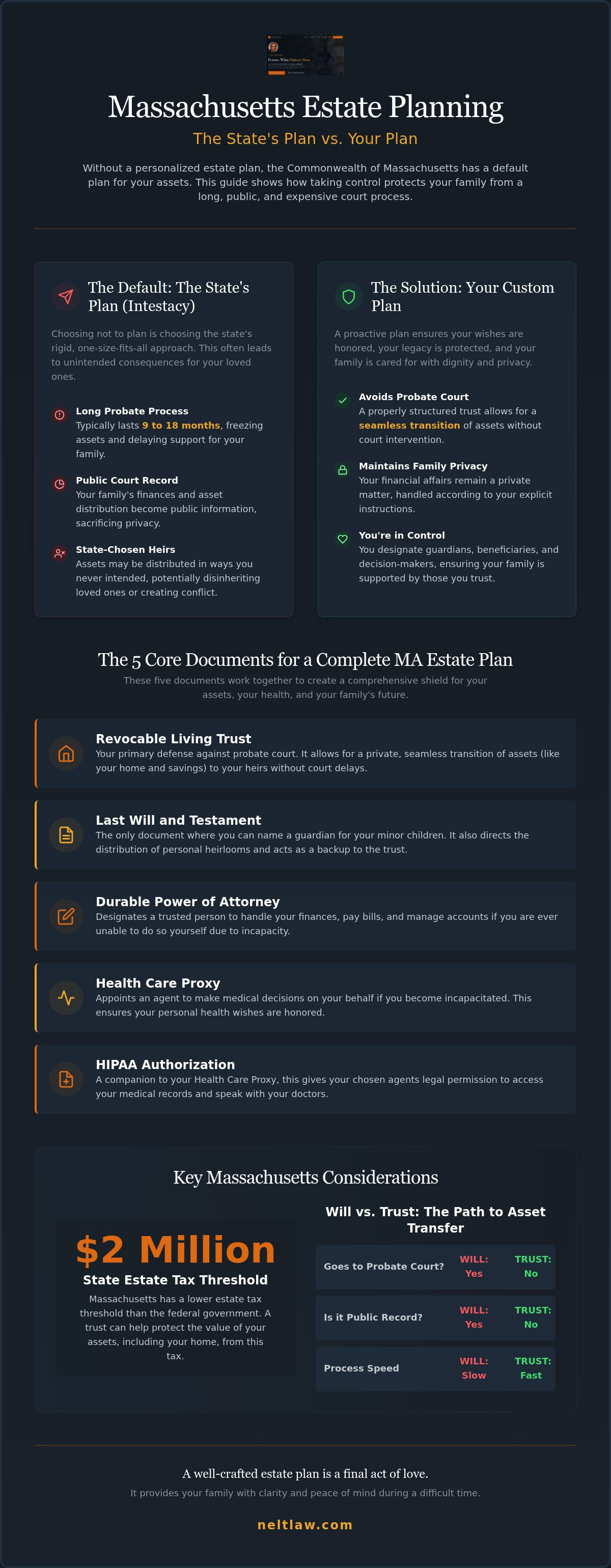
Choosing not to plan is, in effect, choosing the state's plan. In Massachusetts, the typical probate process can take anywhere from 9 to 18 months to complete. During this time, your assets may be frozen; this leaves your family unable to pay bills or maintain property easily. These delays often lead to unnecessary stress and family disputes over who should serve as a guardian for minor children. By following a methodical estate planning checklist massachusetts residents can avoid these public court battles. You ensure your legacy remains a source of support rather than a source of conflict.
The Goal: Peace of Mind and Family Harmony
The real value of this process isn't found in the paper documents, but in the "sigh of relief" you feel once they are signed. A complete plan ensures your healthcare wishes are honored through a proxy, preventing a judge from deciding who makes your medical decisions. It provides a clear roadmap that guides your loved ones through difficult times with grace. When your "legal house" is in order, you replace the weight of uncertainty with the quiet confidence that your family is protected. This unhurried, supportive approach turns a complex legal requirement into a simple act of love for those you leave behind.
The 5 Core Documents Every MA Estate Plan Needs
Building a solid foundation for your future requires the right tools. Your estate planning checklist massachusetts guide isn't complete without five specific documents that work together to shield your family. Each piece of paper serves a different purpose; some protect your property, while others protect your person. By getting these in order now, you prevent the state from making these deeply personal choices for you later.
- Last Will and Testament: This is the starting point for most families. It's the only way to name a guardian for your children and direct the distribution of personal heirlooms.
- Revocable Living Trust: This is your primary defense against the probate court. It allows for a seamless transition of assets to your heirs without the long wait.
- Durable Power of Attorney: This designates a trusted person to handle your finances, pay your bills, and manage your accounts if you're ever unable to do so yourself.
- Health Care Proxy: Under the Health Care Proxy laws in our state, this document appoints someone to make medical choices for you if you're incapacitated.
- HIPAA Authorization: This ensures your family can actually talk to your doctors and access your records during an emergency.
Wills vs. Trusts: Which Do You Need?
A common misconception is that a Will keeps your family out of court. In reality, a Will is simply a set of instructions for the probate judge. If you want your home in Worcester or your accounts in Middlesex to pass directly to your loved ones, a trust is the better tool. Choosing a living trust attorney flat fee model gives you the certainty of a fixed price while providing the maximum protection for your estate. It removes the anxiety of court delays and keeps your family's financial business private.
Empowering Your Healthcare Agents
Massachusetts handles medical wishes differently than some other states. While a Health Care Proxy is the legally recognized document for appointing an agent, a "Living Will" serves as a guiding light for that person. A living will attorney helps you document your specific preferences regarding life-sustaining treatment. This clarity prevents family friction and ensures your agent can act with confidence. It's about making sure the person you choose has the emotional and legal support they need to speak for you. If you're feeling overwhelmed by these choices, reaching out to a protective family advocate can help you decide which documents fit your family best.
Massachusetts Nuances: Estate Taxes and Probate Avoidance
While federal tax laws often grab the headlines, residents of the Commonwealth must navigate a very different set of rules at home. Massachusetts is one of the few states that is "decoupled" from federal law, meaning our state estate tax operates independently. This distinction is a vital part of any estate planning checklist massachusetts families use to protect their hard-earned savings. Because our state threshold is significantly lower than the federal limit, even families who consider themselves "middle class" may find their assets subject to significant taxation without proper planning.
In Middlesex and Worcester counties, the rising value of real estate has changed the landscape for local homeowners. A family home that has been in the same hands for decades might now push an estate over the tax threshold all by itself. When you combine home equity with retirement accounts and life insurance, the need for a strategic plan becomes clear. Without a trust to manage these assets, your family could face what we call the "Probate Gap," a period of 9 to 18 months where assets are tied up in court and subject to public scrutiny.
Navigating the MA Estate Tax
In 2026, the federal estate tax exemption sits at a generous $15 million per individual. However, the Massachusetts estate tax exemption remains much lower at $2 million. This massive gap means you might owe zero federal taxes while still owing the Commonwealth hundreds of thousands of dollars. In Massachusetts, the estate tax functions like a "cliff" because once your assets exceed the $2 million threshold, the tax is often applied to the entire value of the estate rather than just the portion above the limit. Using credit shelter trusts or other strategic tools can help you minimize this burden and ensure more of your legacy stays with your children rather than the government.
Special Needs and Asset Protection
Planning for a loved one with special needs requires a delicate touch and specialized tools like Supplemental Needs Trusts. These instruments allow you to provide for a family member's quality of life without accidentally disqualifying them from essential government benefits. Many seniors also worry about the rising costs of long-term care and how it might impact their ability to leave an inheritance. Understanding the asset protection trust options available in 2026 is a key step in safeguarding your home from MassHealth estate recovery. By planning ahead, you can ensure your home stays in the family while still accessing the care you need as you age. It's about creating a safety net that provides both security for you and a clear path forward for your heirs.
Step-by-Step: How to Execute Your Plan in 2026
Once you've gathered the necessary documents, the real work of protecting your family begins. Moving from a pile of papers to a fully realized plan requires a methodical approach. The first step in your estate planning checklist massachusetts is taking a full inventory of what you own. This includes your home, retirement accounts, and life insurance policies, but don't forget your digital legacy. In 2026, access to online accounts and family photos is just as vital as the deed to your house. Listing these items now ensures nothing is overlooked when your loved ones need to step in.
Selecting Your Protective Team
The next phase of your estate planning checklist massachusetts involves choosing the people who will carry out your wishes. These "fiduciaries" are the steady hands who will manage your affairs. It's helpful to understand the different roles they play. An Executor handles the public probate process for anything governed by your Will, while a Trustee manages your trust assets privately. If you have minor children, selecting a guardian is perhaps the most emotional decision you'll make. You're looking for someone who shares your values and has the stability to provide a loving home. Always name at least one alternate for every role; life is unpredictable, and having a backup plan provides an extra layer of certainty for your family.
Funding Your Trust: The Key to Success
Many people sign their documents and believe they're finished, but they often miss the most critical step: funding. An unfunded trust is like an empty safe; it's a secure vessel that provides no protection until you actually place your valuables inside. For residents in Middlesex or Worcester counties, this means retitling your real estate so the trust is the official owner. You must also align your beneficiary designations on 401(k)s and life insurance policies with your new plan. If you don't fund the trust, then those assets may still end up in the very probate court you were trying to avoid. Taking the time to retitle your accounts now is what truly secures your legacy.
Life doesn't stand still, and your plan shouldn't either. Significant milestones like a marriage, the birth of a grandchild, or a divorce are clear signals that it's time for a review. Moving beyond DIY forms to professional certainty ensures that your plan actually works when it's tested. If you're ready to replace anxiety with the quiet confidence of a completed plan, you can connect with a compassionate mentor to finalize your strategy today. This unhurried process turns a complex legal requirement into a simple, lasting gift for your family.
The Northeast Legal Advantage: Compassionate, Flat-Fee Planning
Choosing the right partner is the final, most important step on your estate planning checklist massachusetts. At Northeast Legal Team, we believe the legal process should feel safe; it shouldn't feel like a cold, clinical transaction. Our "Mentor" philosophy means we listen to your family story before we ever pick up a pen. We've spent over 14 years serving residents in Middlesex and Worcester counties, helping them transform their anxiety into a sense of lasting order. By using a plain-English approach, we strip away the intimidating jargon that often keeps people from finishing their plans.
Why Flat Fees Change the Experience
The traditional legal model of hourly billing often creates a barrier between the attorney and the client. You shouldn't have to worry about a "ticking clock" every time you have a question about your trust or your healthcare wishes. We provide full transparency from our very first meeting to the final signature. This predictable pricing model allows you to focus on what matters: protecting your legacy. This same commitment to certainty extends to our flat-fee probate support. When a family is grieving, the last thing they need is the stress of unpredictable legal bills. We provide a steady hand and a clear path forward without the financial surprises.
Your Next Steps to Peace of Mind
Getting started is often the hardest part of any estate planning checklist massachusetts. We've simplified the process to make it as unhurried and supportive as possible. Your journey begins with an initial assessment where David E. Walker and our team will help you identify your specific goals. To make the most of this session, you should bring a basic list of your assets and a general idea of who you trust to serve as your fiduciaries. We'll handle the complex legal mechanics from there.
What does life look like once your plan is complete? It looks like a "Sigh of Relief." You'll walk away with the quiet confidence that your family is protected from the public probate court and unnecessary tax burdens. You won't have to wonder who will make medical decisions for you or how your home will be passed down to your children. You've replaced the weight of "what if" with the tranquility of a valid, professional plan. This isn't just about documents; it's about the peace of mind that comes from knowing your loved ones are safe.
Secure Your Legacy with Confidence
Securing your family's future shouldn't feel like a burden. By following a methodical estate planning checklist massachusetts residents can navigate the $2 million tax threshold and avoid the lengthy probate process. You've learned that a valid plan requires more than just a will; it needs the protective power of a funded trust and clear healthcare directives.
With over 14 years of local expertise, we help you replace confusion with certainty. We offer flat-fee pricing for total transparency, so you never have to worry about a ticking clock. Our plain-English guidance ensures you understand every step of your journey toward a true sigh of relief. Your family deserves a legacy built on order and tranquility rather than court dates and legal jargon. It's time to move from worry to resolution with a partner who listens first.
Schedule your free estate planning assessment with Northeast Legal Team today. We're here to help you protect what matters most and provide the steady hand your loved ones need.
Frequently Asked Questions
Do I really need a trust in Massachusetts, or is a will enough?
A trust is often necessary if you want to avoid the public probate process, which can take 9 to 18 months in the Commonwealth. While a will is a great starting point for naming guardians, it does not bypass the court system on its own. A trust allows for a private, faster transfer of assets like your home or savings. This is a key component of a complete estate planning checklist massachusetts families use for total protection.
What happens if I die without an estate plan in MA?
Your assets will be distributed according to the state's intestacy laws if you pass away without a valid plan. This means the Massachusetts Uniform Probate Code decides who receives your property, which often contradicts your actual wishes. For example, a spouse might be forced to share assets with distant relatives. Your family may also face higher court costs and significant delays during an already difficult emotional time when they need peace most.
How much does a typical estate plan cost in Massachusetts?
The cost varies depending on the complexity of your family's needs and the types of protective tools you require. Instead of the uncertainty of hourly billing, many residents prefer a flat-fee model for predictability and peace of mind. This approach ensures you know exactly what the investment will be from the start. Focusing on the value of avoiding probate costs and estate taxes often makes the initial planning fee a wise financial decision for your future.
Can I use a DIY online will in Massachusetts?
You can technically use a DIY form, but these generic templates often fail to account for specific Massachusetts laws like the $2 million estate tax threshold. A small error in how a document is signed or witnessed can make it invalid in a local probate court. Professional guidance ensures your plan is legally sound and actually works when your family needs it most, providing a level of certainty and empathy that software simply cannot offer.
How often should I update my estate planning checklist?
You should review your estate planning checklist massachusetts every three to five years or whenever a major life event occurs. Events like a marriage, the birth of a child, a divorce, or a significant change in your finances are clear signals that your plan needs an adjustment. Regular reviews ensure that your fiduciaries are still the right fit and that your documents reflect current state tax laws and your personal wishes for your legacy.
What is the difference between a Health Care Proxy and a Living Will in MA?
A Health Care Proxy is the only legally binding document in Massachusetts for appointing someone to make medical decisions on your behalf. A Living Will is not technically enforceable in the Commonwealth, but it serves as a vital instruction manual for your agent. It helps them understand your specific preferences regarding life-sustaining treatment. Having both ensures your agent can act with confidence while following your documented wishes during a medical crisis or emergency situation.
How does the Massachusetts estate tax work in 2026?
The Massachusetts estate tax exemption is $2 million per individual in 2026. If the total value of your assets, including your home and life insurance, exceeds this amount, your estate may owe a graduated tax to the Commonwealth. Because Massachusetts does not allow portability between spouses like the federal system does, married couples often use specific trust structures to maximize their individual exemptions. This strategy helps protect more of your hard-earned legacy for your children.
Do I need a lawyer for probate in Middlesex County?
You are not legally required to hire a lawyer for probate, but the process in Middlesex County can be incredibly complex and time-consuming. Filing fees alone start at $390 for formal or informal petitions. A professional can help you navigate the strict court deadlines and ensure that all filings are accurate. This support often prevents costly mistakes and speeds up the distribution of assets to your loved ones during an already stressful and emotional time.


