

Imagine you've just learned that a well-meaning relative left a generous inheritance for your child, but instead of relief, you feel a surge of panic. You know that even a small increase in their bank account could suddenly disqualify them from essential MassHealth or SSI benefits. It's a common fear for families in our community, and the confusion surrounding the special needs trust cost massachusetts only adds to that weight. You aren't alone in feeling overwhelmed by complex legal jargon or the anxiety of unpredictable hourly fees that seem to pile up without warning.
We believe that planning for your loved one's future should feel like a sigh of relief, not a financial burden. This guide is designed to pull back the curtain on the investment required to secure their quality of life while keeping their benefits perfectly safe. We'll walk through the specific factors that influence costs in 2026, explain the difference between trust options in plain English, and show you how a predictable, flat-fee path can replace uncertainty with total peace of mind.
Key Takeaways
- Learn why a Special Needs Trust is the most effective way to provide for a loved one without risking their eligibility for MassHealth or SSI.
- Discover the specific factors that influence the special needs trust cost massachusetts, from the complexity of your family's estate to the specific type of trust required for your situation.
- Understand the hidden financial risks of skipping professional planning, including the "spend down" trap that can exhaust an inheritance on medical bills.
- Compare the differences between third-party and first-party trusts to determine which path provides the best protection for your family's legacy.
- See how a flat-fee approach with an experienced guide can turn a confusing legal process into a predictable and manageable plan for the future.
What is a Special Needs Trust and Why is it Essential in MA?
A Special Needs Trust is a legal tool designed to provide for a person with disabilities without disqualifying them from government aid. You might be asking What is a Special Needs Trust? and why it feels so urgent for your family. In Massachusetts, this document acts as a protective shield. It ensures that an inheritance or settlement doesn't accidentally trigger a loss of SSI or MassHealth benefits. Understanding the special needs trust cost massachusetts is the first step toward building this vital protection for your loved one's future.
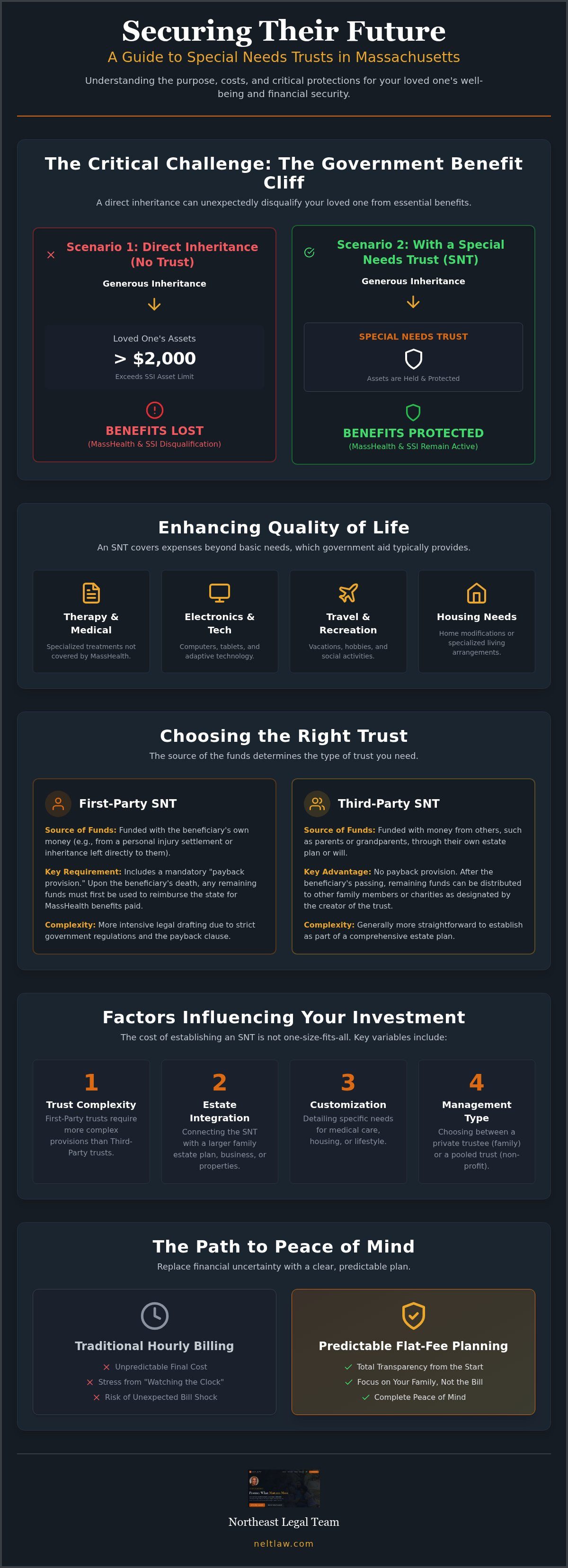
We often see families struggle with what we call the Benefit Gap. Programs like SSI have strict asset limits; currently, an individual cannot have more than $2,000 in countable assets. If a well-meaning relative leaves a gift directly to your child, those funds could immediately stop their monthly payments. The special needs trust cost massachusetts is an investment in preventing this gap. It allows funds to be used for the beneficiary's comfort while the government continues to cover their basic needs.
The person in charge of these funds is the Trustee. Their job is to manage the money and ensure every payment complies with specific Massachusetts laws. You might wonder if a standard Living Trust is enough. Usually, it isn't. Standard trusts often lack the specific restrictive language required by the Social Security Administration. Without that specialized wording, the government views the trust assets as belonging to the beneficiary; this can lead to a total loss of coverage.
The Protective Power of an SNT
This trust acts as a safety net for quality-of-life expenses that government programs won't cover. It can pay for things like specialized therapy, electronics, or even a vacation. Beyond the financial benefits, it offers deep emotional relief. You're providing a clear roadmap for future caregivers, such as a sibling or a professional trustee. In Massachusetts, SNTs are governed by specific state and federal statutes that ensure the beneficiary's rights are protected while their needs are met.
Who Needs a Special Needs Trust?
This planning is essential for any family expecting to leave money to a loved one on disability. It's also vital for grandparents who want to include a grandchild with special needs in their will without causing a benefit crisis. If an individual receives a personal injury settlement, an SNT allows them to keep those funds for their long-term care while remaining eligible for MassHealth. It's a proactive way to ensure your legacy provides lasting comfort rather than a temporary financial hurdle.
Factors Influencing Special Needs Trust Cost in Massachusetts
When you begin looking into the special needs trust cost massachusetts, it's helpful to understand that the price isn't a one-size-fits-all figure. Several variables determine the final investment. Each one is directly tied to the level of protection your loved one receives. For example, a third-party trust funded by parents or grandparents is often more straightforward than a first-party trust. First-party trusts are funded with the beneficiary's own money, perhaps from a settlement or back-pay. These require specific payback provisions that make the legal drafting more intensive.
Your family's existing financial landscape also plays a role. If your special needs planning must integrate with a larger estate plan involving business succession or multiple out-of-state properties, the coordination requires more time and expertise. We also look at the level of customization needed for your loved one's specific lifestyle. A trust that needs to account for unique medical equipment, specialized housing, or specific travel needs requires more detailed language than a basic protective document.
Finally, the choice between a private trust and a Massachusetts Pooled Trust impacts your budget. A private trust is managed by a family member or professional you choose. A pooled trust is managed by a non-profit organization that pools funds from many families for investment purposes while keeping individual accounts. Both have different cost structures for setup and ongoing management. If you're feeling unsure about which path is right, you can reach out for a low-pressure conversation to explore your options.
Hourly Fees vs. Flat-Fee Predictability
Many families worry about hourly billing. It's understandable. Watching a clock during a sensitive conversation creates unnecessary stress and can lead to bill shock. Choosing an estate planning attorney flat fee model removes that barrier. It allows us to focus entirely on your family's story without you worrying about every minute of our time. This approach ensures that the special needs trust cost massachusetts remains predictable from the very first meeting, encouraging a relationship built on trust and thorough communication.
Administrative and Funding Costs
Setting up the trust is only part of the journey. You also need to consider funding costs, which involve moving assets like real estate or bank accounts into the trust's name. A properly drafted document is essential for maintaining eligibility for public assistance and reducing administrative friction down the road. When the paperwork is clear and precise, it prevents expensive legal hurdles later for your future trustees or tax preparers. High-quality drafting ensures that the transition of assets is smooth and that the trust functions exactly as intended for years to come.
The Real Cost of Inaction: Risks of Skipping Professional Planning
Choosing to wait on your planning might feel like a way to save money today, but the long-term risks often outweigh the initial special needs trust cost massachusetts. We've seen families encounter the "spend down" trap, where a sudden inheritance forces a beneficiary to exhaust every penny on basic care before their benefits can resume. This isn't just a financial loss; it's a loss of the extra comfort and security you intended for them. Without a trust, that gift becomes a burden that replaces government support rather than enhancing it.
The financial impact of losing MassHealth coverage is staggering. For many individuals with disabilities, medical expenses and specialized care can reach tens of thousands of dollars annually. If benefits are suspended because of a disqualifying asset, the family must cover those costs out of pocket. Attempting "emergency" planning after a loved one has already received funds is often more complex and stressful. It places an immense emotional toll on siblings or parents who must navigate a benefit crisis while worrying about their loved one's immediate health needs.
Preserving MassHealth and SSI Eligibility
In Massachusetts, the asset limit for an individual to remain eligible for SSI is typically just $2,000. It's a very narrow margin that leaves no room for error. Many families find that a medicaid asset protection trust massachusetts works beautifully alongside special needs goals to shield family assets. When you look at the math, the one-time special needs trust cost massachusetts is a small fraction of the lifetime value of government benefits. Securing these benefits ensures your loved one has access to a lifetime of medical care and monthly income that would otherwise be lost.
The Danger of DIY Online Forms
It's tempting to look for generic online templates to save on legal fees. However, Massachusetts probate and Medicaid standards are incredibly strict and change frequently. A simple mistake in a DIY form can lead to a "voidable" trust, which offers no actual protection when the state reviews it. These "cheap" solutions often become expensive later when you're forced to pay court fees and higher legal costs to fix a broken plan. Investing in professional guidance ensures your documents are ironclad, providing a sense of relief that no template can offer. We focus on getting it right the first time so your family remains protected for decades to come.
Comparing SNT Options: Which Path Fits Your Budget?
Choosing the right trust is like finding the right home; it has to fit your family's specific needs and your financial goals. When you're looking at the special needs trust cost massachusetts, the type of trust you select is the most significant factor in the total investment. Third-party trusts are often considered the gold standard for parents who want to leave an inheritance. These are funded by your assets rather than the beneficiary's own money. Because these funds never belonged to your loved one, there's no requirement to pay back the state for MassHealth expenses after they pass away.
First-party trusts serve a different purpose and are necessary when the person with a disability receives their own funds. This often happens after a personal injury settlement or a direct inheritance that wasn't properly planned for. While these require a Medicaid payback clause, they're essential for keeping benefits intact and providing a higher quality of life. If you're unsure which path is right for your family, you can schedule a low-pressure consultation to review your options and find the best fit.
Third-Party Trusts: Protecting the Family Legacy
In Middlesex and Worcester counties, families frequently choose third-party trusts because they prioritize long-term family continuity. If funds remain in the trust after the primary beneficiary passes, you can designate those assets to go to other siblings or grandchildren. It's a beautiful way to ensure your hard-earned assets stay within the family while providing comfort for your loved one today. We typically set these up as a core piece of a comprehensive estate plan so every document works together for your protection.
Pooled Trusts vs. Individual Trusts
For some families, a pooled trust offers a cost-effective alternative to a standalone document. These are managed by non-profit organizations that combine funds from many individuals for investment purposes. They often feature lower setup fees and shared administrative costs, making them a practical choice for smaller amounts of money. Individual trusts, however, offer much higher levels of customization and give you total control over who serves as the trustee and how funds are spent.
When comparing costs, ongoing management fees are a key detail to track. Organizations like Guardian Community Trust often charge between 1.25% and 3.0% of the principal annually depending on the account balance, while others like PLAN of MA and RI may charge 2% on the first million dollars. While individual trusts might require a higher initial investment, they provide the tailored stewardship that many families find invaluable for complex medical or lifestyle needs. Choosing the right fit depends on your beneficiary's age, the total assets involved, and how much personal oversight you want to maintain over their care.
Planning with Northeast Legal Team: Compassionate, Flat-Fee Support
At Northeast Legal Team, we know that planning for a child with special needs is about more than just money; it's about making sure they feel loved and secure even when you aren't there. David E. Walker brings over 14 years of local Massachusetts experience to every conversation. We prioritize a "listen-first" attitude because your family's story is the most important part of the file. You won't find cold, detached clinicalism here. Instead, we offer a supportive partnership that transforms an overwhelming legal process into a clear, manageable path forward.
One of the biggest hurdles families face is the fear of hidden costs. We address the special needs trust cost massachusetts through a transparent, flat-fee model. This means you'll never receive a surprise bill for a quick phone call or an extra question. We want you to feel empowered to speak up and seek clarity without worrying about a ticking clock. Our commitment to "Plain English" ensures that every document and strategy is explained without intimidating jargon. If you understand the "why" behind your plan, you can make decisions with total confidence.
Our proactive approach looks at your entire family's legacy. We don't just draft a single document; we look at how your special needs planning integrates with your wider goals for asset protection and family continuity. By focusing on the tangible outcomes of the service, we ensure that the special needs trust cost massachusetts translates into long-term safety for your loved one and a sigh of relief for you.
Our Step-by-Step Special Needs Planning Process
We've designed our process to be methodical and unhurried, moving at a pace that allows you to absorb information and feel in control. It starts with an initial consultation, which is a safe space to share your family's story and goals. We then move into custom drafting, where we create a trust that reflects your loved one's specific medical and lifestyle needs. Finally, we provide ongoing stewardship. This involves helping you fund the trust and educating your chosen trustees so they feel prepared for their future responsibilities.
Securing Peace of Mind for Middlesex and Worcester Families
Serving our local community in Middlesex and Worcester Counties is our passion. We act as a protective family advocate, ensuring your legacy is preserved through wise, proactive planning. You deserve a friendly guide who possesses the weight of professional wisdom but remains entirely approachable and low-pressure. Schedule your free assessment today to start protecting your loved one's future and replace your anxiety with a sense of certainty.
Taking the Next Step Toward Lasting Security
You've taken a significant step today by learning how to safeguard your family's future. We've explored how a properly structured plan prevents the loss of essential benefits and why understanding the special needs trust cost massachusetts is the first step toward true security. By choosing a path that prioritizes benefit preservation over the risks of inaction, you're ensuring your loved one has a lifetime of support without the stress of a sudden disqualification. Professional guidance ensures your documents meet strict state standards, protecting your legacy from the pitfalls of generic templates.
At Northeast Legal Team, we're here to be your friendly guide through these complex decisions. David E. Walker uses his 14+ years of experience to provide compassionate, plain-English guidance that removes the mystery from the law. Our flat-fee pricing model ensures total transparency, so you can focus on your family instead of a bill. You don't have to navigate this alone. Secure your loved one's future with a free special needs planning assessment. We look forward to helping you find the peace of mind you and your family deserve.
Frequently Asked Questions
Is a special needs trust expensive to maintain after it is set up?
Maintenance costs vary based on whether you choose a family member or a professional trustee. Professional trustees or pooled trusts typically charge an annual percentage of the assets, while a family member might serve for free. You'll also account for annual tax preparation fees. We help families in Middlesex County evaluate the total special needs trust cost massachusetts over time to ensure the plan remains a sustainable resource for their loved one.
Can I set up a special needs trust myself using an online template?
While online templates exist, using them is risky because Massachusetts probate and MassHealth standards are incredibly specific. A small error in the payback clause or distribution language can disqualify your loved one from benefits. This often leads to much higher legal costs later to fix the mistakes in court. Our team uses over 14 years of experience to ensure your trust is ironclad and fully compliant with local regulations.
How much money should I put into a special needs trust?
There's no single right amount, as it depends on your loved one's specific lifestyle and medical needs. You should consider the long-term costs of therapy, specialized equipment, and comfort items that government benefits don't cover. When calculating your contribution, factor in the special needs trust cost massachusetts and any ongoing management fees. We work with Worcester County families to create a funding strategy that balances immediate protection with long-term growth.
What happens if I leave money to a disabled child without a trust in Massachusetts?
Leaving money directly to a disabled child triggers a crisis where they lose their monthly SSI income and medical coverage. Because the individual's bank account exceeds the state limit, they're forced to pay for their own care until the funds are gone. This takes away the financial safety net you worked hard to build. Our planning in Worcester County prevents this scenario, ensuring your gift enhances their life rather than replacing their benefits.
Will a special needs trust affect my child's ability to get MassHealth?
No, a correctly established trust protects your child's eligibility. By keeping assets in the trust's name rather than the individual's, the money doesn't count toward the strict limits set by MassHealth. This allows your loved one to keep their comprehensive medical coverage while using trust funds for things like dental work or physical therapy not covered by the state. It's a proactive way to ensure they have the best care possible.
Can a sibling be the trustee of a special needs trust?
Yes, siblings are often chosen as trustees because they have a deep personal connection to the beneficiary. However, being a trustee in Massachusetts requires following strict rules about how money is spent to avoid benefit disqualification. We provide guidance to help siblings understand their fiduciary duties and the specific reporting requirements. This proactive stewardship ensures the trust functions smoothly for decades while protecting the family's legacy and the beneficiary's continuity of care.
Does a special needs trust have to pay taxes in Massachusetts?
Yes, trusts are separate legal entities that must file their own tax returns. In Massachusetts, trust income is generally taxed at 5%. If the trust earns a high income above $1,107,750, a 4% surtax may apply in 2026. It's important to work with a tax professional who understands special needs planning. We design our trusts to be tax-efficient while ensuring they meet all federal and state legal requirements.
What can the money in a special needs trust be used for?
Trust funds are intended to enhance the beneficiary's quality of life by paying for items not covered by government aid. This includes specialized medical care, electronics, travel, and education. Current 2026 rules allow the trust to pay for groceries without reducing SSI payments, though paying for housing still impacts benefits. We help families in Middlesex and Worcester Counties create a clear list of allowable expenses to ensure the trust provides maximum benefit without risking essential support.


