

What if the inheritance you leave to protect your child actually causes them to lose their essential healthcare? It's a heartbreaking irony many families in Middlesex and Worcester counties face when they realize that a standard will can accidentally disqualify a loved one from MassHealth or SSI. You want to provide a lifetime of care, but the complex web of state benefit rules feels like a maze with no exit. It's completely natural to feel anxious about who will advocate for your child when you're no longer there to do it yourself.
You deserve a clear path forward that doesn't involve unpredictable hourly legal bills or confusing jargon. By working with a dedicated special needs planning attorney massachusetts, you can transform that uncertainty into a concrete plan for the future. In this guide, we'll explain how flat-fee legal instruments like Special Needs Trusts protect government eligibility while securing your child's quality of life. You'll discover how a trusted local partner can help you manage these emotional decisions, ensuring your loved one is never left without a voice or the resources they need to thrive.
Key Takeaways
- Learn how to avoid the "benefit cliff" by using legal instruments that provide for your loved one without endangering their MassHealth or SSI eligibility.
- Discover why a Special Needs Trust is the most effective way to fund a high quality of life while ensuring assets remain protected and professionally managed.
- Identify the hidden dangers of DIY legal templates and why leaving a child nothing to "protect" them is an unnecessary and risky strategy.
- See how a special needs planning attorney massachusetts provides peace of mind through a flat-fee model that prioritizes your family's story over the billable clock.
- Follow a simple roadmap for families in Middlesex and Worcester counties to gather documents and define a long-term care vision today.
What is Special Needs Planning in Massachusetts and Why Does it Matter?
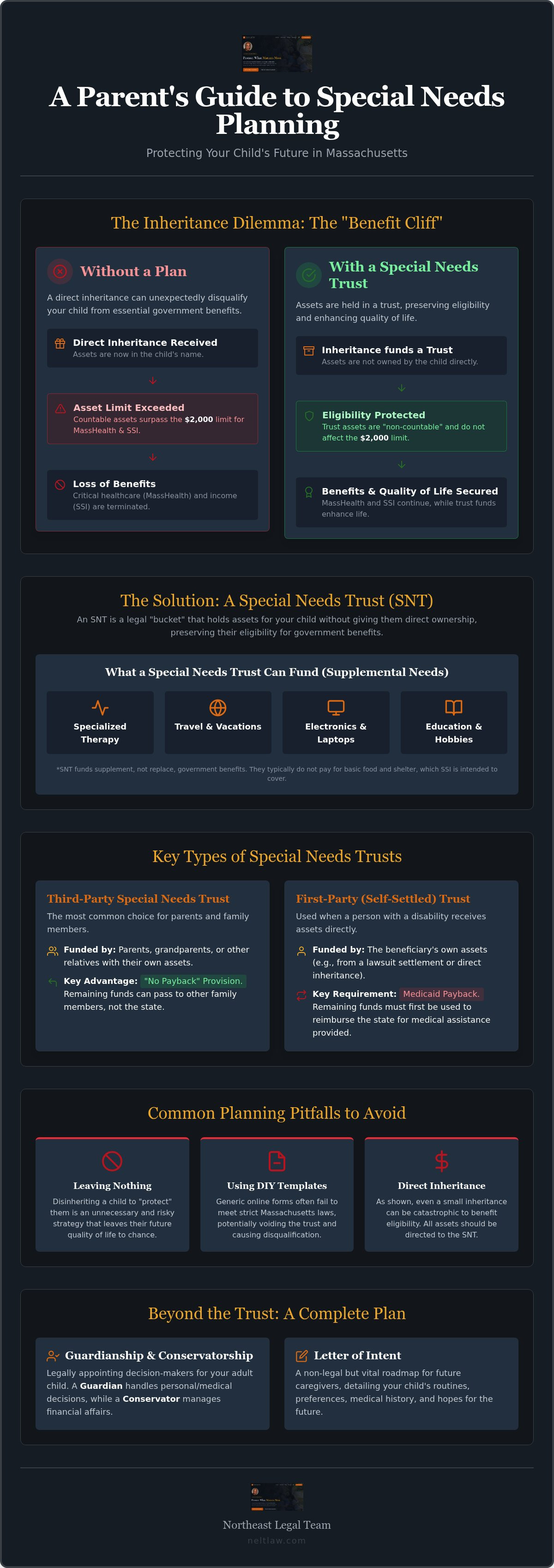
Special needs planning isn't just about drafting a few documents; it's about making sure your child's life remains stable and secure after you're gone. It's a specialized area of estate planning designed to ensure a person with a disability enjoys a high quality of life without losing the government benefits they rely on every day. Special needs planning serves as a protective shield for both financial assets and personal dignity. Many families mistakenly leave a direct inheritance to their child, only to find it creates a "benefit cliff." This sudden influx of cash can accidentally disqualify them from MassHealth or SSI, leaving them in a worse position than before. Working with a dedicated special needs planning attorney massachusetts helps you move from a state of constant worry about the future to a state of order and tranquility.
The Role of Government Benefits: SSI and MassHealth
For many individuals with disabilities in Massachusetts, Supplemental Security Income (SSI) is a vital lifeline that covers basic needs like food and shelter. Even more critical is MassHealth, which provides essential medical care and long-term support services that are often far too expensive for a family to fund privately. However, these programs have strict rules that can be difficult to manage. According to 2026 guidelines, if a beneficiary has more than $2,000 in countable assets, they face a qualifying crisis. Their benefits stop until that money is spent down on basic care. By using a Special Needs Trust, you can provide for your loved one's extra comforts, like specialized therapy or travel, while keeping their primary benefits intact.
Beyond the Money: Planning for Care and Advocacy
Planning involves more than just numbers on a balance sheet; it involves deciding who will speak for your child when you can't. You'll need to decide if selecting a guardian or a conservator is the right move for your family's specific situation. While a guardian makes personal and medical decisions, a conservator manages financial affairs. Beyond these legal roles, a "Letter of Intent" serves as a vital roadmap for the future. It isn't a legal document, but it tells future caregivers about your child's favorite foods, daily routines, and medical history. This proactive legal stewardship ensures family continuity and preserves your legacy of care. A special needs planning attorney massachusetts can help you draft these documents so your child’s advocate is always ready to step in when needed.
Understanding Special Needs Trusts: The Core of Your Plan
Think of a Special Needs Trust (SNT) as a secure legal "bucket." You place assets into this bucket, but your loved one doesn't technically own them. This distinction is vital because if they don't have direct control, the assets don't count toward the strict $2,000 limit for MassHealth or SSI. A trustee oversees the funds, making distributions for "supplemental" needs that government benefits don't cover. This includes things like specialized therapy, a new laptop, or even a family vacation. When you work with a special needs planning attorney massachusetts through an estate planning attorney flat fee model, you can take the time to choose the right trustee without worrying about the cost of every phone call.
Most SNTs are irrevocable. This means once they're established, they can't be easily changed or dissolved. This permanence provides the high level of asset protection required by state and federal law. While a revocable trust might offer more flexibility for you today, it often fails to protect the beneficiary's eligibility for benefits later. A special needs planning attorney massachusetts can help you decide which structure fits your family's long-term goals and emotional needs.
Third-Party Special Needs Trusts
This is the most common tool for parents and grandparents. You fund it with your own assets, such as life insurance, savings, or real estate. The biggest advantage is the "No Payback" rule. When the beneficiary passes away, any remaining money can go to other family members rather than being used to reimburse the state. This is a key part of Massachusetts Transitional Planning Services, ensuring that as a child moves from school to adulthood, their financial safety net is already in place.
First-Party (Self-Settled) Trusts
Sometimes, a person with a disability receives money directly, perhaps from a personal injury settlement or an unexpected inheritance. In these cases, a First-Party Trust is required. Under the federal d4A statute, these funds can be protected, but there's a catch. Massachusetts Medicaid (MassHealth) requires a "Payback Provision." This means when the beneficiary dies, the state must be reimbursed for the cost of medical care provided during their lifetime. It's a complex tool, but it's essential for preventing a total loss of benefits. If you're ready to explore how these tools can work for your family, starting a conversation with a local advocate is a great first step.
Avoiding Common Pitfalls in Massachusetts Disability Planning
Many parents believe that disinheriting their child is the only way to protect their benefits. This "Disinheritance Trap" is a risky and unnecessary strategy that leaves your loved one without a personal safety net. While it might preserve state eligibility, it strips away the resources needed for a higher quality of life. In truth, a "simple will" is often the most expensive mistake a family can make in special needs law because it fails to account for the specific protections your child requires. You don't have to choose between eligibility and an inheritance when the right legal tools are available.
DIY wills and online templates often fail to meet strict Massachusetts probate standards, leading to delays and legal hurdles during an already difficult time. Beyond the will itself, failing to coordinate beneficiary designations on 401(k)s and life insurance policies is a common pitfall. If these assets pay out directly to a person with a disability, they can trigger an immediate loss of Massachusetts government resources for people with disabilities. Consulting a special needs planning attorney massachusetts ensures every financial account is aligned with your trust structure, preventing accidental disqualification from essential programs.
The Risk of Informal Agreements
Parents sometimes decide to "leave it all to the sibling" with a verbal agreement to care for the disabled child. This often leads to legal and tax disasters. What happens if that sibling faces a divorce, a business bankruptcy, or a personal lawsuit? Those funds are legally theirs, meaning creditors can seize the money intended for your child's care. A formal, legally binding trust structure is the only way to shield these assets from life's unpredictable turns and ensure the money is used exactly as you intended.
Inadequate Trustee Selection
Choosing who will manage the trust is just as important as the trust itself. You might consider a close family member, but the burden of accounting and reporting requirements for special needs trusts in MA can be overwhelming for a layperson. Professional corporate trustees offer expertise but may lack a personal connection to your child's daily needs. As a special needs planning attorney massachusetts, Northeast Legal Team acts as a compassionate mentor. We help you weigh these options to find the right advocate who understands both the legal duties and your family's unique story, ensuring the trust remains a source of support rather than a source of stress.
Guide for Families in Middlesex and Worcester Counties
Starting a plan often begins with a simple question: what does a "good life" look like for your loved one? Is it staying in the family home, attending a specific day program, or having the funds for a yearly trip to the coast? Once you've identified these goals, you'll need to gather your financial data. This includes a full inventory of assets, life insurance policies, and current government support. By organizing this information now, you're building a foundation that will support your child for decades to come.
Consulting with a special needs planning attorney massachusetts is the next logical step to translate these dreams into a legal reality. Your plan shouldn't exist in a vacuum. It needs to coordinate with your wider estate plan, including living wills and powers of attorney, to ensure your own wishes are honored alongside your child's. Don't forget to educate your extended family. Grandparents, aunts, and uncles often have the best intentions, but naming your child as a direct beneficiary on their own life insurance or retirement accounts can undo years of careful planning. They should name the trust as the beneficiary instead.
Assessing Local Resources
Families in our region have access to specific support through the Department of Developmental Services (DDS) regional offices in Worcester and Middlesex. These offices are essential for navigating state-funded services and connecting with local support groups. You can also integrate ABLE accounts into your strategy. As of 2026, the annual contribution limit for these tax-advantaged savings accounts is $20,000. These accounts work beautifully alongside a trust to provide even more financial flexibility for daily expenses without affecting SSI limits.
Funding and Maintaining the Plan
The most common reason plans fail is a lack of "funding." This is the process of legally moving assets into the name of the trust. If a trust remains empty, it can't protect anyone. It's also vital to schedule annual reviews. Massachusetts laws change frequently, such as the 2024 updates to the Long-Term Care Act that impacted estate recovery. Our flat-fee assessments offer a low-pressure way to keep your documents current without the stress of hourly billing. If you're ready to build a roadmap that lasts, request a local strategy session today to secure your family's future.
Choosing Northeast Legal Team: The Flat-Fee Advantage
Choosing the right legal partner is about more than just signing papers; it's about finding someone who truly understands your family's journey. At Northeast Legal Team, led by David E. Walker, Esq., we bring over 14 years of experience serving families throughout Middlesex and Worcester counties. We know that the cost of care is already a significant concern, which is why we've moved away from traditional hourly billing. By working with a special needs planning attorney massachusetts who uses a flat-fee model, you eliminate the "fear of the clock." You can ask the questions you need to ask and take the time to get the details right without worrying about an unexpected bill in the mail. We believe that your focus should be on your child's future, not on the minutes spent on a phone call.
Our approach is defined by a "listen-first" attitude. We want to hear about your child’s favorite activities, your hopes for their adulthood, and the specific worries that keep you up at night. This compassionate mentor approach ensures that the legal instruments we create aren't just templates; they're reflections of your family’s love and values. If you're currently comparing different firms, we invite you to use our checklist for choosing the best estate attorney to help you find the partner who best aligns with your needs.
Our Transparent Process
We believe that legal planning should be accessible and low-pressure. Our process starts with a free initial assessment where we listen to your story before we ever open a legal file. If you decide to move forward, we offer customized flat-fee packages that cover everything from basic wills to complex trusts. We prioritize plain English explanations over dense legalese because you should always feel in control of your decisions. By stripping away the jargon, we transform a potentially overwhelming process into one that feels manageable and safe. You'll know exactly what your plan covers and exactly what it costs before we begin.
A Partner for the Long Haul
Our relationship with your family doesn't end when the documents are signed. We see ourselves as a partner for the long haul, practicing proactive stewardship to prevent future crises before they happen. This includes supporting your chosen trustees so they fully understand their fiduciary duties and the rules of the trust. Whether you're in the early stages of research or ready to finalize a plan, a special needs planning attorney massachusetts can provide the steady hand you need. We're here to turn your anxiety into a sense of relief and certainty. Schedule your free special needs planning assessment today to start building a legacy of protection and peace of mind for those you love most.
Building a Bridge to Your Loved One's Future
The path to securing your child's quality of life doesn't have to be paved with confusion or financial surprises. By establishing a Special Needs Trust, you ensure they have access to supplemental care while maintaining their vital MassHealth and SSI benefits. You've seen how avoiding DIY templates and coordinating your beneficiary designations can prevent the "benefit cliff" that threatens so many families in Middlesex and Worcester counties. Your child deserves a plan that grows with them, protected by legal instruments that stand up to state scrutiny.
When you're ready to move from worry to order, working with an experienced special needs planning attorney massachusetts provides the clarity you deserve. David E. Walker, Esq. brings over 14 years of dedicated experience to help families navigate these sensitive decisions with a listen-first approach. Our flat-fee pricing model ensures total transparency, allowing you to focus on your family's story rather than the billable clock. You don't have to face these complex state rules alone. Take the first step toward a lifetime of certain care today.
Secure your loved one’s future with a free special needs planning assessment. Your legacy of protection starts with a single conversation.
Frequently Asked Questions
Can my child still receive SSI if they have a Special Needs Trust?
Yes, your child can continue to receive Supplemental Security Income (SSI) because the assets held within a properly drafted trust aren't considered "countable resources." Since the social security administration views the trust as a separate entity, these funds don't trigger the $2,000 asset limit. This allows your loved one to maintain their monthly income for basic needs while the trust provides for supplemental comforts like specialized equipment, electronics, or personal hobbies.
How much does a special needs planning attorney cost in Massachusetts?
While many firms use hourly billing that can lead to unpredictable costs, Northeast Legal Team utilizes a transparent flat-fee model for our special needs planning packages. This approach removes the stress of a ticking clock during sensitive family discussions. You'll know the total cost of your plan upfront, allowing you to focus on your child's future rather than legal invoices. We provide a free initial assessment to help determine which package fits your needs.
What is the difference between a first-party and third-party SNT?
The primary difference lies in whose money funds the trust. A third-party trust is funded by parents or grandparents and allows remaining assets to pass to other family members after the beneficiary's life. In contrast, a first-party trust is funded with the child’s own money, perhaps from a personal injury settlement. These must include a "payback provision" that reimburses MassHealth for medical expenses before any remaining funds are distributed to heirs under the d4A federal statute.
Does a special needs trust protect my child from losing MassHealth?
Yes, a special needs trust is specifically designed to preserve eligibility for MassHealth. By placing assets into an irrevocable trust managed by a trustee, those funds are shielded from the state’s asset tests. This ensures your child doesn't lose access to vital medical coverage and long-term support services. A special needs planning attorney massachusetts can help you structure these documents to meet the strict regulatory requirements of the Commonwealth while providing for your loved one's comfort.
Can I set up a special needs trust without an attorney?
While you can technically find templates online, setting up a trust without professional guidance is highly risky. Massachusetts probate laws and MassHealth regulations are incredibly complex and don't stay the same for long. A single drafting error can result in a total loss of benefits or your trust being declared invalid by the court. Working with a special needs planning attorney massachusetts ensures your documents are legally sound and tailored to your family’s specific goals.
What happens to the money in an SNT if my child passes away?
The outcome depends on the type of trust you've established. If you have a third-party trust, you can designate other family members or charities to receive the remaining balance. If it's a first-party trust, the state has a right to be reimbursed for the cost of medical care provided through MassHealth. Once the state is repaid, any leftover funds are distributed to the secondary beneficiaries you named in the trust document during the planning process.
How do ABLE accounts work with special needs trusts in Massachusetts?
ABLE accounts and trusts often work together as a powerful financial team. While a trust holds larger assets, an ABLE account provides your child with more direct control over smaller amounts for daily expenses. In 2026, the annual contribution limit for an ABLE account is $20,000. Keep in mind that if an ABLE account balance exceeds $100,000, your child's SSI benefits will be suspended until the balance is reduced below that threshold.
Who should I choose as the trustee for my child’s trust?
Choosing a trustee involves balancing personal connection with administrative skill. You might choose a responsible family member who understands your child’s daily life, or a professional corporate trustee who has experience with complex tax and reporting requirements. Some families opt for a co-trustee arrangement to get the best of both worlds. Regardless of your choice, the trustee must be someone you trust to exercise "sole and absolute discretion" over all fund distributions for the beneficiary.


