

Could the lowest living trust price leave you with more work and unanswered questions after signing? A low advertised fee may look reassuring, but quotes can cover very different levels of legal guidance, documents, and help with trust funding.
It makes sense to want a clear price before making a decision, especially when you’re planning for your family and the assets you’ve worked hard to build. The key is understanding what the quote includes, not just comparing the number. A trust document alone may not address your family’s needs. And signing the papers doesn’t automatically transfer assets into the trust or ensure they’ll be handled as intended.
This guide explains what can shape a living trust quote in Massachusetts and how to compare DIY, online, and attorney-assisted options. You’ll learn which documents and services to ask about, whether deed transfers or funding guidance are included, and what circumstances may call for tailored legal work. With a clearer view of the scope and follow-through, you can ask better questions and choose an option that fits your situation.
Key Takeaways
- Compare each living trust price by the work it covers, including document preparation, signing guidance, funding support, and future updates.
- Discuss your family circumstances, property, business interests, and beneficiaries to learn whether your plan needs tailored attention.
- Compare DIY, online, membership, and attorney-assisted options by their review, personalization, and follow-up, not just their advertised fee.
- Before choosing, request a written scope that explains what’s included, what’s excluded, and who handles trust funding and other implementation steps.
- Families in Middlesex County and Worcester County can use a consultation with Northeast Legal Team to discuss their needs and clarify quote details.
What Does a Living Trust Price Actually Cover?
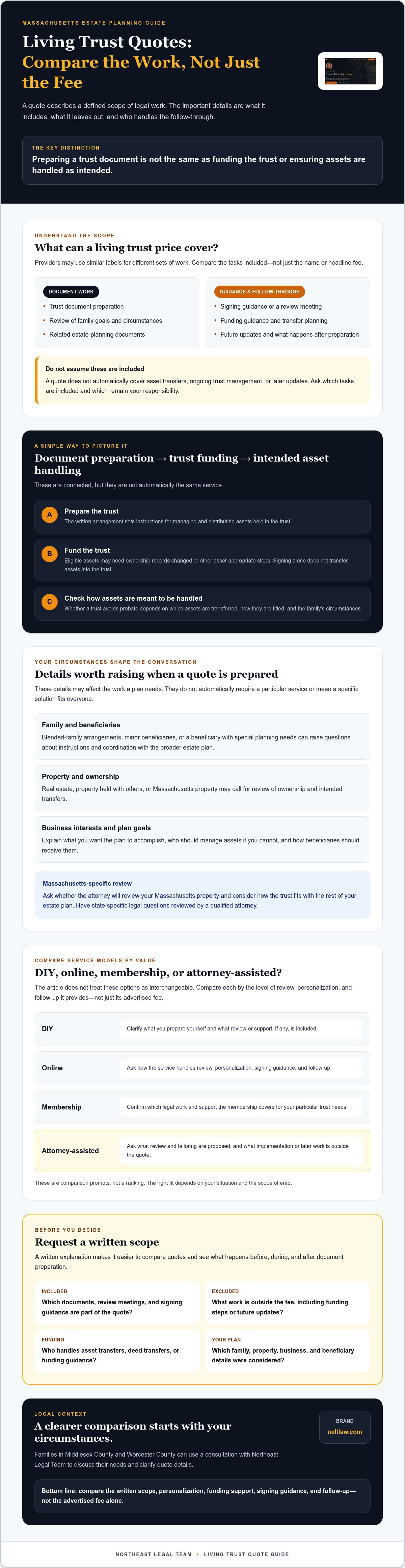
A living trust price is a fee for a defined set of legal work, not a universal charge for every family or a measure of everything a trust may require over time. One quote may cover drafting and a review meeting; another may also include signing guidance or help planning how assets will be transferred. The details matter more than the label.
A trust quote describes the work included in preparing and supporting the trust. It does not automatically cover transferring assets into it, managing it indefinitely, or updating it later. Ask the provider to explain those boundaries in writing so you know what happens before, during, and after document preparation.
What a living trust is designed to do
A revocable living trust is a written arrangement that holds assets and sets instructions for their management and distribution. The person creating it can generally change or revoke it, subject to the trust’s terms and applicable law. For a broader overview of trust law, consider how a trust separates the assets it holds from the instructions that govern them.
Creating the trust document is not the same as transferring eligible assets into it. That transfer, often called funding, may involve changing ownership records or taking other steps appropriate to the asset. Signing a trust does not automatically avoid probate. The result depends on which assets are transferred, how they’re titled, and the family’s circumstances. Have Massachusetts-specific questions reviewed by a qualified attorney.
Why trust quotes are not automatically comparable
Two providers may use similar descriptions while offering different levels of service. One may focus on drafting the trust document, while another may discuss related estate-planning documents, review family goals, explain signing steps, or offer funding guidance. Ask which tasks are included and which remain your responsibility.
The work may also depend on your family and trust arrangements. A straightforward plan may call for different discussions than one involving multiple properties, business interests, blended-family considerations, or particular beneficiary needs. These circumstances don’t automatically mean a specific service or extra work is necessary. They are reasons to clarify the proposed scope.
A headline fee alone won’t tell you whether attorney review, signing support, funding guidance, or later updates are included. If a provider offers flat-fee document preparation, ask what work the fixed fee covers and what may fall outside it. A clear written scope makes it easier to compare options and understand what you’ll need to handle after the documents are prepared.
Which Factors Can Change a Living Trust Quote in Massachusetts?
A living trust quote reflects the work needed for a particular plan, not just the name of the document. The same type of trust can involve different legal work depending on the family, the assets, and the decisions the trust needs to address. Those details may affect the proposed scope, but they don’t automatically mean a provider will charge more or add a particular service. Ask how each factor changes the work described in your written quote.
How family and asset details affect the work
Blended-family arrangements, minor beneficiaries, or a beneficiary with special planning needs can raise questions about how instructions should be written and coordinated with the broader estate plan. Real estate ownership, business interests, or property held with others may also call for a closer review of ownership and intended transfers. These are reasons to discuss your circumstances with an attorney, not signs that one solution fits everyone.
For a useful comparison, explain what you want the plan to accomplish, then ask which details the provider considered when preparing the quote. You might clarify who should manage assets if you can’t, how beneficiaries should receive them, and whether property or business interests need to be addressed. The attorney can then explain what work is proposed and what remains outside the scope.
What Massachusetts residents should verify
Massachusetts residents should ask whether the attorney will review their Massachusetts property and consider how the trust fits with the rest of their estate plan. A revocable living trust is one planning tool, and the Consumer Financial Protection Bureau offers a plain-language overview. The legal effect of a plan depends on its terms and circumstances, so have Massachusetts-specific questions reviewed by a qualified attorney.
Before deciding, confirm what the quote says about:
- Which family and asset details the attorney will review.
- Who prepares the documents and what attorney involvement is included.
- Signing instructions and any funding guidance.
- Tasks you’ll handle yourself, along with any follow-up or updates not included.
Signing and funding are separate steps, and the formalities that apply can depend on the documents and circumstances. Rather than relying on a general online checklist, ask the attorney to explain the relevant signing process and who is responsible for carrying it out. If you’re comparing options, a conversation about your family’s needs can help clarify what a proposed scope covers. You can also learn about living trust planning with Northeast Legal Team.
Online Forms, Legal Plans, or an Attorney: How Do You Compare Value?
A lower upfront living trust price doesn’t, by itself, tell you whether an option fits your family or what work remains after you receive the documents. DIY forms, online document services, membership plans, and direct attorney engagements can differ in how they handle review, personal advice, signing, funding, and follow-up. Compare the parts of the service rather than assuming the format or headline fee tells the whole story.
Use these questions to assess the options:
- Professional review: Does a lawyer check your answers or review the completed trust, or do you prepare it yourself?
- Personalization: Can you discuss family and asset details, and will the documents reflect the choices you make?
- Signing guidance: Are instructions included, and can you ask questions about how to complete the signing process?
- Funding support: Does the service explain how to transfer eligible assets, or are those steps left to you?
- Follow-up: Are later questions or updates included, or handled separately?
What an online or DIY option may leave to the user
An online service may provide forms and prompts for someone with a straightforward situation, while requiring that person to enter accurate information and take responsibility for implementation. Before choosing one, ask who checks your responses, whether an attorney reviews the finished documents, and whether instructions cover asset transfers. Don’t assume that document preparation also means the trust has been funded.
That doesn’t mean an online trust is automatically unsuitable. The practical question is whether you can confidently answer the prompts and complete the steps the service leaves to you. If your situation raises questions the form can’t address, find out whether you can get qualified legal review.
When attorney involvement may provide added value
Working directly with an attorney may be useful if your family, property, or business circumstances aren’t straightforward, or if you want to talk through different planning choices. Ask whether the attorney will explain the proposed plan, answer questions, and clarify what signing and funding guidance the engagement includes. Attorney involvement is valuable when it addresses the needs and tasks that matter to you.
A membership plan is another format to examine. Ask how its legal support applies to trust preparation, whether the work is a one-time engagement or part of an ongoing plan, and what limits or separate charges may apply. For Massachusetts-specific legal questions, the state’s Massachusetts Uniform Trust Code resource provides links to relevant trust laws. A qualified attorney can help explain how applicable law relates to your circumstances.
Compare written scopes side by side. If one option covers document review and funding guidance while another leaves those steps to you, that difference may matter more than the starting fee. Choose the level of help that fits your questions, responsibilities, and comfort with carrying out the plan.
How to Review a Living Trust Quote Before You Decide
A living trust quote is easier to evaluate when you know exactly what the provider will do and what will remain your responsibility. Use this checklist during a consultation, then request the answers in writing. Clear terms help you compare options without assuming a flat fee includes every step.
- 1. List the deliverables. Ask which documents are included and whether the attorney will review your information, discuss your goals, or meet with you to explain the proposed plan.
- 2. Clarify revisions. Find out whether you can request changes before documents are finalized, how revisions are handled, and whether any limits apply.
- 3. Request a written scope. Ask for a plain-English description of the work covered by the fee, along with a list of exclusions. If additional work may be needed, ask how the attorney will explain it and provide a quote before proceeding.
- 4. Ask about signing. Who explains the signing steps? Is execution support part of the engagement, or will you receive instructions to follow on your own? Confirm what guidance is included rather than assuming.
- 5. Identify funding responsibilities. Ask what help, if any, the provider offers for transferring eligible assets into the trust. Confirm which steps you’ll handle and whether property-related work is included or separate.
- 6. Discuss future changes. Ask how amendments or updates are handled if your family, assets, or wishes change. Find out whether later work is included, quoted separately, or outside the engagement.
Once you have the answers, compare the written scopes side by side. Broad phrases such as “trust preparation” may need more explanation. Ask the attorney to describe what you’ll receive, what actions follow document preparation, and which tasks you’ll need to complete yourself. If the provider advertises a flat fee, confirm the specific work that fixed fee covers before you decide.
It’s reasonable to pause if you don’t understand a term or aren’t sure who handles a step. A clear conversation can help you judge whether the proposed service fits your needs and comfort level. To discuss your family’s circumstances and clarify what a living trust engagement may include, request a consultation with Northeast Legal Team.
Choosing a Massachusetts Living Trust Attorney and Taking the Next Step
The right choice isn’t necessarily the lowest living trust price. Compare the proposed work, the guidance you’ll receive, and how well the service fits your family’s circumstances. A clear explanation of what happens before and after signing can help you choose with greater confidence.
What to look for in a local trust attorney
Look for an attorney who explains the proposed deliverables in plain English, identifies exclusions, and makes your next steps clear. Ask how they’ll address Massachusetts-specific questions relevant to your assets and plan, and whether they’ll explain any steps you need to take after the documents are prepared. You should feel comfortable asking questions and understand how the engagement works before deciding.
Also consider communication style. Estate planning involves personal choices about family and the future. A clear, patient conversation can help you understand your options without feeling rushed. If an answer is unclear, ask for an explanation or a written summary of the proposed scope.
A calm first step for Middlesex and Worcester County families
Northeast Legal Team serves families in Middlesex County and Worcester County, Massachusetts, and provides living trusts and broader estate-planning services. The firm offers flat-fee legal services and fixed-fee document preparation. Since scope and terms can vary, ask how current flat-fee terms apply to the living trust work being discussed and what is included before proceeding.
A free consultation or assessment is available to discuss your needs and personalized recommendations. You may find it helpful to bring a list of assets, family concerns, and questions, though you don’t need a formal checklist to begin. For example, note property or business interests you want to discuss, people you hope to provide for, and anything you’re unsure about in the planning process.
Use the conversation to understand whether a living trust fits your goals and how it may connect with other estate-planning documents, such as a will, power of attorney, or healthcare directive. Not every family needs every document. The purpose is to get guidance that reflects your circumstances and a clear explanation of any proposed work.
If you’re ready to explore your options, contact Northeast Legal Team to discuss your estate-planning needs and request a personalized recommendation. A thoughtful conversation can be a manageable first step toward a plan that feels clear and appropriate for your family.
Take the Next Step With a Clear Plan
The right living trust price is easier to judge when you know what the quote covers, what happens after signing, and how the plan fits your family’s circumstances. Compare written scopes rather than headline fees alone, and ask who will guide you through funding and any steps outside document preparation. The right choice is the one that gives you an understandable path forward.
Northeast Legal Team offers flat-fee estate-planning services and a free consultation or assessment for personalized recommendations. The firm’s stated service area includes Middlesex County and Worcester County, Massachusetts. A conversation can help you discuss your goals, ask what a proposed engagement includes, and consider how a living trust may fit within a broader estate plan.
Schedule a free estate-planning consultation to talk through your questions. You don’t need every detail figured out before you begin. A thoughtful first step can help you move toward a plan that feels clearer and more comfortable for your family.
Frequently Asked Questions
How much does a living trust cost in Massachusetts?
There’s no single living trust price that applies to every Massachusetts family. The fee depends on the legal work included and the needs the plan addresses. Compare written quotes by checking document preparation, attorney review, signing guidance, funding support, and exclusions. Northeast Legal Team offers flat-fee estate-planning services, but ask for the current scope and terms for your situation, including whether implementation work is separate.
What factors affect the price of a living trust?
The work involved may depend on family circumstances, assets, and planning goals. A blended family, minor beneficiaries, special planning needs, real estate, or business interests may call for a tailored discussion, but none automatically requires a particular service or fee. Ask the attorney which details affect the proposed scope and why. Have Massachusetts-specific questions about your plan reviewed by a qualified attorney.
Is an online living trust cheaper than hiring an attorney?
An online service or DIY form may have a lower upfront cost than direct attorney assistance, but the price alone doesn’t show which option fits. Check whether a lawyer reviews your answers or documents, whether you can get personalized guidance, and who handles signing and funding steps. An online option may suit some straightforward situations. If your family, property, or business circumstances raise questions, consider asking an attorney to review your needs and options.
What should a living trust quote include?
A useful quote should describe the work and deliverables in plain language. Ask which trust documents, meetings, attorney reviews, and revisions are covered, and what work is excluded. Confirm whether signing guidance, funding instructions, and follow-up are included or handled separately. Request the written scope before deciding, and ask how additional work would be discussed. That makes it easier to compare providers based on the service offered, not just a headline fee.
Does a living trust automatically avoid probate in Massachusetts?
No. Creating and signing a trust doesn’t automatically keep every asset out of probate. Eligible assets generally need to be transferred into the trust, and the result depends on how property is owned and on the family’s circumstances. Ask what funding steps may apply to your assets and who is responsible for them. Because probate outcomes and trust arrangements depend on individual facts and Massachusetts law, discuss your plan with a qualified attorney.
Can I create a living trust without an attorney?
You can use DIY forms or an online document service to prepare a trust without hiring an attorney directly. These options may be workable for some people, but you’ll need to understand the questions, provide accurate information, and check what review or implementation help is included. If you have complex family needs, real estate, business interests, or uncertainties about your plan, consider seeking legal review before relying on the documents.
Does a living trust price include funding the trust?
Not necessarily. A quote may cover preparation of trust documents without including the steps needed to transfer assets into the trust. Ask whether the provider offers funding guidance, handles any transfer-related work, or expects you to complete implementation yourself. Clarify any separate responsibilities in writing, especially for real estate or other assets with ownership records. A signed trust that hasn’t been properly funded may not achieve the intended result for those assets.


