

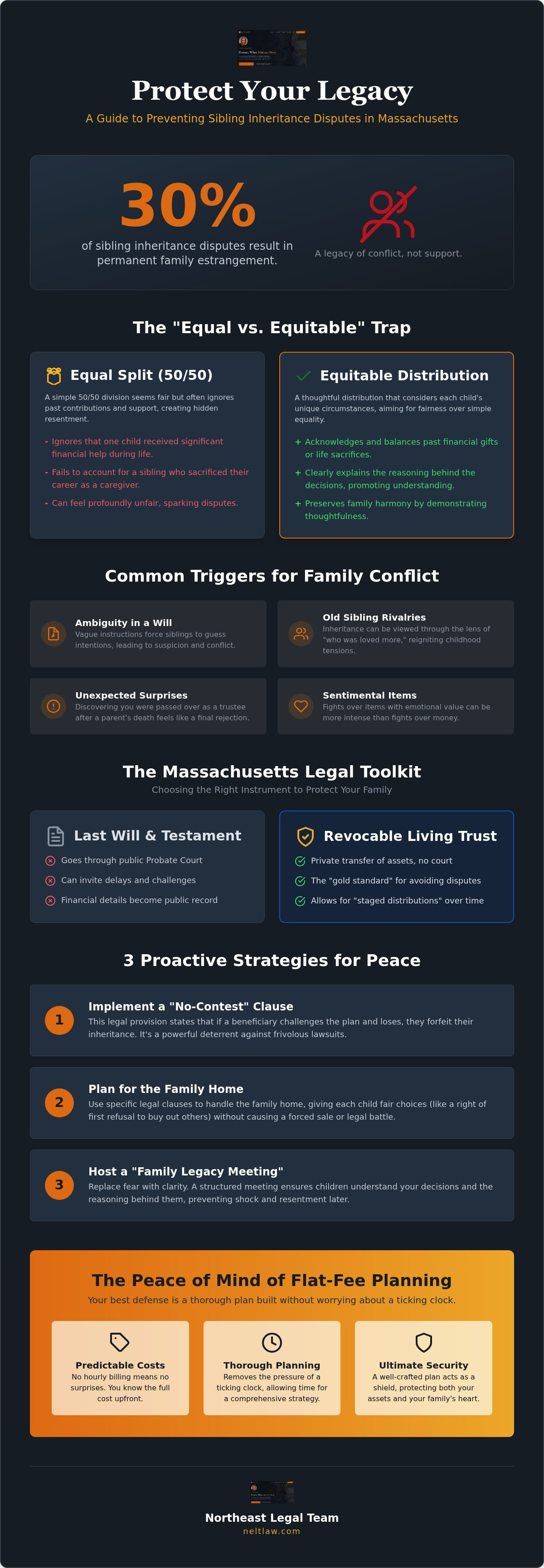
Did you know that nearly 30% of sibling inheritance disputes result in family members never speaking to each other again? It is a heavy statistic, but it highlights a fear many parents in Massachusetts carry. You want your legacy to be a gift of support, not a source of lifelong resentment. The reality is that avoiding inheritance disputes among siblings requires more than just good intentions. It requires a proactive plan that accounts for both complex state laws and the delicate emotions involved in family dynamics.
If you feel anxious about how your children will handle your estate, you aren't alone. It is natural to worry about the complexities of the probate court or the possibility of legal fees draining the inheritance you worked so hard to build. You can learn how to protect your family's bond and ensure a smooth legacy transition using proven Massachusetts estate planning strategies. This guide provides a clear roadmap for asset distribution and explains how to keep legal costs predictable through flat fees. By the end, you will have the tools you need to preserve your children's relationships for generations to come.
Key Takeaways
- Learn why splitting assets exactly 50/50 might actually create unfair burdens and how to aim for an equitable distribution instead.
- Discover why a Revocable Living Trust is often the most effective tool for avoiding inheritance disputes among siblings by keeping your private matters out of the public Massachusetts probate courts.
- Find out how to handle the family home using specific legal clauses that give each child a fair choice without causing a forced sale or a legal battle.
- See how hosting a structured Legacy Meeting can replace fear with clarity and ensure your children aren't surprised by your decisions later.
- Understand the peace of mind that comes with flat-fee planning, ensuring you have the time to build a thorough plan without worrying about a ticking clock.
Why Inheritance Disputes Happen and the Emotional Toll on Siblings
Families often think a simple "split it equally" instruction is the safest path to peace. However, the legal framework of inheritance shows that what is equal isn't always what feels fair to those left behind. This "Equal vs. Equitable" trap occurs when parents ignore that one child may have received significant financial help during life, or perhaps one sibling sacrificed their career to act as a full-time caregiver. When these unique circumstances aren't addressed, a 50/50 split can spark deep resentment. Taking a proactive approach to avoiding inheritance disputes among siblings starts with understanding that money is rarely the only thing at stake.
Old childhood rivalries don't simply disappear when we become adults. These dynamics often resurface during the probate process, where a parent's final wishes are viewed through the lens of "who did Mom love more?" Ambiguity in a will acts as an open invitation for these old wounds to bleed into legal challenges. When instructions are vague, siblings are forced to guess your intentions. This guesswork leads to conflict, suspicion, and a feeling that the process is no longer safe or transparent.
The Psychological Triggers of Family Conflict
Surprises are the most common spark for estate litigation. If a child finds out they were passed over for a trustee role only after a parent passes, it feels like a final rejection rather than a practical business decision. Grief also amplifies small disagreements. A fight over a sentimental item of low monetary value, like a specific piece of furniture or an old photo album, can quickly spiral into a full-scale battle. These items represent emotional connection. Losing them feels like losing a piece of the parent's love, which makes the legal fight feel personal rather than financial.
The Long-Term Cost of a Family Feud
A family feud has a high price that goes far beyond the courtroom walls. If siblings stop talking, the damage reaches the next generation. Grandchildren lose their connection to aunts, uncles, and cousins, effectively fracturing the family tree for years to come. The financial drain is also significant. Hourly-rate litigation can quickly consume a massive portion of the estate's total value, leaving less for the people you intended to protect. By prioritizing clarity now, you are actively avoiding inheritance disputes among siblings and ensuring your legacy is one of order and tranquility. A proactively designed plan acts as a shield, protecting both your assets and your family's heart.
The Massachusetts Legal Toolkit: Pre-empting Conflict with Trusts and Wills
While a Will is a foundational document, relying on it as your only tool can be a recipe for delays. The Massachusetts Uniform Probate Code (MUPC) provides the rules for how estates are handled, but it still requires your family to interact with the Massachusetts Probate and Family Court. This process is public, and the open nature of probate can sometimes invite challenges that wouldn't otherwise occur in private. A Revocable Living Trust, however, serves as the gold standard for avoiding inheritance disputes among siblings because it allows for the private transfer of assets without court intervention.
One powerful deterrent to include in your plan is the "No-Contest" clause. This provision essentially states that if a beneficiary challenges the validity of the estate plan and loses, they forfeit their right to receive any inheritance. It's a significant safeguard that encourages siblings to respect your final wishes rather than seeking a larger share through litigation. Choosing the right person to lead the estate is also a heavy decision. Many parents naturally look to their eldest child to serve as the Executor, but this often places one sibling in a position of perceived power over the others, which can reignite old childhood tensions.
Wills vs. Trusts in Middlesex County
Privacy is one of the greatest gifts you can give your children. When you use living trust attorney flat fee services, you ensure that the details of your assets and who receives them stay within the family. David E. Walker, Esq. specializes in crafting these instruments to include "staged distributions." This means instead of a sibling receiving a large sum all at once, they might receive portions at specific milestones, such as age 30 or 35. This protects siblings with different levels of financial maturity and prevents the resentment that can grow when one child quickly spends their share while another saves.
The Role of the Independent Trustee
If you suspect that your children might struggle to work together, appointing an independent trustee can be a wise move. A professional or neutral third party provides oversight that isn't colored by family history or emotional bias. This neutral presence removes the "sibling vs. sibling" power dynamic and ensures that everyone is treated fairly according to your instructions. A fiduciary duty is the legal obligation to act solely in the best interest of all beneficiaries. By placing this responsibility in neutral hands, you can focus on building a legacy of harmony rather than a legacy of legal battles.
Strategic Ways to Handle 'Unfair' Assets Like the Family Home
The family home is often the most significant asset in an estate, but it is also the most emotionally charged. This "Real Estate Dilemma" occurs when siblings have conflicting goals for the property. One child may wish to keep the house to preserve family memories, while another might prefer to sell it to fund their own retirement or pay off debt. Without a specific strategy, these differing needs can lead to a forced partition sale, which is often expensive and emotionally draining for everyone involved. A well-crafted plan is your best tool for avoiding inheritance disputes among siblings when real estate is on the line.
One effective solution is the "Right of First Refusal" clause. This allows a sibling who wants to keep the home the first opportunity to buy out the others at a price determined by a professional appraisal. It provides a fair path for the sibling who values the property while ensuring the others receive their fair share of the cash value. Another option is a Life Estate. This legal arrangement allows one sibling to live in the home for the remainder of their life, after which the property is sold and the proceeds are distributed among all heirs. This balances the immediate housing needs of one child with the long-term inheritance rights of the others.
Managing the Massachusetts Family Home
Co-ownership between siblings sounds fair, but it often creates ongoing friction regarding maintenance costs, property taxes, and insurance. If the home is tied to a family enterprise, integrating business succession planning massachusetts strategies can help clarify who is responsible for these expenses. You might also consider creating a dedicated sub-account within a trust to fund future repairs. This ensures the home remains an asset rather than a financial burden that sparks new arguments over who owes what.
Distributing Sentimental Tangible Property
It is rarely the bank account that causes the final family rift; often, it's the "grandfather clock" or a specific piece of jewelry. Using a "Memorandum of Personal Property" allows you to specifically name who should receive high-value sentimental items. For everything else, a transparent lottery or "Round Robin" system lets siblings take turns choosing items in a structured way. Getting professional appraisals early for items of significant value replaces emotional guesswork with objective facts. This transparency is essential for avoiding inheritance disputes among siblings and keeping the focus on your family's shared history rather than the monetary value of a heirloom.
The Power of Transparency: Hosting a Productive Family Legacy Meeting
Secrecy is often the biggest catalyst for conflict. When siblings are left in the dark about an estate plan, their minds often fill the silence with assumptions and hurt feelings. This "surprise" element is the number one cause of estate litigation in Massachusetts. By choosing to be open while you're still here, you take the power away from future misunderstandings. Framing this conversation as a "Legacy Meeting" rather than a "Death Talk" shifts the focus from your passing to the life and values you want to preserve. It's about your vision for their future together.
It's often helpful to have a professional, such as a living will attorney or estate planner, facilitate this discussion. Their presence provides a layer of professional authority that can lower the emotional temperature in the room. If you've decided on an "unequal" distribution, perhaps because one child has special needs or another received a lifetime gift, explaining the "why" now prevents siblings from feeling targeted or unloved later. This level of honesty is a cornerstone of avoiding inheritance disputes among siblings. It allows you to answer questions directly, which leaves no room for bitter speculation once you're gone.
Steps to a Successful Family Meeting
Preparation is key to a calm atmosphere. Follow these steps to ensure the meeting remains productive and supportive:
- Step 1: Choose a neutral location. Avoid holiday dinners or sentimental family gatherings. Pick a calm, quiet time where everyone can focus without the pressure of a celebration.
- Step 2: Share the vision first. Start by emphasizing that family harmony is your primary goal. Remind them that your plan is designed to protect their relationships with each other.
- Step 3: Disclose the "How." Explain who you've chosen as Trustee or Executor and the logic behind your asset distribution. This removes the mystery and allows for immediate clarity.
Handling Difficult Conversations
Tension is natural when discussing money and mortality. If things get heated, use de-escalation techniques like active listening and acknowledging feelings without necessarily changing your plan. Allow for a "Question and Answer" phase so your children feel heard and respected. Using a best estate attorney near me checklist can help you prepare for potential objections before the meeting even starts. If you're ready to start this process with a steady hand by your side, contact Northeast Legal Team today to schedule your planning session.
Professional Safeguards: Why Flat-Fee Estate Planning is Your Best Defense
Traditional legal models often place a ticking clock between you and your attorney. When every phone call or email results in a new charge, you might hesitate to explore the complex family dynamics that matter most. This rush is where mistakes happen and where ambiguity takes root. At Northeast Legal Team, our flat-fee model is designed to remove that barrier. It allows for the deep, detailed planning that is essential for avoiding inheritance disputes among siblings. You deserve the time to get every detail right without worrying about an escalating bill.
Our "Listen-First" approach ensures that your unique family story is the foundation of every document we draft. We don't just fill out forms; we act as a protective advocate for your legacy. David E. Walker, Esq. uses over 14 years of experience to build "Crisis-Proof" plans that anticipate where conflict might occur and resolve it before it starts. This proactive stewardship provides a level of certainty that hourly billing simply cannot match. When you aren't worried about the cost of the next conversation, you can focus on building a plan that truly reflects your wishes and protects your children's bonds.
The Predictability of Flat-Fee Probate and Planning
Navigating the legal system in Middlesex or Worcester County shouldn't feel like a financial gamble. Our flat fee probate attorney massachusetts model provides a clear contrast to traditional firms that leave you guessing about the final cost. Fixed pricing allows for more comprehensive family consultations, ensuring that every sibling's situation is considered without extra fees for every minute spent on the phone. Northeast Legal Team provides a clear assessment of your needs before any obligation, so you always know exactly where you stand.
Taking the Next Step Toward Family Peace
You can start the process of securing your family's future by scheduling an estate planning assessment. Whether you are in Middlesex or Worcester County, we are here to guide you through the process with empathy and professional authority. Many of our clients describe a "sigh of relief" once their plan is finalized and signed. They move from a state of worry to a state of order, knowing their legacy is safe and their children are protected from unnecessary conflict. Protect your family's future with a flat-fee estate plan today.
Building a Bridge to Lasting Family Harmony
Your legacy is more than just the assets you leave behind; it's the lasting peace you create for your children. By choosing transparency through family legacy meetings and utilizing precise legal tools like living trusts, you are actively avoiding inheritance disputes among siblings. These proactive steps replace confusion with clarity and ensure that your final wishes act as a gift of protection rather than a source of conflict. When you remove the "surprise" factor, you give your children the space to grieve together rather than fight over the details.
At Northeast Legal Team, we provide the steady, compassionate guidance you need to navigate these sensitive choices. Our local expertise in Middlesex and Worcester Counties ensures your plan is built on a solid foundation of Massachusetts law. With our commitment to flat-fee pricing transparency, you can focus on your family's story instead of the clock. It's time to replace anxiety with a sense of relief and certainty. Take the first step toward a secure future today. Schedule your free estate planning assessment with Northeast Legal Team and discover how simple it can be to protect your legacy. You've worked hard for your family; let's make sure your plan works just as hard for them.
Frequently Asked Questions
Can siblings sue each other over an inheritance in Massachusetts?
Yes, siblings have the legal right to challenge an estate in the Massachusetts probate courts. Common grounds for these lawsuits include claims of undue influence, lack of mental capacity, or a failure to follow the legal requirements for a valid will. These disputes often arise when a sibling feels a parent was pressured into changing their plan. Proactive planning is the most effective way of avoiding inheritance disputes among siblings by providing clear evidence of your intentions.
What is the most common cause of sibling inheritance disputes?
Research indicates that disputes over land and property are the primary cause of conflict, accounting for 51% of cases. Money is the second most common trigger at 32%. Beyond the physical assets, the emotional perception of "unfairness" often sparks litigation. If one child was a primary caregiver and expects a larger share, or if a parent's instructions are vague, siblings may turn to the courts to resolve the ambiguity and hurt feelings.
How can I prevent my children from fighting over my house after I die?
You can include specific language in your trust that outlines exactly how the home should be handled. Options include giving a sibling a "right of first refusal" to buy out the others at an appraised value or using a life estate to allow one child to remain in the home. By making these decisions now, you prevent a situation where siblings are forced into a partition sale, which is often a slow and emotionally damaging process.
Is a 'No-Contest' clause legal in Massachusetts?
Yes, "No-Contest" clauses are generally enforceable in Massachusetts. These provisions state that if a beneficiary challenges the estate and loses, they forfeit their right to receive any inheritance. However, Massachusetts courts may not enforce the clause if the sibling had "probable cause" to bring the challenge. Despite this limitation, including such a clause acts as a powerful deterrent against frivolous lawsuits and encourages siblings to respect your final wishes rather than seeking a larger share.
Should I appoint one of my children as the executor of my will?
While many parents choose their eldest child, this often creates a difficult power dynamic that can spark resentment. If there is already tension between your children, appointing an independent professional or a neutral third party is usually the safer choice. A neutral executor ensures that the estate is managed fairly and removes the emotional burden from your children. This allows them to focus on supporting each other during their grief rather than arguing over administrative tasks.
What happens if a sibling refuses to sign off on the sale of a family home?
If a sibling refuses to cooperate and the property is held in a simple will, the other siblings may have to file a "partition action" in court. This legal process asks a judge to order the sale of the property so the proceeds can be divided. This is an expensive process that often drains the estate's total value. A well-designed trust can bypass this issue by giving the trustee the clear, private authority to manage or sell the home.
Does a living trust prevent a sibling from contesting the estate?
A living trust makes it significantly more difficult for a sibling to contest your plans compared to a traditional will. Because a trust is a private document that you manage while you are alive, it creates a clear "track record" of your intentions. While it doesn't provide absolute immunity from lawsuits, it keeps the details out of the public probate court. This privacy often discourages litigation and is a key strategy in avoiding inheritance disputes among siblings.
How much does it cost to have an attorney help prevent inheritance disputes?
Northeast Legal Team believes in price transparency to help lower your anxiety during the planning process. We offer flat-fee estate planning packages for our clients in Middlesex and Worcester Counties. This fixed-rate model ensures that you can spend the necessary time with David E. Walker, Esq. to build a comprehensive plan without worrying about a ticking clock. We provide a clear assessment of your needs during our initial consultation so you know exactly what to expect.


