
What if the gift you leave behind to protect your child actually causes them to lose their healthcare? It's a heavy question that many families face when they start thinking about the future. You've worked hard to build a safety net, yet the complex rules surrounding a special needs trust Massachusetts can feel like an impossible puzzle. You shouldn't have to choose between providing an inheritance and keeping the essential government benefits your loved one relies on every day.
We understand that this process can feel overwhelming, but it doesn't have to be. In this guide, we'll show you how to build a secure financial future while protecting eligibility for MassHealth and SSI. You’ll learn the difference between first-party and third-party trusts, see how 2026 legal updates affect your planning, and discover how to get professional help without the stress of unpredictable legal bills. Let's transform that worry into a clear, manageable plan for your family's peace of mind.
Key Takeaways
- You'll learn how a special needs trust Massachusetts protects your loved one's inheritance while keeping their MassHealth and SSI benefits fully intact.
- We'll explain the difference between third-party and first-party trusts so you can choose the right path for your family's unique financial situation.
- Discover the wide range of supplemental needs the trust can cover, from advanced medical care to personal enrichment and job training.
- You'll find out why choosing the right trustee and using specific state-level protections is the best way to safeguard your child's future.
- Learn how flat-fee planning removes the anxiety of hourly legal costs, allowing for open and honest conversations about your legacy.
What is a Special Needs Trust in Massachusetts?
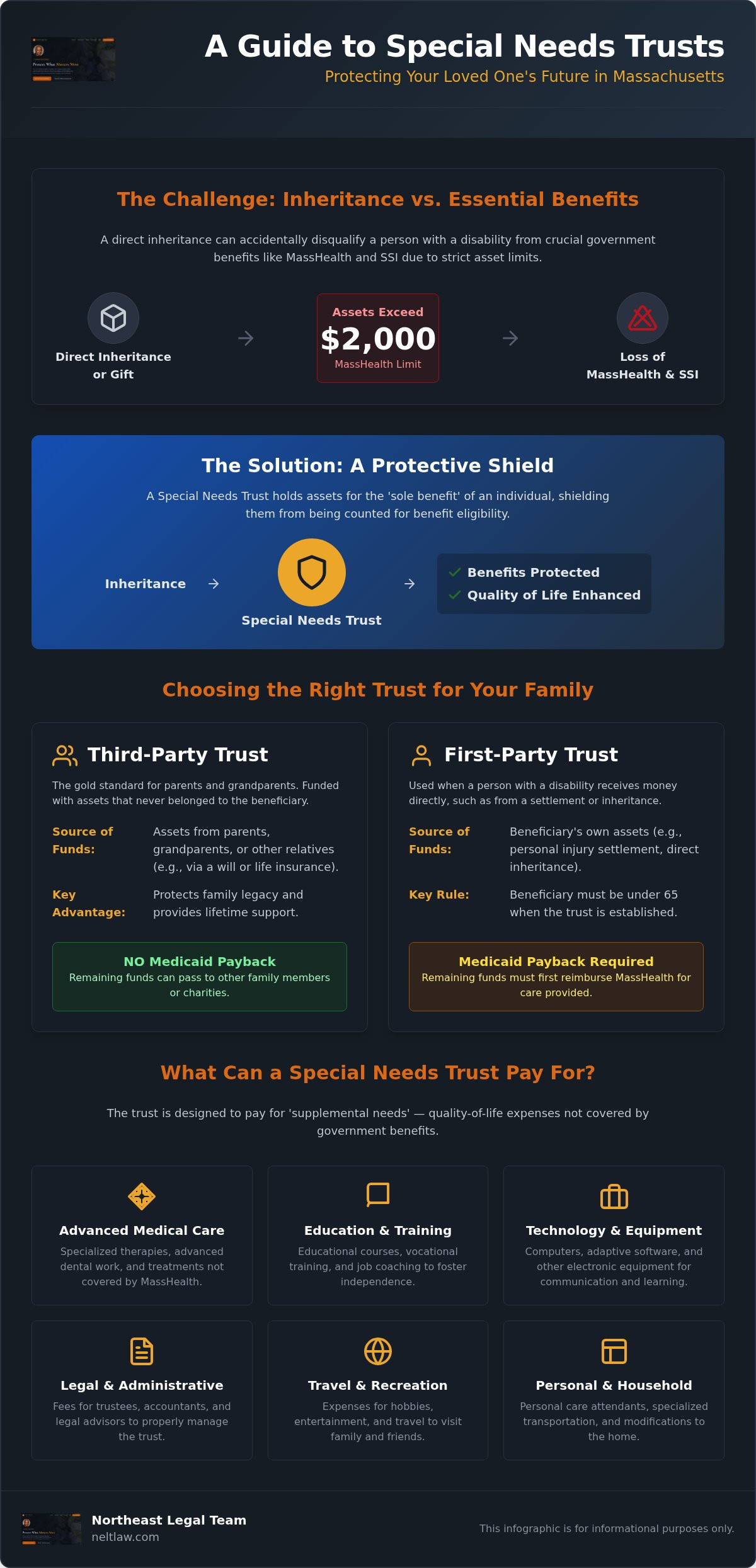
A special needs trust Massachusetts is a legal tool designed to hold assets for a person with a disability without those assets counting against them for government programs. If you leave a traditional inheritance to a child who receives Supplemental Security Income (SSI) or MassHealth, it can trigger a "disqualifying event." Because these programs have strict asset limits, a sudden gift of money could stop their benefits entirely. A trust prevents this by ensuring the funds are used for the "sole benefit" of the individual while the state continues to provide basic support. This "sole benefit" rule is a cornerstone of Massachusetts law. It means the money in the trust must be used exclusively for that one person, rather than shared among siblings or other family members. For a deeper look at how these structures work within the broader legal system, you can review this U.S. Trust Law Overview.
The Role of MassHealth and SSI in Your Planning
Most means-tested programs require the beneficiary to have very few resources. In Massachusetts, the asset limit for non-working individuals to qualify for standard MassHealth benefits is just $2,000 as of July 2026. If your loved one has even one dollar over that limit, they might lose their coverage. A special needs trust acts as a legal barrier that shields assets from being counted as a personal resource by the state, keeping eligibility safe. When you realize your child's medical care and monthly income are protected, the heavy weight of worry finally begins to lift. You move from a place of constant fear to a state of quiet resolution.
Why 'Supplemental' is the Key Word
It's helpful to think of the trust as a way to enhance life rather than just pay for the basics. Government programs like SSI are meant to cover the essentials: food and shelter. Using a special needs trust Massachusetts ensures your loved one has a safety net for the things the government won't cover. These quality-of-life enhancements might include:
- Advanced dental work or specialized therapy not covered by MassHealth.
- Educational courses, vocational training, or job coaching.
- Electronic equipment, hobbies, and travel to visit family.
- Personal care attendants or specialized transportation.
For this to work with Massachusetts regulators, the trust must be irrevocable. This means once it's created, the terms can't be easily changed and the assets can't be taken back by the person who gave them. This permanence is exactly what gives the state the confidence to ignore those assets when calculating benefits. It creates a stable, long-term foundation that allows your loved one to thrive, not just survive.
Types of Special Needs Trusts: Which is Right for Your Family?
Selecting the right special needs trust Massachusetts depends entirely on where the money is coming from. It isn't a one-size-fits-all decision, but rather a choice based on your family's specific financial story. Most families find their answer in one of three categories: third-party trusts, first-party trusts, or pooled trusts. Each serves a unique purpose in protecting your loved one's future and maintaining their quality of life.
Third-Party Trusts: Protecting Your Legacy
This is the gold standard for parents and grandparents in Middlesex and Worcester counties. A third-party trust is funded with assets that never belonged to the beneficiary. You might fund it through your will, a life insurance policy, or even by deeding a family home into the trust. The biggest advantage here is the lack of a "Medicaid payback" requirement. When the beneficiary passes away, any remaining funds can go to siblings, other relatives, or charities of your choice. It's a way to ensure your hard-earned legacy stays within the family while providing a lifetime of support.
First-Party Trusts and the Medicaid Payback
Sometimes, a person with a disability receives money directly. This might happen through a personal injury settlement, an unplanned inheritance from a relative, or a back-payment from Social Security. In these cases, a first-party trust, often called a (d)(4)(A) trust, is the primary tool used. To meet federal requirements, the beneficiary must be under the age of 65 when the trust is established and funded. The trade-off for this protection is the Medicaid payback rule. If the trust has money left when the beneficiary passes, those funds must first be used to reimburse MassHealth for the cost of care provided during their lifetime. If you're feeling unsure about which path fits your situation, scheduling a free assessment can help clear up the confusion.
For families with smaller asset amounts, a pooled trust is a community-managed alternative. These are run by non-profit organizations that "pool" the resources of many individuals for investment purposes while maintaining separate accounts for each person. A significant reform in September 2024, known as the Long-Term Care Act (H.5033), now allows individuals of any age in Massachusetts to join a pooled trust without facing a transfer penalty. This change removed the old "over 65" barrier, making pooled trusts a more flexible and accessible option for seniors with disabilities than ever before.
What Can a Special Needs Trust Pay For?
A special needs trust Massachusetts is more than just a legal document. It's a tool that fills the gaps left by traditional benefits, ensuring your loved one has access to a life that is rich and meaningful. While government programs cover the bare essentials, the trust handles the "extras" that define our daily happiness and independence. These funds can be used for a wide variety of expenses that MassHealth or SSI simply won't touch.
- Medical and Dental Care: This includes specialized therapies, private nursing, and advanced dental procedures that aren't covered by standard state plans.
- Education and Training: You can pay for tuition, vocational programs, or job coaching to help the beneficiary reach their professional goals.
- Technology and Mobility: The trust can purchase computers, adaptive software, or specialized mobility equipment like modified vans or high-end wheelchairs.
- Travel and Care: Funds can cover the cost of vacations, including travel expenses for a companion or professional caregiver to ensure safety and comfort.
Enhancing Quality of Life
We want your family member to thrive, not just get by. The trust provides for recreation and entertainment, such as movie tickets, museum memberships, or specialized summer camps designed for individuals with disabilities. It also serves as a source of protection, covering legal fees and advocacy services to ensure the beneficiary's rights are always respected. By handling these costs, the trust acts as a compassionate safety net that preserves the person's dignity and joy.
The 'Food and Shelter' Trap
Historically, families had to be extremely careful about using trust funds for basic needs. If a trust paid for rent or food, the Social Security Administration would often reduce the beneficiary's monthly SSI payment. However, a significant rule change in September 2024 now allows a special needs trust to pay for groceries without any reduction in SSI benefits. This is a massive relief for families struggling with rising costs.
Housing remains a bit more complex. In Greater Boston, where the median rent for a one-bedroom apartment exceeds $2,500 as of July 2026, the SSI payment alone rarely covers the cost of living. While the special needs trust Massachusetts can pay for rent, doing so may still trigger a reduction in SSI known as "In-Kind Support and Maintenance." Your trustee must navigate these payments carefully, often paying vendors directly rather than giving cash to the beneficiary. This strategic approach ensures your loved one stays housed in a safe environment without losing their essential monthly income.
Setting Up a Special Needs Trust in Massachusetts
Creating a special needs trust Massachusetts is a methodical process that turns your good intentions into a legally binding promise. It begins with drafting a document that includes specific "spendthrift" provisions. These clauses are essential because they prevent outside creditors or lawsuits from touching the money meant for your loved one. Once the document is signed, you'll need to fund it by transferring assets like real estate, brokerage accounts, or life insurance proceeds into the trust's name. After the trust is funded, you'll need to notify the Social Security Administration and MassHealth. They need to see the trust language to verify that the assets are truly shielded and won't count against benefit eligibility limits.
Choosing a Trustee with Heart and Skill
Deciding who will manage the money is often the most emotional part of the journey. In Worcester County, many parents feel a strong desire to name a sibling as the trustee. This brings a level of personal care and family history that a bank simply can't match. However, you should consider if that sibling is prepared for the technical side of the job, such as filing trust tax returns and keeping meticulous records. If the administrative burden seems too high, you might choose a professional fiduciary instead. A helpful middle ground is appointing a "Trust Protector." This person doesn't manage the daily money but has the power to oversee the trustee and step in if the beneficiary's needs aren't being met. It adds an extra layer of safety for your child's future.
Local Considerations for Middlesex and Worcester Families
If your trust is established as part of a will, it may be subject to the oversight of the local probate court. Courts in Middlesex and Worcester have specific expectations for how these trusts are reported and managed. Having a guide who understands these local nuances can prevent delays and unnecessary stress during a sensitive time. Beyond the legalities, it's wise to connect with local advocacy groups in Central Massachusetts. These organizations offer a wealth of community knowledge that can help your trustee find the best local services for the beneficiary. If you're just starting your broader estate plan, you might find it helpful to read about an Estate Planning Attorney Massachusetts: Flat-Fee Wills. When you're ready to take the next step, reach out for a free assessment to discuss your family's unique goals.
The Northeast Legal Advantage: Peace of Mind Through Flat Fees
When you're planning for a loved one with a disability, the last thing you need is the stress of a ticking clock. Traditional law firms often rely on billable hours, which can make a simple phone call feel like an expensive risk. We believe that setting up a special needs trust Massachusetts should be a time of resolution, not financial stress. By offering flat-fee pricing, we remove that "fee anxiety," allowing you to focus entirely on what matters most: your child's security.
David E. Walker, Esq., built this firm on a foundation of compassionate stewardship and professional wisdom. He understands that a special needs trust Massachusetts isn't just a collection of legal clauses; it's a promise of continuity. Our "plain English" philosophy ensures that you'll never feel lost in a sea of intimidating jargon. We strip away the complex legalese to explain exactly how each tool protects your family's legacy. This supportive, non-judgmental environment is designed to move you from a state of concern toward one of lasting order.
Predictable Costs for Unpredictable Times
Our flat-fee model is a foundational pillar of how we serve families in Middlesex and Worcester counties. When you choose a special needs planning package, you'll know exactly what the investment is from the very first day. These packages typically include the drafting of the trust document, guidance on proper funding, and the necessary coordination for state agencies. If you're comparing different firms, you might find our Best Estate Attorney Near Me: A Comprehensive Checklist for 2026 helpful in making your decision. We want you to feel empowered and in control of the process, rather than overwhelmed by the fear of hidden costs.
Your Next Steps Toward Certainty
Starting this journey is easier than you might think. To prepare for an initial consultation, it's helpful to gather a basic list of your loved one's current benefits and any assets you're considering for the trust. You don't need to have all the answers right now; that's what we're here for. We act as your friendly guide, listening first to your story before offering a clear, simplified path forward.
The relief of having a completed plan in place is profound. It's the peace of mind that comes from knowing your loved one will be cared for, their benefits are safe, and your legacy is secure. You can stop wondering "what if" and start feeling certain about the future. Schedule your free special needs planning assessment today and take the first step toward tranquility.
Protecting Your Legacy and Their Future
You've seen how a special needs trust Massachusetts can bridge the gap between basic government support and the high quality of life your loved one deserves. By shielding assets from strict MassHealth and SSI limits, these tools ensure that essential benefits remain intact while providing for the specialized care, education, and recreation that make life meaningful. Whether you're choosing a third-party trust for an inheritance or navigating the latest 2026 reforms for pooled trusts, the goal is the same: lasting security and dignity.
At Northeast Legal Team, we remove the "billable hour" anxiety by offering transparent flat-fee pricing and compassionate, mentor-led guidance. We prioritize "plain English" so you can make informed decisions without the stress of complex legalese. Our deep expertise in Massachusetts-specific trust law ensures your plan is both legally sound and deeply personal. Secure your family's future with a free Special Needs Trust assessment today. You've worked hard to provide for your family; now it's time to make sure that protection lasts a lifetime. You're closer to tranquility than you think.
Frequently Asked Questions
Can a Special Needs Trust pay for a house or rent in Massachusetts?
Yes, a special needs trust Massachusetts can pay for housing, but the trustee must follow specific rules to protect benefits. If the trust pays rent directly to a landlord, the beneficiary's SSI payment may be reduced by a set amount. However, the trust can also own a home where the beneficiary lives. This provides a stable environment in expensive areas like Greater Boston, where median rents now exceed $2,500.
What happens to the money in a Special Needs Trust when the beneficiary dies?
What happens next depends on the type of trust you've created. If it's a third-party trust funded by parents, you can decide exactly who receives the remaining funds, such as siblings or charities. If it's a first-party trust, Massachusetts law requires that MassHealth is reimbursed for the cost of care provided during the person's life. Recent reforms have limited these recoveries, but professional guidance ensures your family's legacy is handled correctly.
Who can serve as a Trustee for a Special Needs Trust in MA?
You can appoint a family member, a professional fiduciary, or a combination of both. Family members bring deep personal knowledge and love to the role, while professional trustees offer technical expertise in tax and benefit rules. Many families in Middlesex County find success by naming a sibling as trustee and adding a "Trust Protector" to provide an extra layer of oversight. This structure provides a balance of heart and skill.
Does a Special Needs Trust affect my child's eligibility for Section 8 housing?
A properly structured trust generally doesn't count as income or assets for Section 8 housing eligibility. HUD regulations typically exclude irrevocable trusts where the beneficiary doesn't have control over the funds. Because housing rules are complex, the trust document must be drafted carefully to ensure it doesn't accidentally increase the beneficiary's reported income. This allows your loved one to keep their housing voucher while still receiving the support they need.
Can I set up a Special Needs Trust without an attorney?
While you could technically try to draft one yourself, it's a significant risk to your loved one's future. Massachusetts has unique probate court expectations and strict MassHealth regulations that a generic online form will likely miss. A single mistake could lead to a loss of health coverage or essential income. We act as a compassionate mentor to help you avoid these pitfalls, providing a clear path forward without the stress of navigating the law alone.
How much money can you put into a Special Needs Trust?
There's no legal maximum for how much you can put into a special needs trust Massachusetts. You can fund it with modest amounts or millions of dollars depending on your family's resources. However, you should consider the $2 million Massachusetts estate tax threshold during your planning. If the trust is very large, professional management is often wise to ensure the funds are invested properly and the beneficiary's eligibility for means-tested programs remains secure.
Is a Special Needs Trust the same as an ABLE Account?
No, they are different tools that work best when used together. An ABLE account has a $20,000 annual contribution limit in 2026 and is excellent for daily spending and smaller savings. A special needs trust can hold unlimited assets, such as a family home or a large inheritance, providing long-term stability. While both protect benefit eligibility, the trust offers more robust control for parents who want to ensure their child is supported for decades.
What is the difference between a First-Party and Third-Party Special Needs Trust?
The main difference is whose money is being used to fund the trust. A third-party trust is funded by assets from someone other than the beneficiary, like a parent's life insurance, and has no Medicaid payback requirement. A first-party trust is funded with the beneficiary's own money, such as a personal injury settlement. This type requires that any funds left after the beneficiary passes are used to reimburse the state for medical care costs.


