

What if the weight of honoring a loved one's final wishes didn't have to feel like a legal interrogation? You are likely standing at a crossroads of profound grief and sudden, complex responsibility. It's completely natural to feel overwhelmed when faced with the list of executor of estate duties massachusetts requires, especially when unfamiliar terms like "Personal Representative" start clouding your path. You want to do right by your family, but the fear of making a costly mistake or facing personal financial liability can be paralyzing during such a sensitive time.
We understand this delicate balance and believe that legal clarity is the first step toward healing. This guide is designed to replace your anxiety with a sense of relief and certainty. You'll discover exactly how to protect yourself while navigating the probate process with confidence and poise. We will provide a clear roadmap of your legal obligations, explain the 2026 filing requirements for the Probate and Family Court, and show you how to move from a state of chaos toward a place of lasting peace and order for your family.
Key Takeaways
- Learn why Massachusetts now uses the term "Personal Representative" and how this role serves as the essential legal authority for settling a loved one’s affairs.
- Master the specific executor of estate duties massachusetts mandates, including the critical steps for notifying heirs and filing the initial petition with the Probate and Family Court.
- Understand the difference between informal and formal administration to determine which path offers the most efficient and peaceful resolution for the estate.
- Identify common pitfalls like self-dealing and unpaid estate taxes to ensure you are fully protected from personal financial liability.
- Discover how professional flat-fee support can transform a complex legal burden into a manageable process, providing you with a clear roadmap and total peace of mind.
Understanding the Role of a Personal Representative in Massachusetts
In the Commonwealth, taking on the responsibility of a loved one's estate is a noble but complex task. While many people still use the term "executor," Massachusetts officially shifted to the term "Personal Representative" when it adopted the Massachusetts Uniform Probate Code (MUPC) in 2012. This change reflects a more streamlined, modern approach to the Executor's Role and Duties. As the Personal Representative, you are the court-appointed individual legally authorized to settle the deceased person's affairs, from paying final bills to distributing cherished heirlooms to family members.
This role carries a significant fiduciary duty. You must act with the highest level of integrity, putting the interests of the estate and its beneficiaries above your own. It's a position of trust that requires careful attention to the executor of estate duties massachusetts law mandates. If you don't act in the estate's best interest, you could face personal liability. Once the court issues your "Letters of Authority," you gain the official "key" needed to manage the deceased person’s assets. This document is what banks and government agencies will ask for before they allow you to move funds or sign titles.
Who Can Serve as an Executor in MA?
To serve in this capacity, you must be at least 18 years old and of sound mind. Massachusetts courts prioritize the person named in the will, but they also vet candidates to ensure they're suitable for the responsibility. If the person named is unable or unwilling to serve, a "successor" personal representative takes over the mantle. This ensures the process continues without interruption. If no one is named or available, the court will appoint an administrator to fulfill these same executor of estate duties massachusetts requirements, ensuring the estate is handled with care.
The Emotional and Legal Weight of Stewardship
Managing an estate is often a marathon of stewardship. It isn't a sprint. You'll likely find yourself balancing complex family dynamics while following strict legal mandates. This can be emotionally taxing, especially when grief is still fresh and the pressure to perform is high. The key to staying grounded is organization. By moving from a state of worry to one of order, you protect your loved one's legacy. Proactive planning and a clear roadmap transform a chaotic legal burden into a final, meaningful act of service for your family.
Step-by-Step: The 6 Essential Duties of a Massachusetts Executor
Fulfilling the executor of estate duties massachusetts law requires is a methodical process that demands both patience and precision. Once you've accepted the mantle of Personal Representative, your primary goal is to move the estate from a state of transition to a place of resolution. This journey isn't just about checkboxes; it's about ensuring your loved one's final wishes are honored with dignity and legal accuracy.
Step 1: The Initial Filing and Notice
The process officially begins at the Probate and Family Court. If your loved one lived in Middlesex or Worcester County, you'll file the original will and a petition for appointment in those specific jurisdictions. To begin, you must understand the formal Massachusetts Probate Process, which involves submitting the necessary forms to receive your Letters of Authority. After your appointment, you must issue a "Notice of Appointment" to all heirs and devisees. This transparency is vital because it opens the one-year window for creditors to file claims against the estate. If you miss these notice requirements, you risk extending the timeline of the probate process indefinitely.
Step 2: Asset Management and Valuation
Your next priority is to identify and protect everything the deceased owned. This includes securing physical property, such as a family home in Worcester or a seasonal cottage in Middlesex County, and identifying digital accounts or investments. You'll need to determine the value of these items accurately. Date of death value is the fair market price of an asset on the day the person passed away, used to establish a new tax basis for heirs. You must also distinguish between probate assets, which pass through the court's jurisdiction, and non-probate assets like life insurance policies or accounts with named beneficiaries that transfer automatically. If the weight of these valuations feels heavy, seeking professional probate guidance can help ensure you don't miss a single detail.
Step 3: Final Distributions and Closing
Before any inheritance reaches a beneficiary, you must address the estate's liabilities. This includes handling final income tax returns and, if the estate exceeds $2 million, the Massachusetts estate tax. Once debts are settled, you'll distribute the remaining assets according to the instructions in the will. To finalize your work, you must prepare an "Account of the Personal Representative," which details every dollar that entered and left the estate. Obtaining signed receipts and releases from beneficiaries provides you with a layer of protection before you're officially discharged from your duties. This final step turns the page, providing the family with the tranquility they need to move forward.
Navigating the Massachusetts Probate Process: Informal vs. Formal Administration
Choosing how to move forward is one of the most critical decisions you'll make as you begin your work. In the Commonwealth, the law provides different paths tailored to the complexity of the estate and the relationships between beneficiaries. Understanding these options helps you fulfill the executor of estate duties massachusetts law requires without unnecessary delays or legal costs. While the process might feel daunting at first, the Massachusetts Uniform Probate Code (MUPC) offers several ways to find an orderly resolution.
- Informal Probate: This is an administrative path designed for estates where the will is clear and no one is contesting the process. A Magistrate reviews your paperwork rather than a judge, which often leads to a faster appointment.
- Formal Probate: This judicial path is necessary if there's a dispute over the will, if an heir is a minor, or if there are missing beneficiaries. While it involves court hearings, it provides the security of a final court order.
- Voluntary Administration: If the deceased owned no real estate and their personal property is valued at $25,000 or less (excluding the value of one car), you can use this simplified "small estate" process.
- Late and Limited Probate: This specific formal process is used when more than three years have passed since the person's death and no prior proceedings were filed.
Choosing the Right Path for Your Situation
The MUPC was created to streamline your journey. Most families qualify for informal probate, which allows you to handle your responsibilities without ever stepping into a courtroom. However, certain triggers will require a judge's involvement. If you're unsure which path fits, remember that formal probate offers a higher level of protection for the Personal Representative. It prevents heirs from challenging your actions later, which can provide immense peace of mind if family dynamics are strained.
Timelines and Expectations in 2026
It's helpful to set realistic expectations for the months ahead. In 2026, the Probate and Family Courts in Middlesex and Worcester counties continue to manage a high volume of filings. While an informal petition might be approved relatively quickly, the entire estate typically takes 8 to 14 months to fully settle. Much of this timeline is dictated by the "one-year rule." Creditors have exactly one year from the date of death to file a claim against the estate. Because of this, you generally shouldn't make final distributions until that year has passed. Explaining this legal requirement to beneficiaries early can help manage their expectations and maintain tranquility within the family.
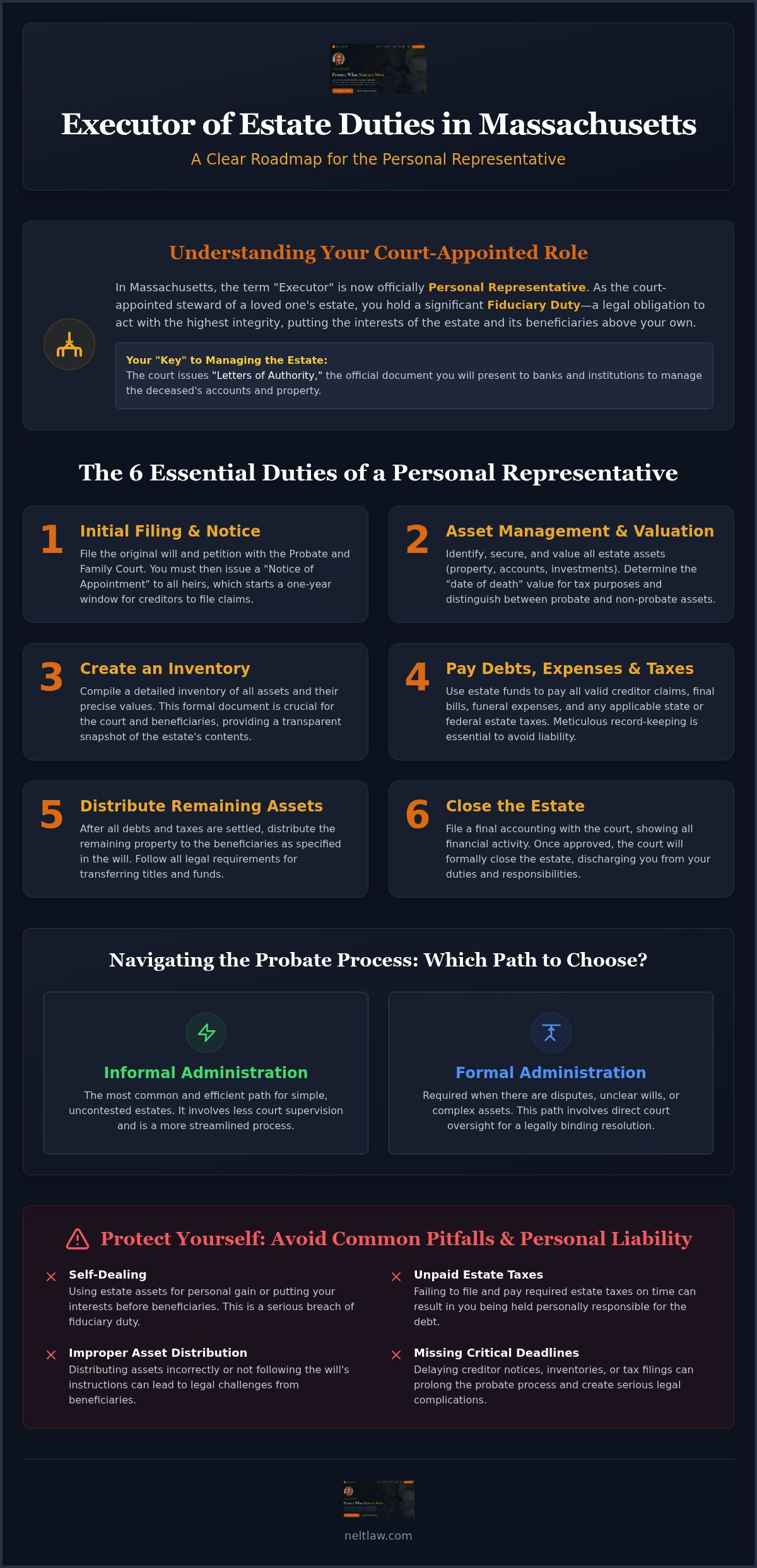
Protecting Yourself: Common Pitfalls and Personal Liability Risks
Taking on the mantle of Personal Representative means you're stepping into a role of significant trust. While your primary goal is to honor your loved one, you must also look out for your own protection. One of the most common ways people get into trouble is through "self-dealing." This doesn't necessarily mean you're trying to steal; it often happens when someone simply mixes their personal money with estate funds to pay a quick bill. You must keep estate funds strictly separate in a dedicated estate bank account to avoid even the appearance of impropriety. Navigating the executor of estate duties massachusetts law requires this level of strict financial boundaries.
Another major risk involves the order of payments. If you distribute an inheritance to your siblings before paying the final tax bill, and the estate then lacks the cash to cover those taxes, the government may look to you personally for payment. This is why paying taxes and creditors is a priority over giving out inheritances. You also have a specific duty to notify MassHealth if the deceased was 55 or older. If you fail to provide this notice, the state can pursue estate recovery years later, creating a legal nightmare for you and the beneficiaries. Documenting every decision you make is your best defense against claims of a breach of fiduciary duty.
Managing Creditors and Insolvent Estates
Sometimes, an estate has more debt than assets. In these cases, the estate is considered "insolvent." It's vital to remember that you aren't responsible for paying these debts out of your own pocket. Massachusetts law provides a strict statutory order of priority for paying bills. Usually, administrative costs and funeral expenses come first, followed by taxes and medical bills from the final illness. If you pay a "regular" credit card bill before a tax lien, you could be held liable for that mistake. Never use your own savings to cover estate debts; the estate is its own legal entity.
Professional Guidance as a Shield
Working with a probate administration attorney acts as a powerful liability shield. When you rely on professional advice, you're meeting the standard of "Reasonable Care," which means you've acted as a prudent person would in a similar situation. Using estate funds to pay for legal counsel is generally considered a valid administrative expense because it protects the estate from costly errors. If you're feeling the weight of these responsibilities, you can secure expert probate support to ensure every step you take is on solid legal ground.
Easing the Burden with Flat-Fee Probate Support
Navigating the complex list of executor of estate duties massachusetts law demands is rarely something anyone wants to do alone. At Northeast Legal Team, we believe that providing legal support is about more than just filing forms; it's about offering a steady hand during your family's most difficult moments. Our approach combines over 14 years of professional authority with deep human empathy, ensuring you never feel like just another case file. We specialize in helping Personal Representatives in Middlesex and Worcester counties move through the probate process with a sense of order and tranquility.
We understand that the weight of responsibility can feel heavy. By taking over the technical paperwork and court communications, we allow you to step back from the legal pressure and focus on your family's healing. Our local expertise in the Middlesex and Worcester Probate and Family Courts means we know the specific nuances of these jurisdictions, helping you avoid the common delays that often frustrate families trying to manage things on their own.
Predictable Costs, Unmatched Peace of Mind
For many families, the traditional hourly billing model used by many law firms creates a secondary layer of stress. You shouldn't have to worry about the clock ticking every time you have a question about a filing or a creditor claim. Our flat-fee probate administration package is designed to be a "sigh of relief." This model provides total cost transparency from the very beginning, covering the essential steps of the probate process without the anxiety of unpredictable invoices. When you know exactly what the investment will be, you can make decisions for the estate with confidence and clarity, ensuring the executor of estate duties massachusetts mandates are settled correctly the first time.
Your Next Steps Toward Resolution
Moving from a state of worry to a state of resolution starts with a simple conversation. Scheduling a free assessment with David E. Walker, Esq., gives you the opportunity to share your story and receive a clear roadmap for the path ahead. During your initial probate consultation, it's helpful to bring the original will, a certified copy of the death certificate, and any known information about the estate's assets and debts. This information allows us to provide a more tailored strategy for your specific situation. If you are ready to transition from chaos to order, you can Schedule your free consultation today and take the first step toward protecting your loved one's legacy and your own peace of mind.
Moving Forward with Clarity and Peace of Mind
You've discovered that fulfilling the executor of estate duties massachusetts law mandates is a process best handled with both precision and heart. By understanding the shift to the Personal Representative role and recognizing the specific timelines of the Probate and Family Court, you've already replaced much of your initial anxiety with a clear sense of direction. Protecting yourself from personal liability and navigating the nuances of creditor claims are vital steps in ensuring a smooth transition for your loved one's estate.
If you're feeling the weight of these responsibilities, remember that expert support is available to act as your shield. With over 14 years of local experience, our firm offers the compassionate, plain-English guidance you need to succeed. We provide flat-fee pricing so you can enjoy predictable costs and focus entirely on your family's healing. Request your free probate assessment with Northeast Legal Team today to secure the steady hand you deserve.
You're doing a brave and meaningful thing for your family. With an organized approach and a protective ally by your side, you'll find the resolution and tranquility you're looking for.
Frequently Asked Questions
How much does an executor get paid in Massachusetts?
Massachusetts law allows you to receive "reasonable compensation" for your work rather than a fixed percentage of the estate. This amount depends on the complexity of the assets, the time you invest, and the specific skills required to settle the affairs. If the estate is straightforward, your fee should reflect that simplicity. Many family members choose to waive this fee to keep more assets within the family, especially since executor fees are considered taxable income.
Do I need a lawyer to serve as an executor in MA?
You aren't legally required to hire an attorney, but having professional guidance is a wise way to protect yourself. The executor of estate duties massachusetts mandates can be technically demanding, and even a small oversight in filing or tax reporting can lead to delays. Working with a legal partner ensures you meet every deadline with confidence. This support acts as a shield, helping you avoid the personal financial risks often associated with managing an estate.
How long do I have to file the will after someone dies in Massachusetts?
You generally have up to three years from the date of death to file a will and open probate. However, you must wait at least seven days after the passing before you can officially file your petition with the court. It's usually best to start the process within a few months. Filing early allows you to secure assets quickly and starts the one year clock for creditors to make claims against the estate.
Can I be held personally liable for the estate’s debts?
You aren't responsible for paying the deceased person's debts with your own money, but you can be held liable for mistakes in administration. If you distribute money to heirs before paying the IRS or valid creditors, you might have to pay those debts out of your own pocket. Using a methodical approach to the executor of estate duties massachusetts law requires ensures that all obligations are met in the correct legal order before any inheritance is released.
What is the difference between a Will and a Trust during probate?
A will is a public document that must pass through the Probate and Family Court to be validated before any assets can move. This process involves filing fees and public notices. A trust is a private agreement that typically bypasses the probate court entirely. If your loved one had a trust, you can often distribute those specific assets much faster and without the oversight of a magistrate or judge.
What happens if the deceased person died without a will in MA?
If there is no will, the estate is considered "intestate," and Massachusetts law determines who will inherit the assets based on family priority. You still need to file a petition with the court to be appointed as the Personal Representative. The court will follow a specific legal hierarchy to decide who has the right to serve and how the property should be divided among the surviving spouse, children, or other relatives.
How do I get a "Letter of Authority" in Middlesex County?
You receive your Letters of Authority after filing a petition for probate at the Middlesex Probate and Family Court and receiving court approval. You'll need to submit the original will, a certified death certificate, and a bond. Once the Magistrate or Judge signs the order of appointment, the court issues this document. It serves as your official proof of power to manage bank accounts, sell real estate, and handle all estate business.
Can an out-of-state resident serve as an executor in Massachusetts?
Yes, you can serve as a Personal Representative even if you live outside the Commonwealth. However, you must appoint a Massachusetts resident to act as your "agent for service of process." This person serves as a local point of contact for the court to send legal notices or documents. This requirement ensures that the Massachusetts court system can maintain contact with you throughout the duration of the probate process.


