

Imagine sitting at your kitchen table, holding a document that claims to be your parent's final wishes, only to realize the words on the page don't match the person you loved. It's a painful moment that often brings a mix of confusion and heavy responsibility. You want to honor their memory, but you're worried that speaking up might destroy family relationships or lead to a mountain of unpredictable legal bills. Partnering with a compassionate contested will attorney in massachusetts can help you protect your family's true legacy while keeping your peace of mind intact.
We believe that legal support should feel like a steady hand, not an added burden. You deserve to know that the wishes of the deceased are being respected. This guide will walk you through the complexities of the Massachusetts probate system, explaining everything from strict filing deadlines to the common grounds for a legal challenge. You'll discover a predictable, supportive path that validates your loved one's true intentions and helps your family move forward with clarity and confidence.
Key Takeaways
- Learn who has the legal standing to challenge a will and why a simple feeling of unfairness is not enough to initiate a case.
- Discover the four primary legal grounds a contested will attorney massachusetts uses to protect the estate from fraud or undue influence.
- Demystify the probate litigation process in Middlesex and Worcester counties to see how most disputes are resolved through thoughtful negotiation.
- Understand the essential roles that attorneys play in helping both executors and heirs fulfill their duty to honor the deceased’s intentions.
- Find out how a supportive, "listen-first" legal guide can help preserve your family relationships while securing your legal rights.
Understanding Will Contests in Massachusetts: Standing and Legal Rights
A will contest is a formal legal challenge to a document's validity while it's moving through the probate court. It's a necessary tool when there's a genuine belief that a document doesn't represent a person's true wishes. However, it's vital to remember that you can't contest a will just because you find the results unfair or hurtful. Understanding Will Contests requires looking beyond the emotional sting to see if there's a legal reason the document should be set aside. By focusing on the law, a contested will attorney massachusetts helps you ensure that your loved one's true legacy isn't lost to errors or outside pressure.
The primary goal of this process is protection. It's about shielding the "testator," the person who wrote the will, from having their intentions replaced by someone else's agenda. When you speak up in court, you aren't just fighting for an inheritance; you're acting as a guardian for your family member's final voice. This path requires a clear understanding of your legal rights and the specific rules that govern Massachusetts estates.
Who is an 'Interested Person' Under MA Law?
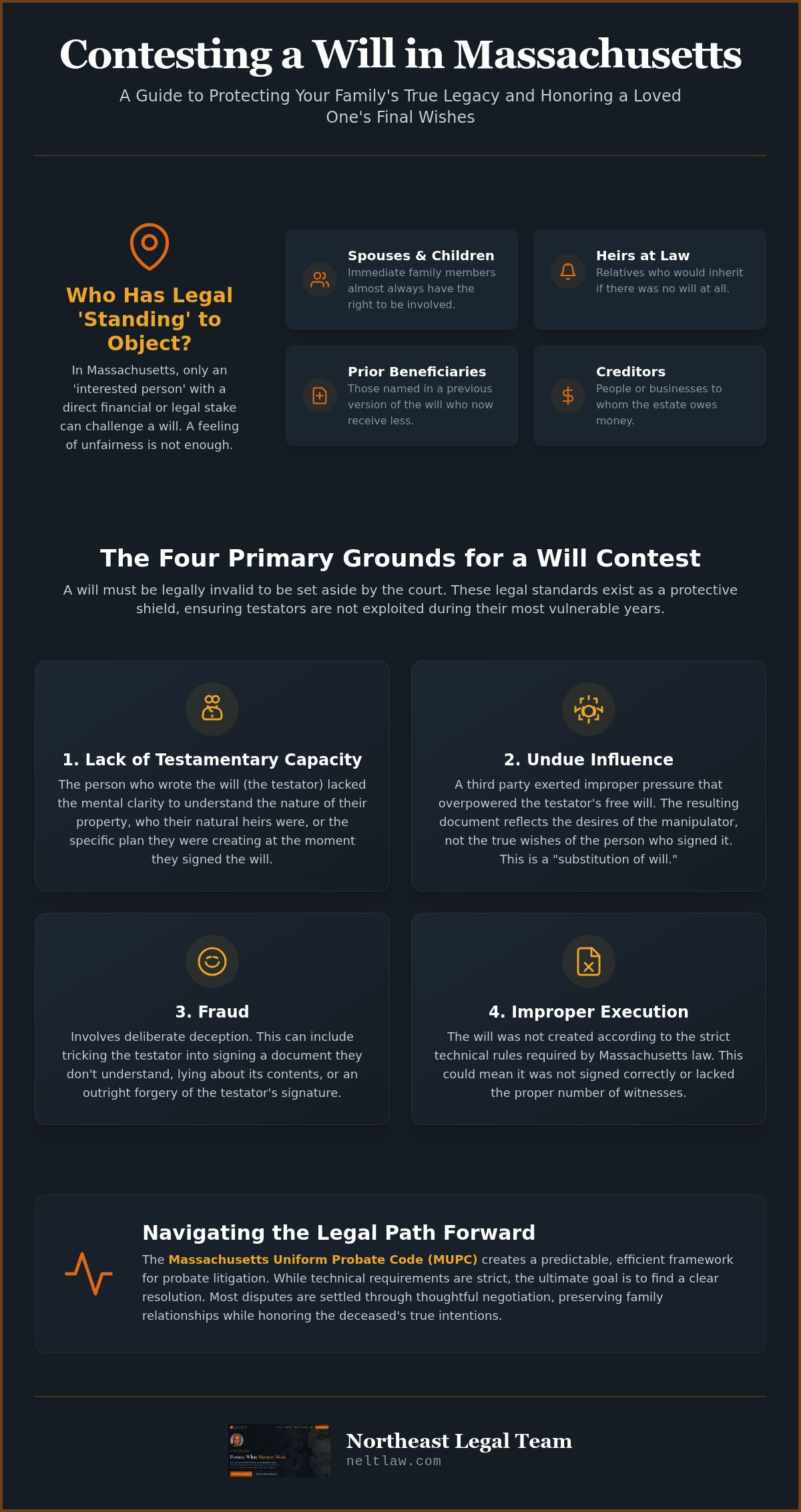
In Massachusetts, you don't have the right to challenge a will unless you have "standing." This means you must be what the law calls an interested person. This isn't just about being emotionally invested; it's about having a direct financial or legal stake in the outcome. Common categories include:
- Spouses and Children: These immediate family members almost always have the right to be involved in the probate process.
- Heirs at Law: These are relatives who would have inherited the estate if your loved one had died without any will at all.
- Prior Beneficiaries: If a previous version of the will gave you a larger share, you may have the standing to challenge a newer, suspicious version.
- Creditors: People or businesses to whom the estate owes money have a stake in ensuring the assets are handled correctly so debts can be settled.
The Role of the Massachusetts Uniform Probate Code (MUPC)
The MUPC was designed to make probate litigation more predictable and efficient across the Commonwealth. Since David Walker began practicing 14 years ago, he's seen how these standardized rules help families in Middlesex and Worcester counties find resolutions more quickly. While the law is the same statewide, the way a contested will attorney massachusetts approaches a case often depends on local court practices. Whether you're filing in the Middlesex Probate and Family Court or the Worcester location, the MUPC provides the framework we use to protect your rights and your family’s peace of mind. It simplifies the process, but the technical requirements for filing objections remain strict, making professional guidance essential.
Common Grounds for Challenging a Will in Middlesex and Worcester Counties
When you first read a will that feels "wrong," it's natural to feel a sense of injustice. However, the court doesn't set aside a document just because it's unfair or surprising. A will must be "legally invalid" to be successfully challenged. These legal standards exist as a protective shield for our seniors in Middlesex and Worcester counties, ensuring they aren't exploited during their most vulnerable years. A contested will attorney massachusetts typically builds a case around four primary pillars: lack of capacity, undue influence, fraud, or improper execution. It's common for these grounds to overlap. For instance, a person who is already struggling with their health is often much more susceptible to outside pressure or deceptive tactics.
Lack of Testamentary Capacity and Undue Influence
Capacity is the legal term for a person’s mental state at the moment they sign their will. To have capacity, they must understand the extent of their property, who their natural heirs are, and the specific plan they're creating. If a medical condition or cognitive decline prevented them from grasping these facts, the will may not be valid. Closely tied to this is the concept of undue influence, which is essentially a "substitution of will" by a third party. Undue influence is the improper pressure that overpowers a testator's free agency. Instead of the document reflecting the testator's heart and wishes, it reflects the desires of someone who exerted too much control over them during the drafting process.
Fraud and Improper Execution
Fraud involves deliberate deception, such as someone lying to the testator about what the document contains or forging a signature entirely. While fraud is a direct act of dishonesty, improper execution is often the result of cutting corners. Massachusetts has strict rules for how a will must be signed. It requires the presence of at least two competent witnesses who watch the testator sign and then sign the document themselves. A contested will attorney massachusetts often sees these requirements ignored in "DIY" or online wills. These templates might seem convenient, but they frequently fail to meet the standards of the Massachusetts Probate Litigation Process, leaving the estate vulnerable to disputes.
If you're worried that your family's legacy is being steered in the wrong direction, speaking with a compassionate legal guide can provide the reassurance and clarity you need during this difficult time.
The Massachusetts Probate Litigation Process: A Step-by-Step Guide
Many people picture a dramatic courtroom scene when they think of a will contest, but the reality is usually much more methodical and quiet. In Massachusetts, the probate process moves at a deliberate pace designed to ensure every voice is heard fairly. Understanding the sequence of events can help lower your anxiety and put you back in control of a difficult situation. Working with a contested will attorney massachusetts helps you stay ahead of strict timelines while ensuring you don't feel lost in the paperwork. This professional support transforms a chaotic period into a manageable series of steps.
Filing the Objection and the Discovery Phase
The legal journey officially begins with a Notice of Appearance. This document tells the court you intend to participate in the case. After this, you have 30 days to file an Affidavit of Objections, which is a sworn statement outlining the specific reasons you believe the will is invalid. According to Massachusetts probate and estate laws, you must file your written appearance before 10:00 A.M. on the return date listed in the court citation. Missing these windows can end a case before it starts, so acting quickly is essential.
Following the initial filings, the discovery phase allows your contested will attorney massachusetts to gather evidence. This might include medical records to prove a lack of capacity or financial statements that show unusual patterns of spending. Local courts in Middlesex and Worcester have specific ways of handling these filings, and a steady hand can guide you through each requirement without unnecessary delays. This phase is about building a clear, factual picture of your loved one's true intentions.
Settlement Discussions and Mediation
Most probate disputes don't end in a dramatic trial. Instead, they find resolution through mediation or settlement discussions. Mediation offers a private, respectful environment where families can talk through their differences with a neutral third party. This process is often much less stressful than a public hearing and allows for more creative solutions that the law might not otherwise provide. It's a path that prioritizes family continuity and peace of mind over public conflict.
When you work with a flat-fee probate attorney Massachusetts, you can focus on these discussions without worrying about escalating legal costs. This predictable support ensures you can make decisions based on what's best for your family's future, not just what's best for your budget. By choosing negotiation over litigation, you often find a resolution that honors your loved one's true wishes while keeping the family intact. This "steady hand" approach is often the fastest way to return to a state of order and tranquility.
Protecting the Estate: The Role of an Attorney for Executors and Heirs
While many people focus on the person challenging a document, an attorney is equally vital for the personal representative tasked with defending it. When you're named as an executor, you carry a heavy fiduciary duty. This means you're legally required to act in the best interest of the estate and uphold the terms of the will as written. It's a high standard to meet, especially when family tensions are high. A contested will attorney massachusetts acts as an essential buffer, standing between you and the emotional weight of family conflict. This professional distance allows for an orderly resolution that honors the deceased's wishes without letting personal feelings derail the legal process.
Professional guidance transforms what feels like a chaotic family crisis into a structured legal procedure. By handling the technicalities of the court, your attorney allows you to focus on your family's emotional needs. This support is about more than just filing papers; it's about providing a steady hand that ensures the probate process doesn't become a source of permanent division. You don't have to carry the burden of these legal complexities alone.
Defending Against Unfounded Challenges
Not every challenge to a will is based on a legitimate legal flaw. Sometimes, nuisance lawsuits arise from a place of grief or misunderstanding rather than evidence of fraud or incapacity. In these moments, your role is to protect the dignity of your loved one's original plan. Finding the best estate attorney near me helps you vet these claims early on. By identifying which objections have legal merit and which don't, your legal guide prevents the estate from being drained by unnecessary litigation. This proactive stewardship ensures that the assets are preserved for the rightful beneficiaries and that the testator's voice remains the final word.
Asset Protection During Litigation
One of the biggest risks during a probate dispute is the potential freezing of the estate's assets. If a court battle drags on, essential tasks like paying property taxes, managing a family business, or maintaining a home can become complicated. Professional guidance helps you implement specific asset protection strategies to keep the estate running smoothly. A contested will attorney massachusetts knows how to petition the court for the authority to handle these urgent matters while the larger dispute is being settled. This keeps the estate's value intact and prevents a temporary disagreement from causing permanent financial loss.
If you're feeling overwhelmed by the responsibility of managing a contested estate, we're here to help you find a clear path forward. Contact our team today to secure the professional support your family deserves.
Why Northeast Legal Team is Your Partner in Probate Disputes
Choosing a contested will attorney massachusetts is about more than just finding a technical expert; it's about finding a steward for your family's future. David E. Walker, Esq. has spent over 14 years guiding families through the complexities of Massachusetts estate law with a commitment to human empathy. We understand that behind every legal file is a deeply personal story of love, loss, and legacy. We listen first. By prioritizing your family's unique history, we ensure that the legal strategy we build actually reflects the outcomes you need for long term peace of mind.
Our firm is built on a "plain English" philosophy. We believe that legal support shouldn't feel like a barrier of dense jargon and intimidating legalese. Instead, we act as a steady hand, stripping away the complexity so you can make informed decisions with confidence. This supportive approach transforms a potentially overwhelming court process into a clear, manageable path forward. We're here to lower your anxiety and replace uncertainty with a sense of relief and order.
The Flat-Fee Advantage in Estate Law
Financial anxiety often stops families from seeking the legal help they need. Traditional hourly billing can make you feel like you're "watching the clock" every time you have a question. We do things differently. By offering a predictable estate planning attorney flat fee and fixed rates for probate administration, we remove the fear of hidden costs. You deserve transparency.
This model allows for open, honest communication. You can reach out to your contested will attorney massachusetts whenever a concern arises without worrying about a surprise bill. It shifts the focus from billable minutes to meaningful results. When the financial path is clear, you can focus entirely on what matters most: honoring your loved one's true wishes and protecting your family's continuity.
Next Steps: Your Free Estate Assessment
You don't have to face this transition alone. We invite you to a low pressure, supportive consultation where we can discuss your situation and explore your options together. You'll find a "friendly guide" persona here, someone who values your well-being as much as your legal rights. We're ready to help you move from a state of chaos and worry toward a resolution that feels like a sigh of relief. Schedule your free assessment with Northeast Legal Team today.
A Clear Path Toward Family Peace and Resolution
Honoring your loved one's final wishes is a profound responsibility that often comes with complex legal questions. Whether you're navigating the strict filing deadlines of the Massachusetts Uniform Probate Code or seeking to understand the legal grounds of a will challenge, you don't have to walk this road alone. A contested will attorney massachusetts provides the steady hand you need to transform a season of uncertainty into a structured, manageable process.
At Northeast Legal Team, we bring over 14 years of local experience to families in Middlesex and Worcester counties. Our plain English approach and flat-fee probate administration options are designed to lower your anxiety and provide predictable support. We prioritize the human story behind the legal file, ensuring your family's continuity remains the focus. You deserve a partner who values your peace of mind as much as your legal rights. Secure your family's legacy with a free assessment from David Walker today. Take the first step toward a resolution that honors the past and protects your future.
Frequently Asked Questions
How long do I have to contest a will in Massachusetts?
You generally have up to one year from the date of informal probate or three years from the date of death, whichever occurs later. However, if a formal probate petition is filed, the timeline is much tighter. You must file a written appearance by 10:00 A.M. on the return date listed on the court citation. Missing these specific windows can prevent you from protecting your family's true legacy.
Can an executor of a will be removed if they are not acting fairly?
Yes, the probate court can remove an executor if they fail to fulfill their fiduciary duties or act unfairly toward beneficiaries. If an executor is self-dealing, mismanaging assets, or failing to communicate, you can petition the court for their removal. A contested will attorney massachusetts can help you present evidence of these failures to the judge in Middlesex or Worcester County to ensure the estate is handled with integrity.
Is it expensive to contest a will in Middlesex County?
The cost of a will contest depends on the complexity of the evidence and whether the case reaches a full trial. While litigation involves court fees and professional time, many families find that mediation is a more cost-effective way to reach a resolution. Northeast Legal Team focuses on transparent support, helping you understand the potential financial path before you commit to a long legal process.
What happens to the estate assets while a will is being contested?
Estate assets are typically restricted until the court determines the will's validity. The personal representative might have limited authority to pay essential bills, like property taxes or insurance, but they generally cannot distribute inheritances to heirs while a challenge is pending. This safeguard ensures that assets aren't lost or spent before the court confirms who the rightful beneficiaries are under Massachusetts law.
Can I contest a will if I was intentionally left out?
You can contest a will if you were disinherited, but you must prove a legal ground like undue influence or lack of capacity. Simply being unhappy about being left out isn't enough. However, if you believe your loved one was pressured by someone else or didn't understand what they were signing when they excluded you, a contested will attorney massachusetts can help you investigate the circumstances surrounding the document's creation.
Do I need to go to court personally for a will contest?
You may not need to attend every procedural hearing, especially as many Massachusetts probate courts now offer remote access for routine matters. However, your presence is usually required for significant events like depositions or a trial. Your attorney acts as your voice in the courtroom for most filings and motions, allowing you to focus on your family's emotional healing while the legal details are managed professionally.
What is the difference between a will contest and probate administration?
Probate administration is the standard, orderly process of settling an estate, paying debts, and distributing assets according to a valid will. A will contest is a specific type of litigation that interrupts this process to challenge the document's validity. Administration is about following the instructions, while a contest is about determining if those instructions truly represent the deceased person's final, unforced wishes.
Can a will be challenged if it wasn't notarized in Massachusetts?
A will can be legally valid in Massachusetts even if it isn't notarized, as long as it is signed by the testator and at least two competent witnesses. While a notary is often used to create a self-proving will that speeds up the probate process, it isn't a strict requirement for validity. If the witness signatures are missing or improper, however, the document may be vulnerable to a legal challenge.


